How to Remove Pet Hair from a Car: Seats, Mats and Tight Gaps

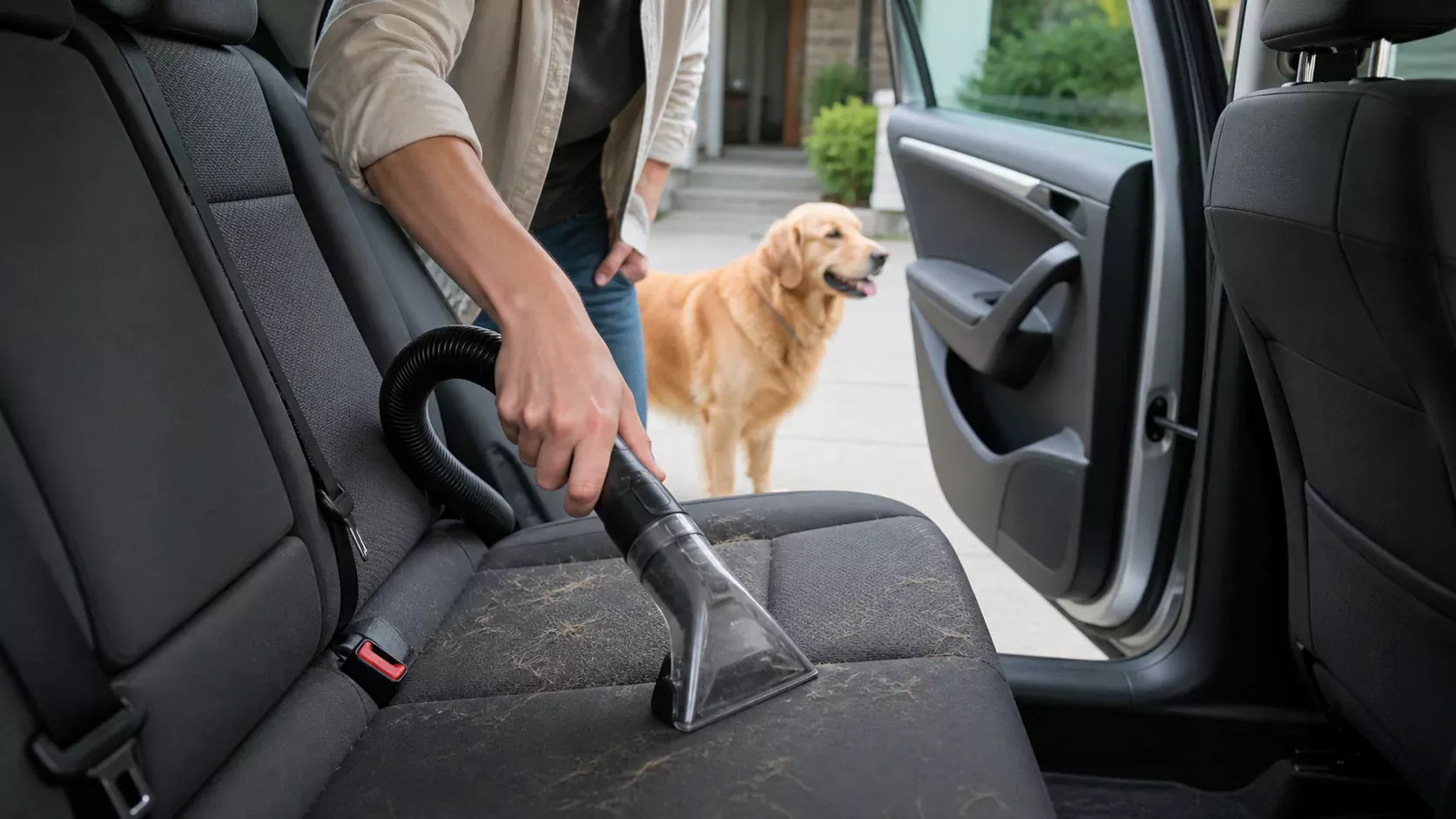
To remove pet hair from a car, clean one material and one zone at a time. Take out removable mats, vacuum open seat fabric with an upholstery nozzle, use a floor brush on carpet, and finish seams and narrow gaps with a crevice tool. Move adjustable seats only as the vehicle instructions allow, then inspect the cabin from a second angle before putting the mats back.
Key takeaways
- Start with dry pickup so loose hair does not move onto an area you already checked.
- Match the vacuum attachment to the area: upholstery nozzle for cloth seats, floor brush for carpet, and crevice tool for seams.
- Keep leather, wet cleaning, stain treatment and deodorizing outside this routine unless the relevant care instructions support them.
- Use a second viewing angle to find hair left along stitching, mat borders and seat rails.
What should you prepare before removing pet hair from a car?
Park where you can open the doors fully and see the seats and floor clearly. Remove bottles, toys, travel bowls, seat covers and other loose items. Take out removable floor mats and keep them beside the car so they can be cleaned separately. Check the vehicle manual, the mat instructions and the vacuum instructions before using an attachment on an unfamiliar material.
You do not need a crowded collection of tools for this route. The useful starting set is a vacuum with an extension hose, an upholstery nozzle, a floor brush and a crevice tool. Consumer Reports describes these attachments in its general car-interior detailing guidance. The same source recommends working from the top of the cabin downward, which helps keep dislodged material moving toward areas that have not yet been vacuumed.
How do you remove pet hair from cloth car seats?
Begin with the broad, open section of one seat. Place the upholstery nozzle flat against the fabric and move it in short, overlapping lanes. A visible route is easier to check than random passes across the whole bench. Complete the seat back before the seat base, then inspect the outer bolster and the line where the back meets the base.
Look at the stitching from the open doorway and again from the opposite side. Hair that blends into a gray or beige panel can become easier to see when the light crosses the fabric. If strands remain on a completed lane, vacuum that lane again instead of restarting the entire seat. This is a visual checkpoint, not a promise that one attachment will remove every strand from every upholstery weave.
How do you clean removable mats and carpeted footwells?
Clean removable mats outside the cabin. Lay one mat flat, vacuum its face, and check the border before setting it aside. Do not return it while you are still cleaning the footwell underneath. Keeping the two surfaces separate prevents the mat from hiding hair at the corners or carrying loose strands back into the car.
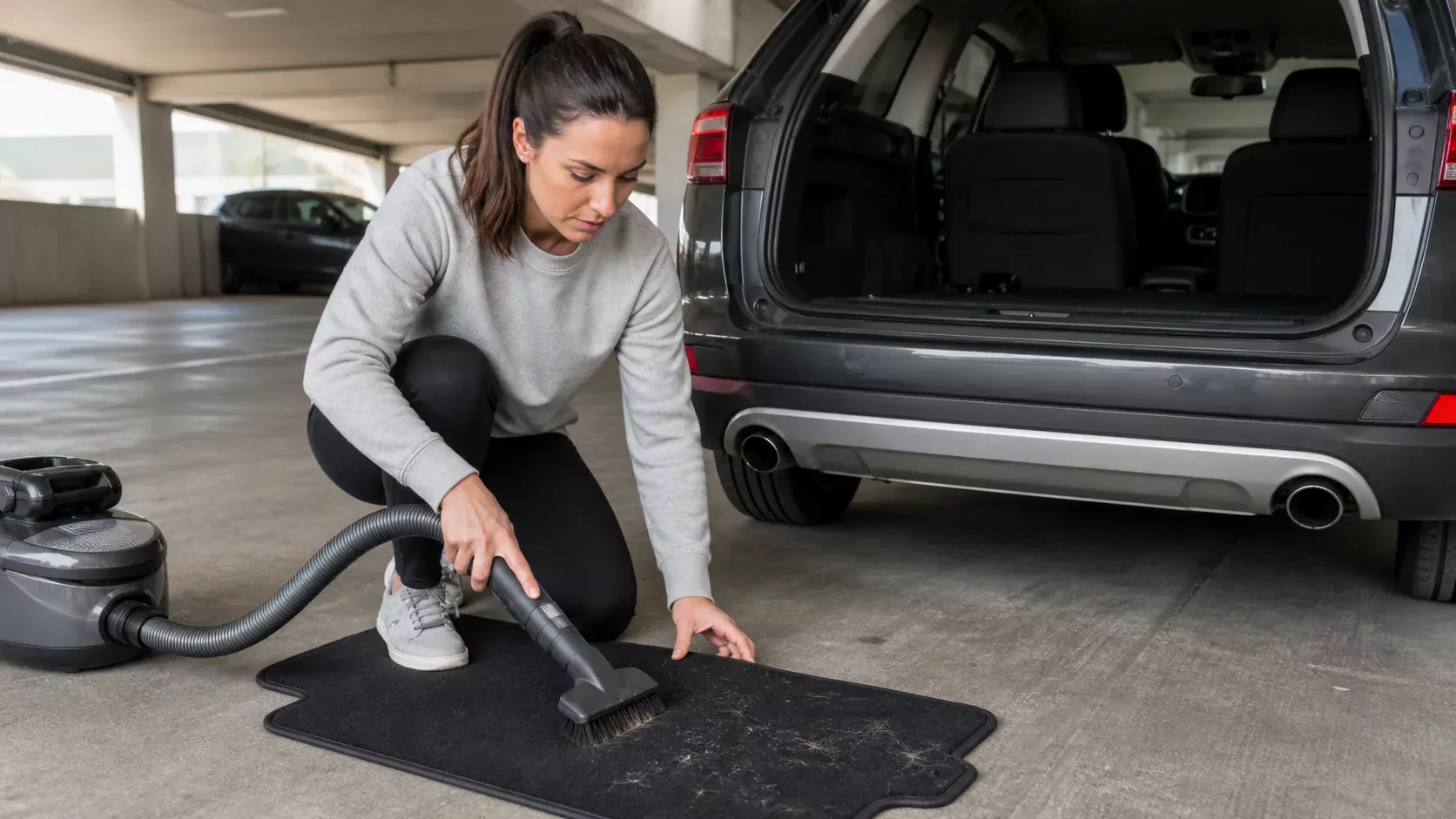
Use the floor brush on carpeted footwells. Work from the center toward the edges, then check the pedal-side area, door-side edge and the floor revealed when an adjustable seat moves. Treat fixed carpet, removable carpeted mats and rubber mats as different surfaces. For any step beyond dry vacuum pickup, follow the instructions supplied for that specific surface.
How do you remove pet hair from car-seat seams and tight gaps?
Switch to the crevice tool after the open panels are complete. Use it along the seam between the seat back and base, beside seat-belt buckles, around accessible seat pockets and in gaps where the attachment fits without force. Move adjustable seats forward or backward to reach the floor below them; do not dismantle a seat or interfere with wiring or controls as part of this routine.
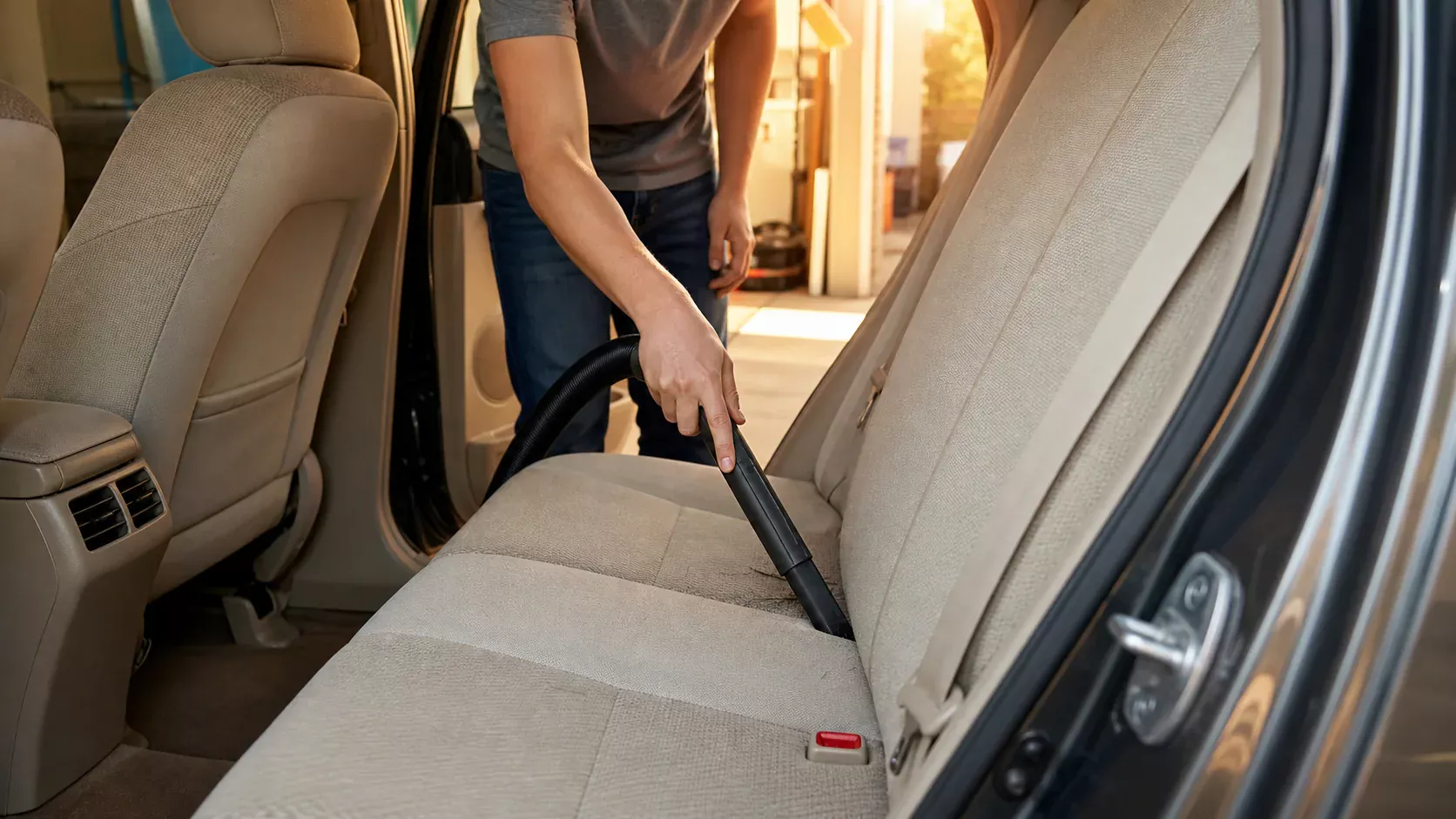
Finish one gap before moving to the next. That makes it clear whether the nozzle reached the visible hair or whether the gap requires guidance from the vehicle manufacturer. Avoid improvising with sharp objects, adhesive tape, stones or stiff tools on upholstery. Those methods are not part of this evidence-bounded routine and can introduce a new surface risk.
What is the best order for car pet-hair removal?
- Clear the cabin. Remove loose belongings, covers and removable mats.
- Work from the top down. Start with higher upholstered panels and seat backs.
- Vacuum open cloth areas. Use the upholstery nozzle on seat panels and bolsters.
- Clean carpet separately. Use the floor brush on footwells and vacuum removable carpeted mats outside the cabin.
- Finish narrow areas. Use the crevice tool in accessible seams, pockets and gaps.
- Inspect before reassembly. Check each zone from another angle and repeat only where hair remains visible.
Which attachment belongs in each area?
| Car area | Starting tool | What to inspect |
|---|---|---|
| Cloth seat panel | Upholstery nozzle | Center panel, bolster and stitching |
| Carpeted footwell | Floor brush | Open floor, edges and corners |
| Removable carpeted mat | Vacuum separately | Face and border before returning it |
| Seat seam or pocket | Crevice tool | Visible gap where the nozzle fits freely |
| Small loose pickup | Lint roller | Open surface with a few remaining strands |
This table is a route map, not a product comparison. Consumer Reports notes that a lint roller is useful for smaller cleanups, while a cordless handheld vacuum can address larger messes, including pet hair, in its review of practical car accessories.
What should you avoid during a dry pet-hair cleanup?
Do not turn a hair-removal pass into an unsourced upholstery treatment. Water, cleaners and stain products create a separate task with separate material requirements. Do not assume a method shown for cloth belongs on leather or vinyl. Avoid claims that a particular attachment is universally safe, removes all embedded hair, or works in a fixed number of minutes. Vehicle interiors, upholstery weaves and the amount of hair differ.
Also avoid mixing product selection with this informational page. Someone searching for a pet hair removal tool for a car may want to know which form fits a seat, mat or seam. The useful answer is the area-to-attachment map above. A buying decision should still be based on the tool instructions, dimensions and compatibility with the owner’s actual vehicle surfaces.
How can you check the car before putting everything back?
Pause before replacing mats, covers and travel items. Open one door at a time and look across the seat instead of only looking straight down. Check the seat center, outer bolster, buckle seam and the strip where the seat back meets the base. On the floor, compare the open footwell with its edges and the area beneath movable seats.
Run a clean hand just above the fabric without rubbing it. If you see loose strands, repeat the matching vacuum step on that zone. Empty or maintain the vacuum according to its instructions. Return every mat to its intended position and confirm it lies as the vehicle maker intends. A brief note such as “rear seat seam needed a second pass” can make the next cleanup easier to plan without pretending it is a laboratory result.
Frequently asked questions
Can a handheld vacuum remove pet hair from a car?
A handheld vacuum can be useful for larger car cleanups that include pet hair, according to Consumer Reports. Check that its attachments fit the seat, carpet and narrow areas you need to clean, and follow both the vacuum and vehicle instructions.
Can I use the same attachment on seats, mats and seams?
Use the attachment suited to the area: an upholstery nozzle for cloth seat panels, a floor brush for carpet, and a crevice tool for accessible narrow gaps. Removable mats should be taken out and cleaned separately.
How often should I remove pet hair from my car?
The cited sources do not set a pet-hair schedule. Inspect the seats, mats and gaps, then clean when visible buildup makes a pass useful for your household.
What if hair is still visible in the carpet?
Repeat the floor-brush vacuum pass on that visible zone. Check the carpet or mat instructions before adding any wet method, brush or cleaning product.
Can I use this routine on leather seats?
This guide is limited to dry pickup on cloth upholstery and carpeted areas. Follow the vehicle’s leather-care instructions rather than transferring a cloth-seat method to leather.
Related pet-hair guides
- How to remove pet hair from carpet
- How to remove pet hair from furniture
- How to remove pet hair before laundry
- Pet hair remover glove for upholstered furniture