How to Use a Pet Hair Remover Glove on Upholstered Furniture

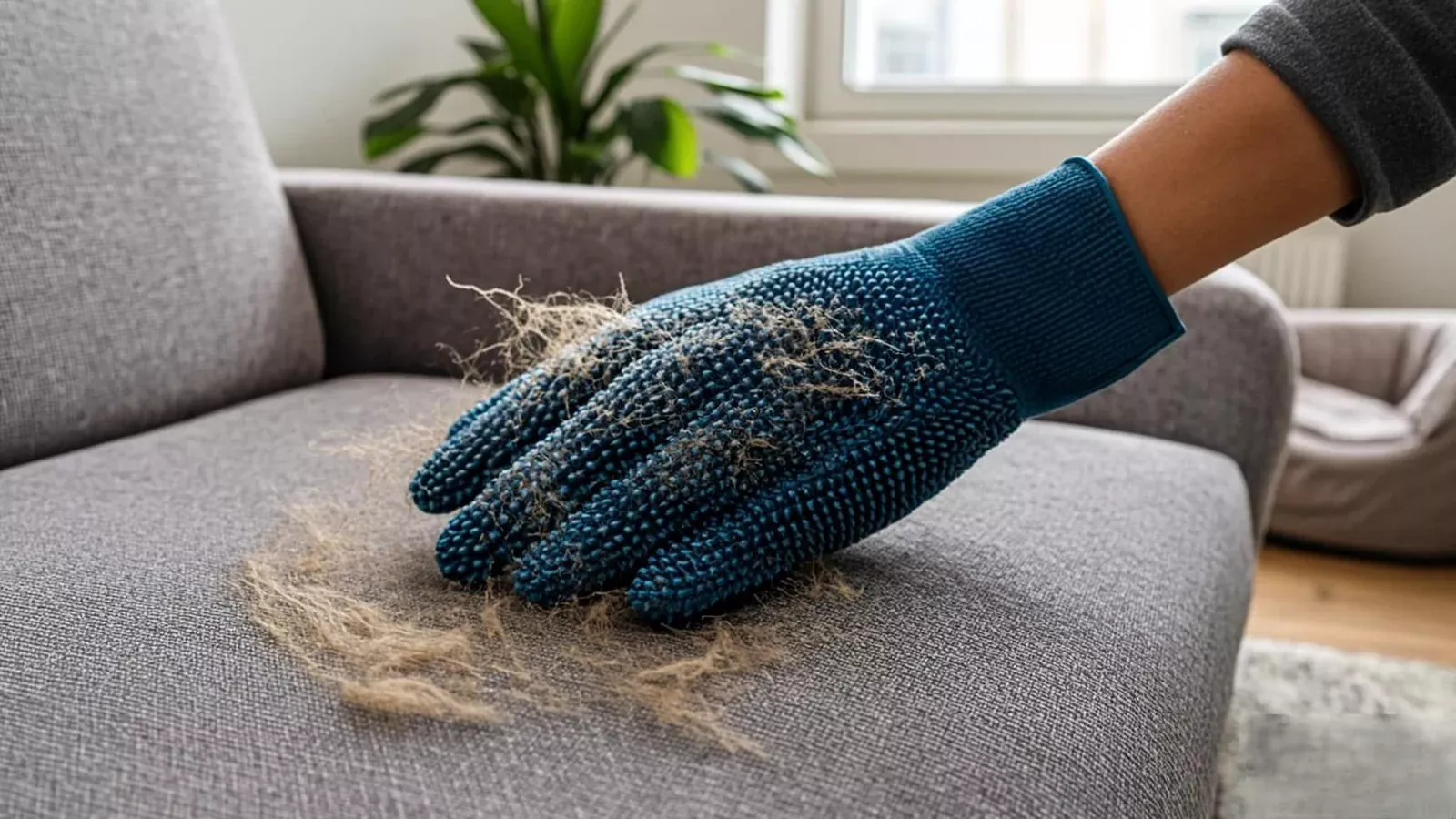
Removing embedded fur from upholstered furniture can feel like a never-ending chore, especially if your pet treats the sofa as a second bed. A pet hair remover glove lets you lift hair from fabric surfaces by simply stroking the material with a textured palm.
Key takeaways
- Test the glove on a hidden area of your upholstery before full use to check for snagging or color transfer.
- Work in one direction to gather hair into manageable clumps, then switch to a lint roller or vacuum for fine particles.
- Rinse the glove after each session and let it air-dry to keep the textured surface effective.
- Pair the glove with a reusable pet hair remover for laundry to catch loose fur that ends up on washable covers.
- Store the glove flat or hung by the cuff to prevent the silicone or rubber nubs from deforming.
Why can pet hair be difficult to lift from upholstery?
Hair can sit on the surface, settle along seams, or become caught in a fabric’s texture. That is why the first pass should be observational: check the care label, look for loose threads, and test the glove on a hidden area. A glove is a collection tool, not proof that every upholstery type will respond the same way.
If the surface changes, pills, or snags during the test, stop and use the care method supplied by the furniture maker. This surface-first approach matters more than pressing harder or repeating unsupported “hacks.”
What types of upholstery work well with a pet hair remover glove?
A reusable pet hair remover glove can be used on most common upholstery fabrics, but results vary depending on the surface. The table below compares observable use cases, handling, and maintenance considerations for different materials. These observations come from everyday household use and general cleaning guidance, not from laboratory testing.
| Upholstery type | How the glove interacts | Handling tip | Maintenance note |
|---|---|---|---|
| Tight-weave cotton or linen | Hair sits on top; glove collects it easily with light strokes. | Use short, overlapping strokes in one direction. | Check for pilling after repeated use; a fabric shaver can help. |
| Microfiber or synthetic suede | Hair clings to the fine fibers; glove pulls it into clumps. | Dampen the glove slightly to increase grip on stubborn patches. | Rinse the glove more frequently to prevent buildup in the nubs. |
| Velvet or chenille | Hair embeds in the pile; glove lifts it but may disturb the nap. | Stroke with the pile direction; avoid circular motions. | Use a soft brush afterward to realign the nap if needed. |
| Leather or faux leather | Hair wipes off easily; glove is effective but may squeak. | Wipe with a dry microfiber cloth first to reduce static. | Test on a hidden seam to ensure the nubs don’t leave marks. |
| Loosely woven or knit throws | Hair intertwines with yarns; glove can snag if pulled too fast. | Work slowly and lift the glove straight up after each pass. | Consider a mesh laundry bag when washing removable covers. |
How do you test a pet hair remover glove on upholstery before full use?
Before you run the glove across an entire sofa cushion, take a moment to check how the fabric responds. This step helps you avoid snags, discoloration, or unintended texture changes.
- Choose an inconspicuous spot—the back of a cushion, the lower side panel, or an area normally hidden by a throw pillow.
- Put on the pet hair remover glove and gently stroke the test area a few times in the same direction.
- Inspect the fabric under good light. Look for pulled threads, pilling, or any transfer of color from the glove to the upholstery.
- If the surface looks unchanged, proceed with the full cleaning. If you notice snagging, limit use to more robust fabrics in the room or switch to a softer pet hair remover tool designed for delicate textiles.
How can you use a pet hair remover glove on a fabric couch step by step?
This method focuses on a typical three-seater fabric couch, a common gathering spot for pet hair. Adjust the steps for armchairs or ottomans by working in smaller sections.
- Remove loose cushions and throws. Take off any removable covers if they are machine-washable. Shake out cushions outdoors or in a well-ventilated area to dislodge surface hair.
- Vacuum the frame and crevices. Use the upholstery attachment on your vacuum to clean along seams, under cushions, and around the base. This picks up dust and larger debris so the glove can focus on embedded hair.
- Put on the reusable pet hair remover glove. Make sure your hand is dry; moisture can reduce friction on some silicone nubs. If the glove feels loose, adjust the wrist closure for a snug fit.
- Start at the top of the backrest. Stroke downward in overlapping rows, applying light to moderate pressure. You should see hair rolling into small clumps or tubes. Gather these clumps with your free hand and discard them.
- Move to the seat cushions. Work from the back edge toward the front, keeping strokes parallel. For corners and piping, use the fingertips of the glove to wiggle into tight spaces.
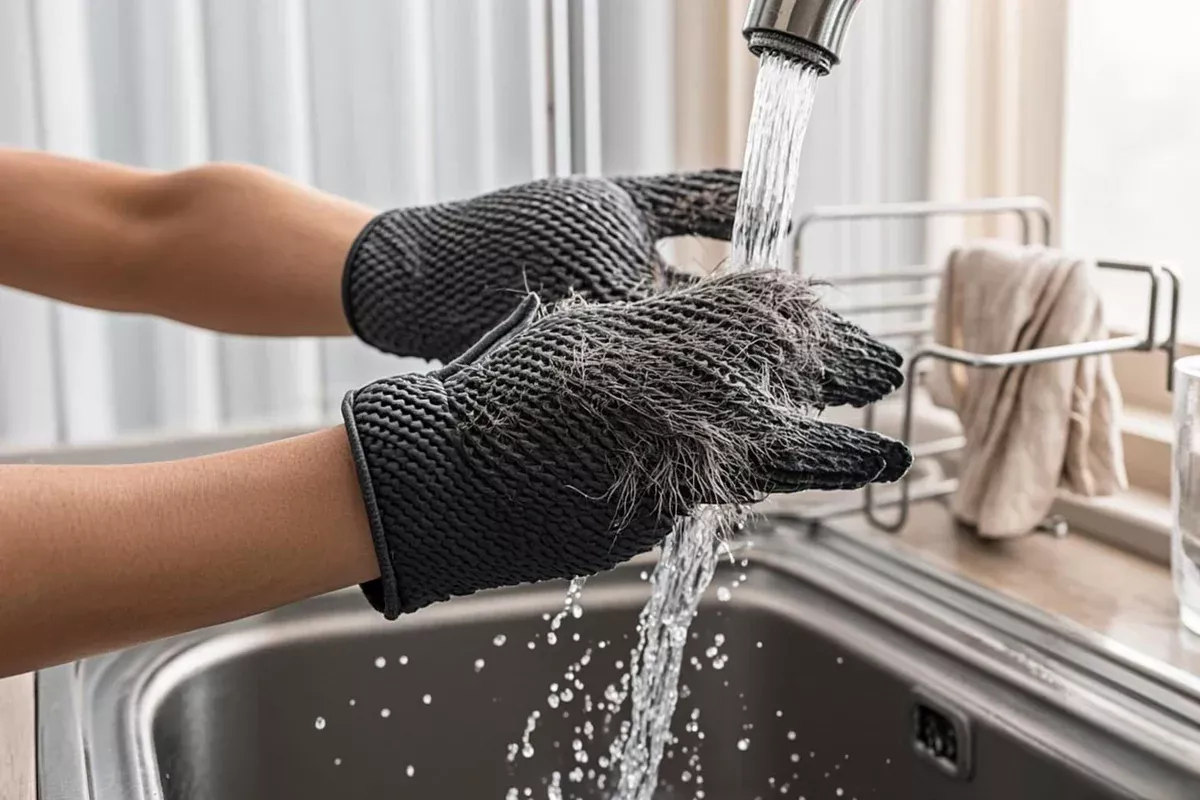
- Address the armrests. Armrests often collect oils from both pets and hands. If the glove loses grip, rinse it quickly under running water, shake off excess moisture, and continue.
- Finish with a lint roller or damp cloth. After the glove has removed the bulk of the hair, go over the entire couch with a lint roller or a lightly dampened microfiber cloth to catch any remaining fine particles.
- Replace cushions and covers. If you washed removable covers, make sure they are completely dry before putting them back. Consider adding a washable throw blanket to high-contact areas for easier maintenance between glove sessions.
How do you clean and store a pet hair remover glove?
Keeping the glove clean ensures it continues to pick up hair effectively. Hair, dander, and dust can fill the spaces between the nubs, reducing friction over time.
- Rinse immediately after use. Hold the glove under lukewarm running water, textured side down. Use your fingers to gently rub the nubs and dislodge trapped hair. Most of the hair will rinse away in clumps.
- Use mild soap if needed. If the glove feels greasy, add a drop of mild dish soap to the palm area and work it through the nubs. Rinse thoroughly until the water runs clear.
- Shake off excess water. Flick the glove several times to remove droplets, then pat the outside with a dry towel. Avoid wringing or twisting, which can deform the shape.
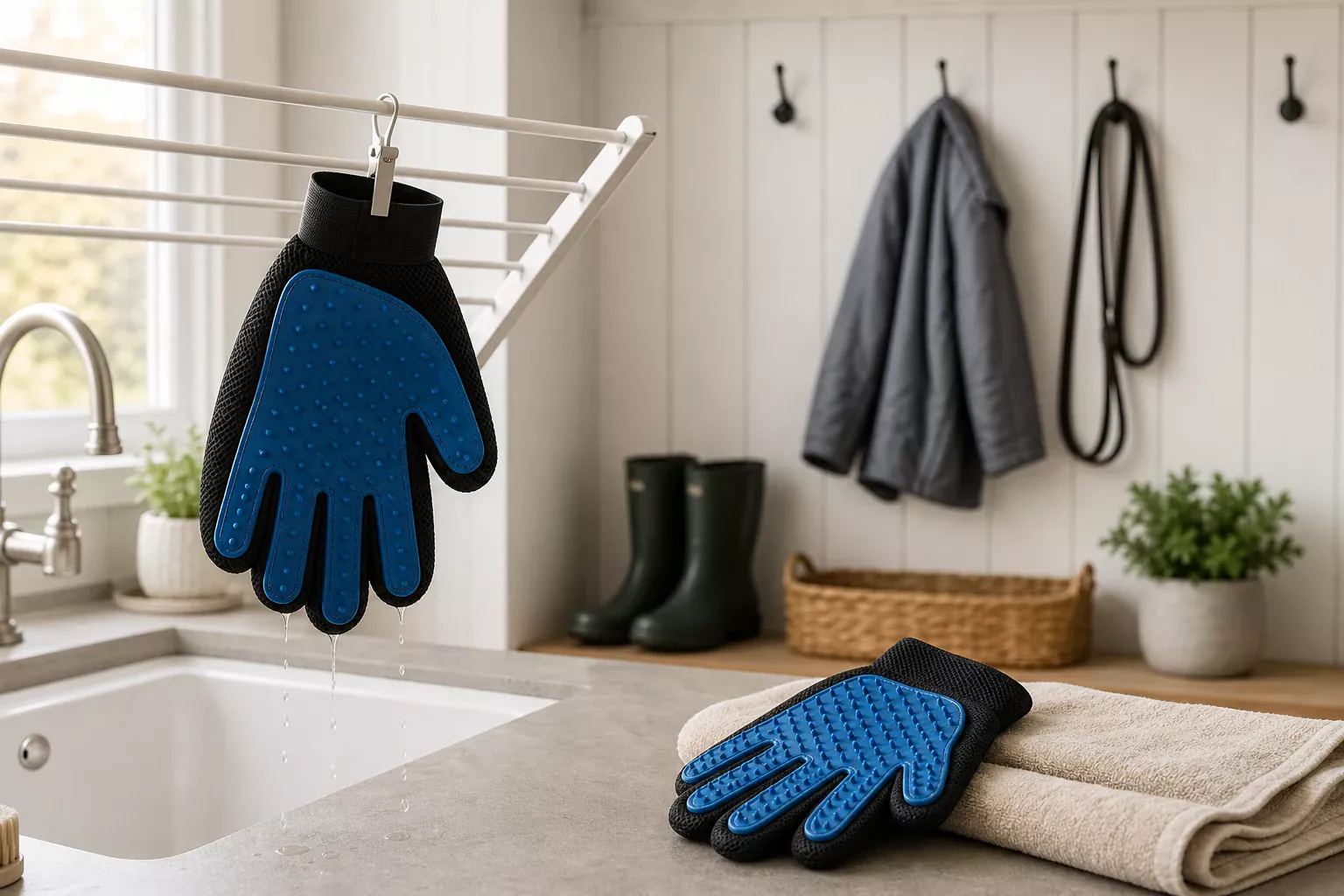
- Air-dry completely. Place the glove textured side up on a drying rack or hang it by the cuff. Do not put it in a tumble dryer or expose it to direct heat sources, as high temperatures can warp the material.
- Store flat or hung. Once dry, keep the glove in a drawer or hang it on a hook near your cleaning supplies. Storing it with heavy items on top can flatten the nubs and reduce their effectiveness over time.
Can a pet hair remover glove help with laundry?
While the glove itself is not a laundry product, it plays a supporting role in a broader pet hair management routine. After you use the glove on upholstery, you can toss removable cushion covers into the washing machine along with a reusable pet hair remover for laundry. These tools—often silicone or rubber disks—move freely in the wash and help collect loose hair that would otherwise redeposit on fabrics. For more tips on integrating different tools, see our cleaning guides.
What are some practical questions about using a pet hair remover glove?
Can I use a pet hair remover glove on a damp couch?
It is usually better to work on a dry surface. Damp fabric can cause hair to clump and smear rather than lift cleanly. If you need to spot-clean a stain first, let the area dry completely before using the glove.
How often should I use the glove on my furniture?
Use it when visible hair begins to collect rather than following a universal schedule. Shedding, fabric texture, and how often a pet uses the seat all change the workload.
What if hair remains after the glove pass?
Stop if extra pressure changes the fabric. Use the upholstery attachment permitted by the care label for seams and remaining loose hair, then reassess the surface under good light.
Can I use the same glove on my pet?
Only if the manufacturer explicitly identifies that glove for grooming and provides directions for that use. A household cleaning glove should not automatically be treated as a grooming product.
What should I do if the glove leaves a residue on dark fabric?
Some silicone gloves can leave a faint, powdery mark on very dark upholstery. If this happens, wipe the area with a dry microfiber cloth. To prevent it, rinse and thoroughly dry the glove before use, as residue is often more noticeable when the glove is new or damp.
When is a glove only one part of the job?
This guide focuses on testing, using, cleaning, and storing a pet hair remover glove. For a complete furniture routine that also covers cushions, seams, removable covers, and careful vacuuming, use our step-by-step furniture pet-hair removal guide.
Next steps for a hair-free home
Once you have established a routine with your pet hair remover glove, consider pairing it with a few supporting habits. Keep a lint roller in the living room for quick touch-ups between deeper cleaning sessions. Wash removable covers regularly and use a pet hair remover for laundry to catch loose fibers. Browse our shop for additional tools that fit your home’s surfaces and your pet’s coat type. Small, consistent actions tend to keep upholstery looking fresher with less effort over time.
Sources
- CDC: Cleaning and Disinfecting Pet Supplies — supports following item-care instructions and drying cleaned pet items.
- US EPA: Read the Label First—Protect Your Pets — supports reading product directions and storing household cleaners away from pets.