Pet Cleaning Kit for a Dog-Friendly Office: A Practical Setup

WORKPLACE PET CLEANUP
A pet cleaning kit for a dog-friendly office should handle small, predictable messes without turning a shared cabinet into a shelf of mystery products. Build the kit around the surfaces in the workplace, keep every cleaner in its original container, separate routine cleaning from disinfection, and give staff a clear way to block a wet area and report anything beyond a minor cleanup.
What should a workplace pet cleaning kit actually do?
A workplace kit should cover small events that employees can handle without specialist equipment: tracked mud at an entrance, loose hair on a washable chair cover, spilled drinking water, or a waste-bag failure that has not spread beyond a limited area. It should not invite improvised treatment of blood, unknown chemicals, damaged flooring, or a large contamination event.
The boundary matters in an office because the room is shared. OSHA standard 1910.22 requires workrooms and passageways to remain clean, orderly, and, as far as feasible, dry. A kit therefore needs both cleanup materials and a way to guard a wet area. The person responding should also know how to keep the aisle open or redirect people until the floor is dry.
What belongs in a basic pet cleaning kit for an office?
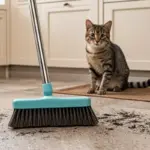
Start with dry, low-complexity tools. Absorbent white cloths make it easier to see what has transferred from a surface. Disposable bags contain waste. A lint roller or reusable fabric tool handles loose hair on compatible upholstery. Disposable gloves, paper towels, and a folding caution sign round out the response. Add liquids only after facilities staff approve them.
| Kit item | Office use | Selection check |
|---|---|---|
| White absorbent cloths | Blot water or fresh moisture | Washable or disposable under office procedure |
| Disposable waste bags | Contain solid waste and used disposable material | Strong enough to close without leaking |
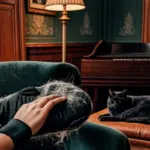
| Lint tool | Lift loose hair from compatible fabric | Pretest on the exact upholstery |
| Disposable gloves | Reduce direct contact during cleanup | Correct size and stored dry |
| Floor sign or barrier | Warn people about a wet or closed area | Stable, visible, and easy to deploy |
| Approved surface cleaner | Clean a named office surface | Original label lists that use and method |
Do not decant products into drinks bottles or unmarked spray containers. EPA guidance says household cleaners and pesticide products should remain in original containers and should not be sprayed or stored near pet food or water dishes. The office should also avoid stocking five cleaners that appear interchangeable. One approved product for each necessary surface is easier to train, track, and replace.
Choose by surface, not by the word “pet”
A product marketed for pet messes may still be unsuitable for a particular stone, wood finish, textile, or electronic surface. Check the floor or furniture care instructions first. Record the permitted method on the response card. If the office cannot verify compatibility, use dry containment and contact facilities rather than testing a new liquid in the middle of a workday.
Keep animal-contact tools separate
A towel used on a dog’s damp paws should not return to the same compartment as clean desk cloths. Use separate washable bags or clearly assigned trays. Do not use a surface disinfectant on a dog’s coat or paws. CDC facility guidance specifically says not to wipe or bathe pets with disinfection products.
How should staff respond to a small pet-related spill?
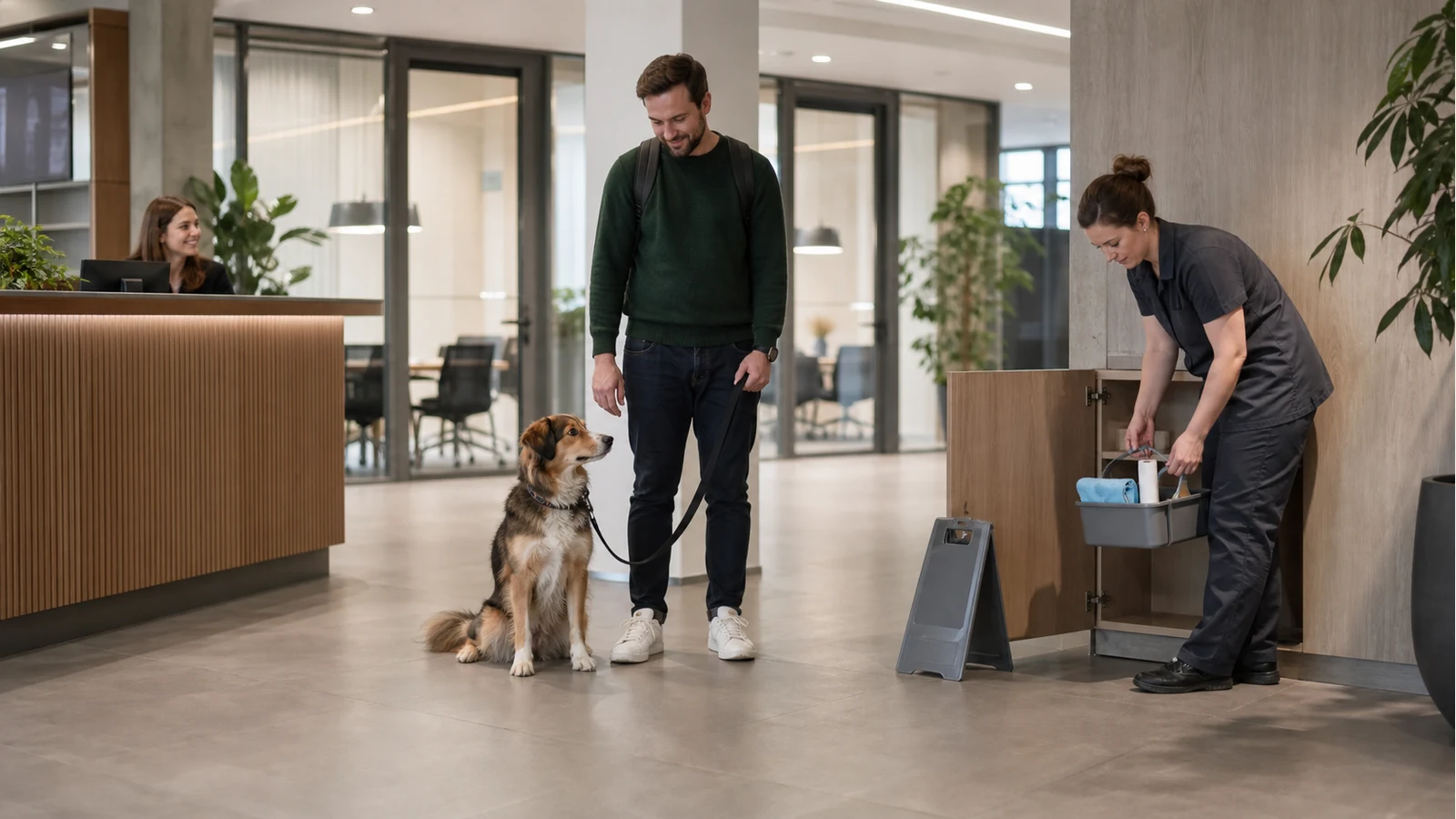
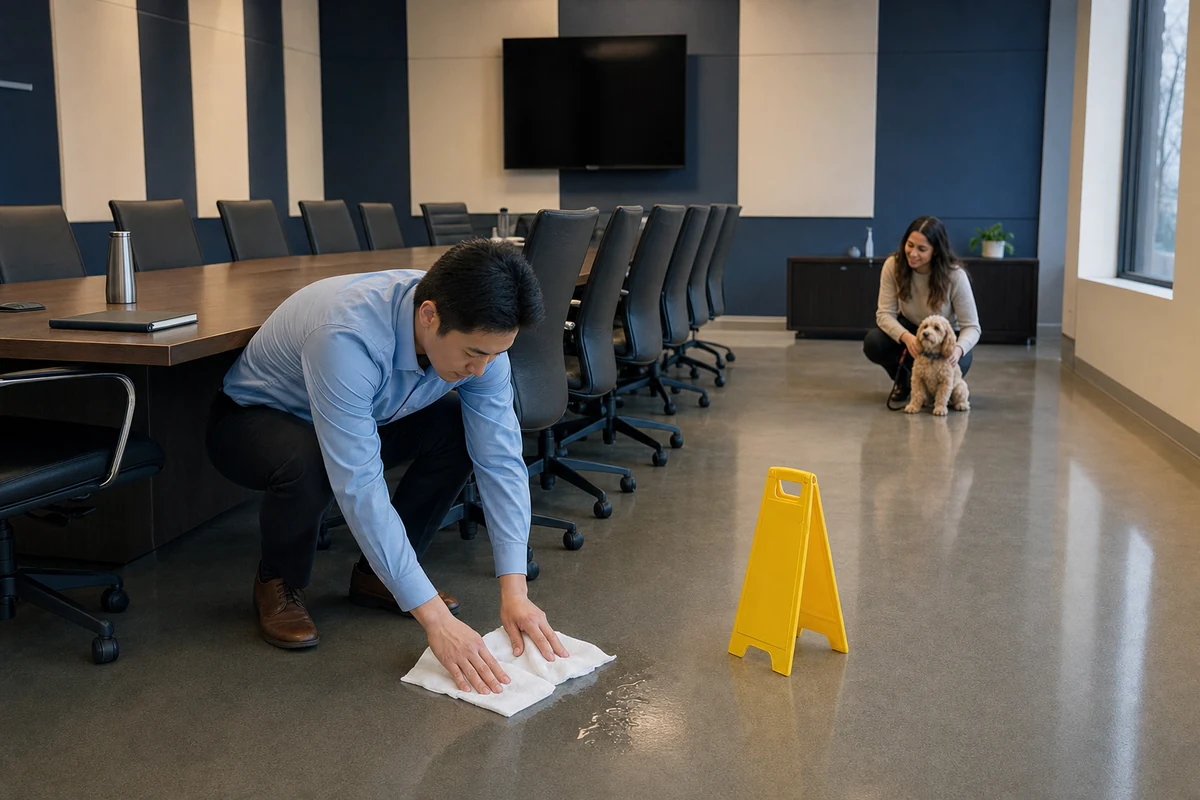
The first job is control, not scrubbing. Move the animal and nearby people away, place the floor sign, and identify the material. Clear drinking water is handled differently from urine, vomit, blood, or an unknown liquid. If the material falls outside the office’s minor-spill procedure, stop and notify the designated facilities contact.
- Keep the dog and foot traffic away from the affected area.
- Place the warning sign without blocking an emergency route.
- Identify the spill and check the office response card.
- Lift solids or blot moisture without spreading the boundary.
- Clean the surface with its approved, label-directed method.
- Dry the surface, reset the kit, and record or report the event.
Clean before considering disinfection
The CDC distinguishes cleaning from disinfection. Cleaning removes dirt and germs with soap, detergent, water, and physical action. Disinfection uses chemicals to kill germs and is an additional step for certain situations. Visible soil can interfere with disinfection, so applying a disinfectant over an unclean surface is not a shortcut.
Follow the complete product label
If an approved disinfectant is needed, check the use site, dilution, application method, contact time, ventilation, protective equipment, and any rinse requirement. EPA explains that a surface must stay visibly wet for the full contact time stated on the label. Do not borrow a timing number from another product, and never mix products unless the directions explicitly permit it.
Where should the kit be stored and how should it be reset?
Store the kit near the areas where small incidents are likely, but outside the dog’s reach and away from food preparation. A closed facilities cabinet near reception may work better than an open shelf beside a communal water bowl. If the office has several floors, a compact dry kit on each floor can reduce response time while liquids remain under controlled storage.
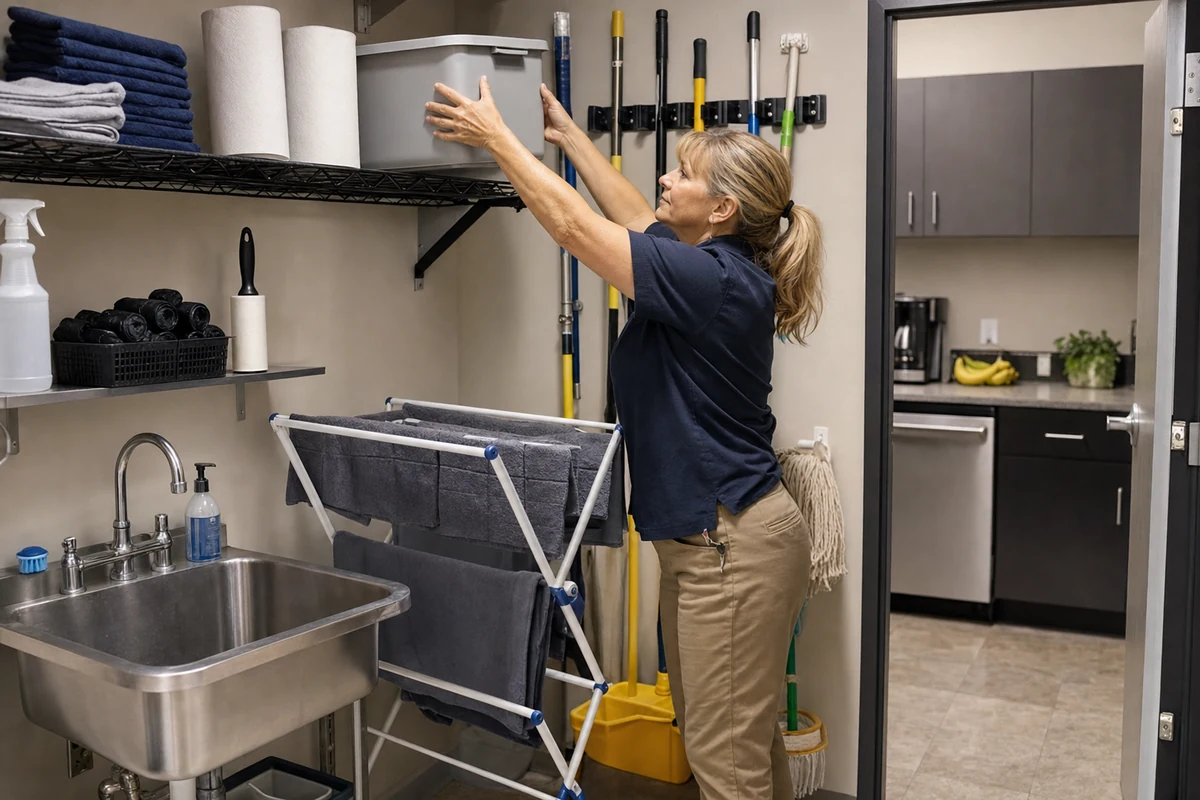
After use, discard single-use material through the office’s normal waste process unless another procedure applies. Clean reusable tools according to their instructions, let them dry completely, and return them only when clean. A damp cloth sealed in the caddy creates another maintenance problem. Restock bags, gloves, and towels before closing the cabinet.
| Reset check | Ready condition | Escalate when |
|---|---|---|
| Reusable cloths | Clean and fully dry | Stained, damaged, or cannot be cleaned as directed |
| Liquid containers | Closed, upright, original label readable | Leaking, unmarked, expired, or label damaged |
| Floor sign | Clean, stable, and easy to reach | Hinge or feet no longer hold it securely |
| Response card | Current contact and surface instructions | Flooring, products, or responsible staff change |
What should the dog-friendly office policy say?
A useful policy fits on one page. Name the areas where dogs may go, where bowls belong, who supplies waste bags, who handles a minor accident, and which events must be reported. Include the facilities contact and a rule that employees follow building and product instructions. The policy should also preserve clear aisles, exits, and accessible routes.
Assign routine pet-item care rather than assuming someone will notice it. The CDC’s 2026 pet-supply schedule gives concrete reference points: wet-food bowls are cleaned after each use, dry-food and water bowls daily, bedding weekly, and toys monthly. A workplace may adapt responsibility and location, but it should not invent a product claim or ignore the item’s own instructions.
For loose hair on shared seating, use the methods in the guide to remove pet hair from furniture. For entrance tracking, the dog paw cleaning routine helps separate outdoor debris from the office response. The wider PawPureHome cleaning guides organize cleanup by surface and source.
Frequently asked questions
Should every employee use the pet cleaning kit?
Only if the office policy permits it and the task is within the minor-cleanup procedure. Staff should not guess at an unknown spill or product. The response card should identify the person responsible and the conditions that require facilities, building management, or another trained responder.
Does an office kit need disinfectant?
Not for every event. CDC guidance says cleaning is usually enough for many routine pet items, while disinfection is an additional step in specified situations. If the office stocks a disinfectant, facilities staff should approve it for the named surface and retain the original label.
Can cleaning products be stored beside the dog bowls?
No. EPA advises against spraying or storing cleaners and pesticide products near pet food or water dishes. Keep bowls in their assigned feeding area and store the closed kit in a controlled cabinet where the dog cannot reach it.
What if a dog has an accident on office carpet?
Block foot traffic, remove the animal, contain the fresh material, and follow the building’s carpet procedure. Do not saturate the area or test an unfamiliar product. The guide to removing pet stains from carpet explains the material-first approach.
How often should the kit be checked?
Check it after every use and on a regular facilities round. Replace damaged supplies, verify that labels remain readable, dry reusable materials, and update the response card whenever the office changes flooring, cleaning products, storage location, or responsible contacts.
Sources and further reading
- CDC: About Cleaning and Disinfecting Pet Supplies, updated February 18, 2026, retrieved July 28, 2026.
- CDC: When and How to Clean and Disinfect a Facility, retrieved July 28, 2026.
- US EPA: Read the Label First, Protect Your Pets, updated 2026, retrieved July 28, 2026.
- US EPA: Selected EPA-Registered Disinfectants and Directions for Use, retrieved July 28, 2026.
- OSHA: 1910.22 General Requirements for Walking-Working Surfaces, retrieved July 28, 2026.