How to Remove Pet Urine Stains From Carpet


When a pet has an accident on the carpet, acting quickly can make a difference in how to remove pet urine stains from carpet. Start by blotting the damp area with plain white paper towels to absorb as much liquid as possible. Then apply a solution of ¼ teaspoon of liquid dishwashing detergent (nonbleach, non-lanolin) mixed with one cup of lukewarm water, blotting repeatedly.
Key takeaways
- Blot fresh urine immediately with white paper towels—never rub—to lift liquid before it spreads deeper.
- Test any cleaning solution on a hidden carpet section first to check for colorfastness or adverse reactions.
- Use a detergent-and-water solution followed by a vinegar rinse for many urine stains, but recognize that some dye damage may be permanent.
- For old or set-in stains, repeated gentle blotting and thorough drying are essential; complete odor removal can be challenging, especially with cat urine.
- Always store cleaning products in original containers, out of pets’ reach, and follow label precautions to protect household animals.
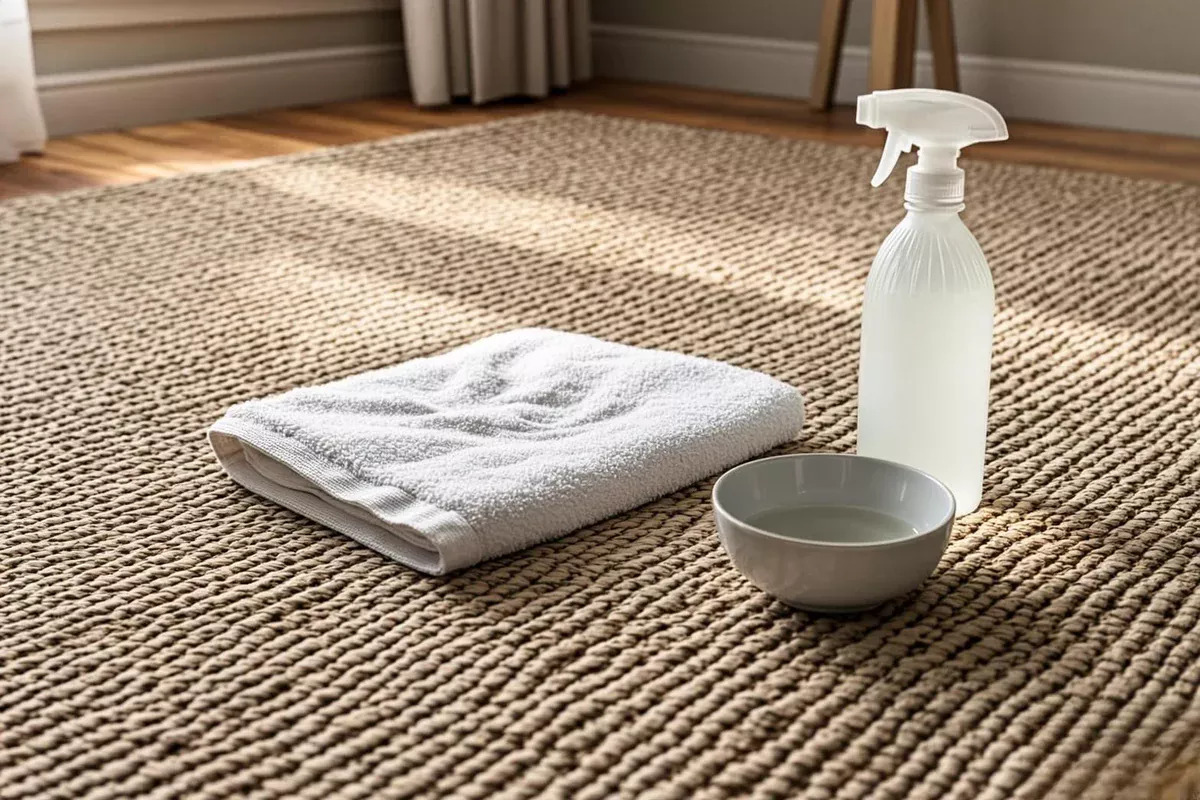
What should you do the moment you discover fresh pet urine on the carpet?
How to remove pet urine stains from carpet starts with a fresh, localized spot: blot with plain white towels rather than rubbing. Replace the towels as they absorb moisture. The Carpet and Rug Institute’s technical bulletin begins with prompt blotting and explains that results vary with the carpet dyes, construction, prior treatments, urine composition, and elapsed time.
Once you’ve lifted as much liquid as possible, you can move to a cleaning solution. The Carpet and Rug Institute recommends a mild detergent mixture: ¼ teaspoon of liquid dishwashing detergent (nonbleach and non-lanolin) per cup of lukewarm water. Apply this solution to a clean white cloth or paper towel, not directly onto the carpet, and blot the stain. Work from the outside edge toward the center to avoid spreading. Rinse by blotting with plain lukewarm water, then absorb the moisture with dry towels. Repeat the detergent and rinse steps as long as you see transfer to the towel or improvement in the stain.
The CRI procedure follows detergent application and water rinsing with one cup of white vinegar mixed with two cups of water, then blotting and drying under weighted white towels. Treat those measurements as carpet-specific source guidance, not a recipe for upholstery, wood, or other surfaces.
For more guidance on immediate stain management, visit our cleaning guides.
How can you test your carpet before using any cleaning product?
Before you apply any solution—even a mild detergent—test it on an inconspicuous area. Choose a spot inside a closet, under a piece of furniture, or in a corner. Apply a small amount of the cleaning mixture to a white cloth and blot the test area. Observe the test area as directed by the cleaner label, then check the cloth and the carpet for color transfer, fading, or texture changes. If you see dye on the cloth or a lightened patch, stop and try a different approach or consult a professional. This step is especially important on wool, sisal, or antique carpets, but it’s a wise habit for any carpet.
Also, consider the carpet’s construction. Some modern carpets have backings designed to resist spills and prevent liquid from penetrating to the cushion. If you know your carpet has such a barrier, you may have more time to address the stain before it reaches the pad. However, seams and edges can still be vulnerable, so always check those areas after cleaning. If you’re unsure about your carpet type, check with the manufacturer or installer, or explore our shop for cleaning tools suited to different surfaces.
When should an older urine stain be assessed professionally?
An older stain may involve the carpet backing, pad, seams, or subfloor. Repeated surface treatment can add moisture without reaching the source. Check for changes in color, texture, backing, and seam condition.
If the stain has altered the dye, the odor remains after full drying, or the affected area extends below the carpet face, contact the carpet manufacturer or a qualified cleaner. This page focuses on a fresh, localized urine spot rather than promising removal of permanent dye or backing damage.
Why does carpet construction change the cleaning decision?
A hidden-area test is necessary because fiber, dye, backing, finish, and prior treatments vary. Do not assume a method suitable for one synthetic carpet also suits wool, plant fiber, antique, or hand-dyed carpet.
| Carpet situation | First check | Reason to stop |
|---|---|---|
| Known synthetic carpet | Manufacturer care guidance and hidden-area test | Dye transfer, texture change, or backing movement |
| Wool or specialty fiber | Fiber-specific instructions | No confirmed compatibility for the proposed cleaner |
| Antique or hand-dyed rug | Qualified rug-cleaning advice | Any color movement or uncertain construction |
What steps should you follow for a careful carpet-cleaning process?
Here’s a step-by-step sequence that incorporates surface checking and realistic storage guidance:
- Blot the area immediately. Use plain white paper towels to absorb as much urine as possible. Press firmly, replace towels, and repeat until barely damp.
- Test the solution. Apply a small amount to a hidden carpet section with a white cloth. Stop if color transfers or the texture changes.
- Apply detergent solution. If the test is successful, dampen a clean white cloth with the solution and blot the stain from the outside in. Do not pour directly onto the carpet.
- Rinse with water. Blot the area with a cloth dampened in plain lukewarm water to remove detergent residue.
- Follow the sourced rinse sequence. Use the vinegar-and-water step only as described in the CRI carpet guidance, then blot rather than scrub.
- Dry under white towels. Use a flat, non-fading weight and replace damp towels until the area is dry.
- Inspect and repeat if needed. Once dry, check for remaining stain or odor. If present, repeat steps 2–6. For persistent odor, consider an enzyme-based product from a pet store, following all label precautions.
- Store products safely. Keep all cleaning solutions in their original containers with labels intact. Store them in a secure cabinet out of reach of pets and children, away from food and water dishes.
For additional cleaning product options, browse our online shop.
How can you prevent urine damage to carpet backing and seams?
The CRI bulletin states that unattended urine moisture can weaken the bond between carpet layers and that seams can be vulnerable. Limit added moisture, blot and rinse as directed, and stop if the carpet bubbles, lifts, or separates at a seam.
Regular inspection of pet-frequented areas can help you catch accidents early. A black light can reveal dried urine spots that are invisible in normal light—urine will fluoresce under UV. Mark any spots you find with a small piece of tape, then treat them one by one using the methods above.
Questions you might have about removing pet urine stains
Why did my beige carpet turn pink or orange after a pet accident?
This color change often results from urine attacking the blue dyes in the carpet, leaving behind red and yellow tones. It may appear immediately or develop over weeks. This type of dye damage is usually permanent and cannot be reversed with cleaning.
Can I use laundry detergent or automatic dishwasher detergent on carpet stains?
No. These products can be too harsh, may contain bleach or lanolin, and can leave sticky residues that attract soil. Stick to a mild liquid dishwashing detergent that is nonbleach and non-lanolin, as recommended by the Carpet and Rug Institute.
How do I know if the urine has soaked into the carpet pad?
If the accident was large or went unnoticed for a while, the pad may be affected. Signs include persistent odor even after surface cleaning, or a stain that reappears after drying. In such cases, you may need to lift a corner of the carpet to inspect the pad, or call a professional cleaner.
Should you add another cleaner if the first routine does not work?
Not automatically. Check the carpet and product directions before combining or repeating treatments. If the affected layer is unclear, professional assessment is more useful than adding another product to the surface.
Sources
- Carpet and Rug Institute – Technical Bulletin: Pet Urine and Carpet
- EPA – Read the Label First: Protect Your Pets
What to do next
Once the carpet is dry, check the color, texture, seam condition, and odor. If the affected area extends below the carpet face or shows lasting dye change, stop repeating the surface routine and seek carpet-specific advice. If odor remains after the area dries, use the source-first guide for removing pet odors from carpet before adding another treatment. For other surface-first routines, use the PawPureHome cleaning guides; product formats for this job are grouped under stains and accidents.