DIY puzzles for dogs: 5 easy games you can set up at home

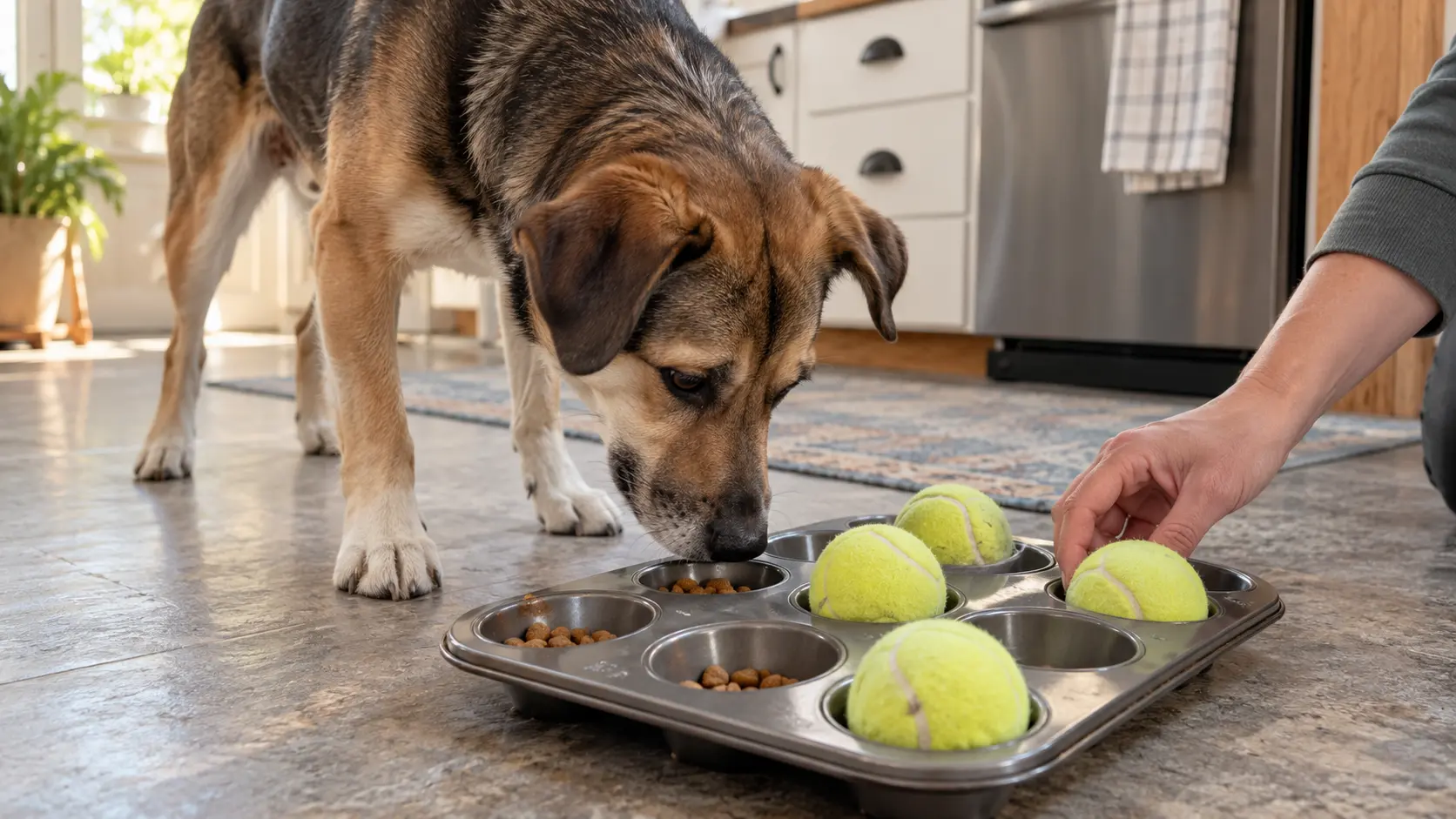
Want a simple indoor activity for your dog? A muffin tin, a clean towel, a few cardboard boxes, or part of your dog’s regular meal can become a quick puzzle. These DIY puzzles for dogs are meant for supervised play, not for leaving out while you go to work. Start with an easy win, then watch how your dog handles the materials.
Key takeaways
- Use your dog’s normal kibble or meal portion to fill a puzzle.
- Keep cardboard, fabric, balls, and other loose pieces under close supervision.
- Begin with an easy setup your dog can solve quickly.
- Stop the game if your dog chews or swallows the materials, gets frustrated, or guards the food.
If you were looking for homemade puzzle toys for dogs, the ideas below use ordinary household items rather than special equipment. Your dog’s chewing habits matter more than the puzzle’s difficulty label. A dog who mouths and swallows paper or fabric should skip those materials.
Before you set up a game
- Use familiar food. A portion of your dog’s usual kibble works well. If you use treats, count them as part of the day’s food rather than adding a large extra serving.
- Check the materials. Use clean items without staples, tape, string, sharp edges, loose labels, or small parts your dog could swallow.
- Stay close. The ASPCA’s canine DIY enrichment guide calls for close, active supervision and says to remove an item if a dog tries to ingest it.
- Make the first try easy. The Ohio State University Veterinary Medical Center’s guide to toys and puzzles recommends watching for frustration, stress, attempts to swallow pieces, and damage. If any show up, end the game and choose another setup.
5 DIY puzzles for dogs
1. Muffin tin and ball puzzle
You’ll need a muffin tin, a small portion of kibble, and a few sturdy toys that are an appropriate size for your dog. Put kibble in two or three cups, then cover just one or two of them. Let your dog sniff and nudge the covers aside. For a first try, leave one food-filled cup uncovered so the idea is easy to understand.
The ASPCA describes this basic setup using kibble in a muffin tin with toys on top. Keep a hand nearby and remove the covers if your dog tries to chew them. If your dog is a ball destroyer, skip this game rather than testing whether the balls will hold up.
2. Loose-fold towel search
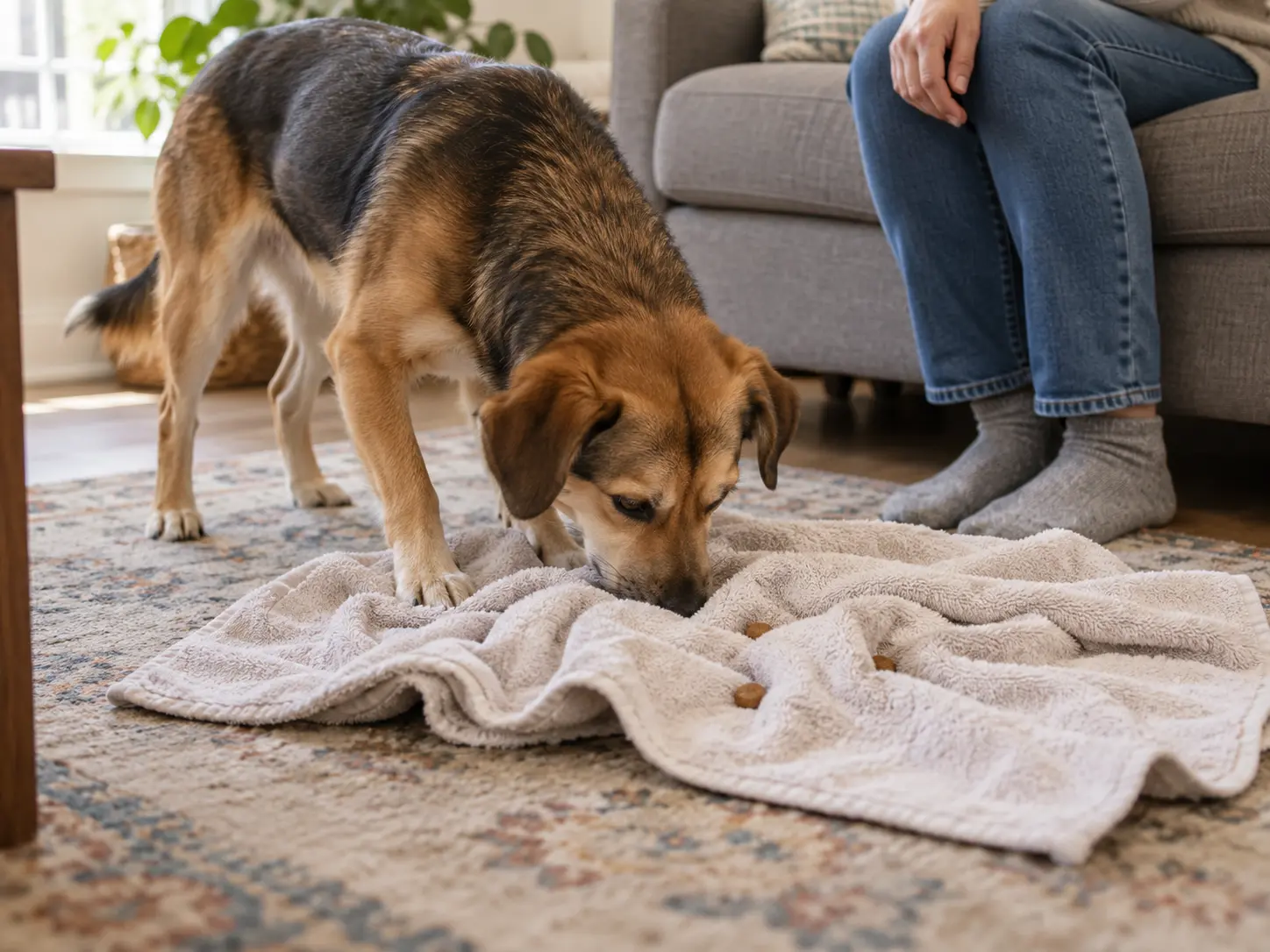
Spread a clean towel on the floor and scatter a few pieces of kibble across it. Fold one side over loosely so some pieces are hidden but easy to reach. Let your dog use their nose to open the folds. Add another loose fold next time if the first round is simple. Do not tie the towel into a tight knot, and put it away if your dog chews or pulls threads.
3. Nested cardboard boxes
Use two or three clean, plain cardboard boxes with no staples or tape. Put a few pieces of kibble in the smallest box, then set it inside a larger one. Leave the openings easy to reach and let your dog nose the boxes apart. Stay nearby. If your dog starts eating cardboard instead of searching for food, take the boxes away and try a no-prop scent game.
The ASPCA also includes a nested-box puzzle in its DIY enrichment ideas. Keep the boxes simple; a loose arrangement is plenty for a first attempt.
4. Folded paper-roll parcel
Take an empty toilet-paper tube or paper-towel tube. Fold one end inward, add a few pieces of kibble, and fold the other end loosely. Set it on the floor and let your dog nudge it open. Keep this to a supervised session, then pick up the tube. If your dog shreds and swallows cardboard, don’t use this one.
This is a short-lived puzzle, not a chew toy. The ASPCA lists a folded paper roll as a food puzzle and advises removing DIY materials when a dog tries to ingest them.
5. “Find it” kibble search
This one needs no box or toy. Start by placing one piece of kibble where your dog can see it, then say “find it.” Once your dog understands the cue, place a few pieces on the floor nearby while they watch. On later turns, hide them in easy spots around the same room, such as beside a chair leg. Keep food away from cleaning products, trash, and places your dog cannot safely reach.
The ASPCA recommends starting scent games with a treat tossed close to the dog, then making the search harder after the dog understands the game. There is no need to make every hiding place difficult. If your dog keeps looking back to you, make the next round easier.
How to pick the right puzzle for your dog
Pay attention to what your dog does with the setup. A dog who sniffs and nudges may enjoy the towel or “find it” game. A dog who likes moving objects may take to the muffin tin. A dog who tears up paper or fabric should not use those materials. Try the open-floor search instead, with you nearby.
Keep the first round short and easy. If your dog paws frantically, barks, walks away, or starts chewing the puzzle, pause and remove it. In a home with more than one dog, give them separate space for food puzzles so nobody has to compete over the food.
For a more structured, store-bought option, see our guide to puzzle toys for dogs. You can also browse the related Dog Toys & Enrichment articles.
Frequently asked questions
Are homemade dog puzzles safe for every dog?
No single household material suits every dog. Supervise the first session and watch for chewing, swallowed pieces, frustration, or food guarding. If a material is a poor fit, remove it and use a simpler game.
Can I use my dog’s regular kibble?
Yes. Using part of your dog’s regular meal keeps the game familiar and avoids turning every puzzle into an extra treat serving.
What should I do if my dog shreds the puzzle?
Take it away and pick up the loose pieces. Skip cardboard and fabric for a dog who eats them, and try the “find it” search with food placed openly on the floor while you supervise.
How do I make a dog puzzle harder?
Change one thing at a time after your dog can solve the easy version. Add one loose fold to the towel, cover one more muffin-tin cup, or hide kibble a little farther away. If your dog gets stuck, go back a step.