How to Remove Pet Hair from Carpet: A Surface-First Routine

FUR & HAIR ROUTINE
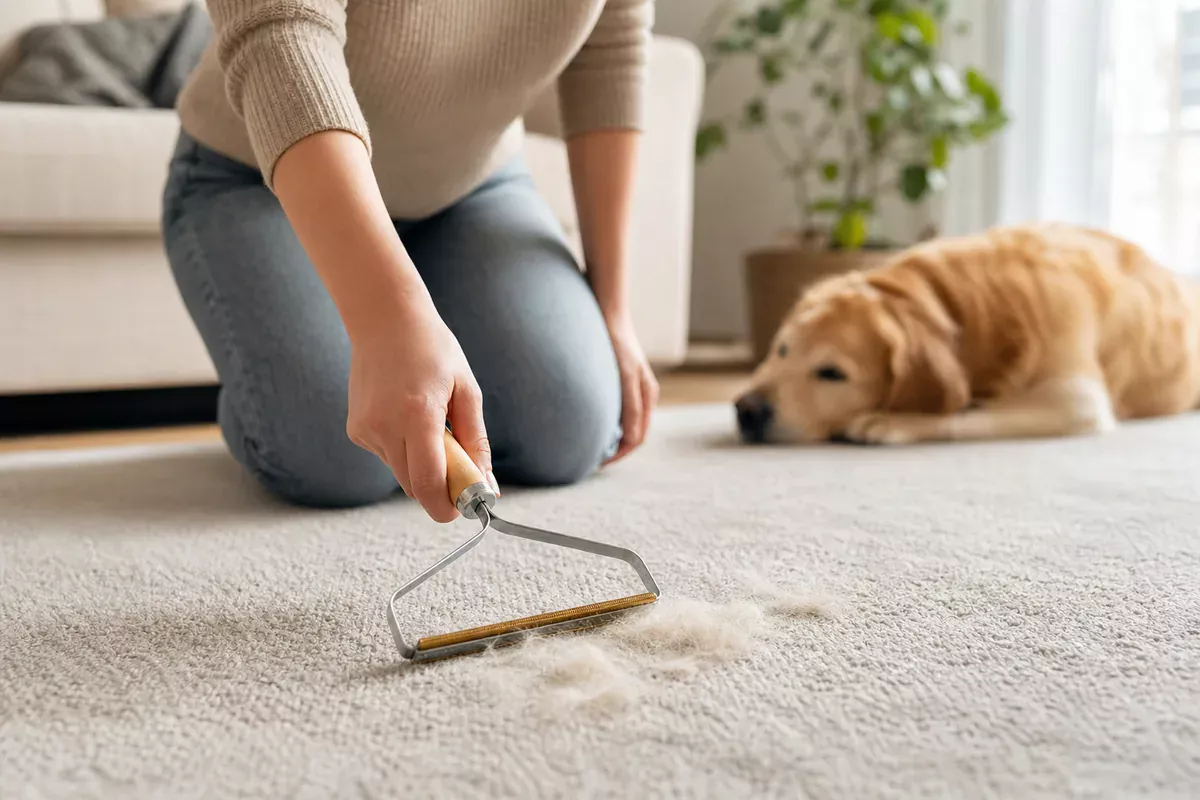
The most reliable way to remove pet hair from carpet is to loosen embedded strands first, gather them into visible rows, and vacuum only after the bulk has been lifted. This surface-first order prevents repeated passes and makes it easier to see which zones still need attention.
Quick answer
- Test any manual tool on a hidden carpet area before broader use.
- Work in short, overlapping strokes against the pile, then with it.
- Collect loosened hair before vacuuming the remaining fine debris.
- Clean the tool and vacuum components after the room is finished.
- Inspect and divide the carpet into zones.
- Loosen and gather visible hair.
- Vacuum the remaining fine debris.
- Check the result from a second angle.
Why does pet hair stay in carpet?
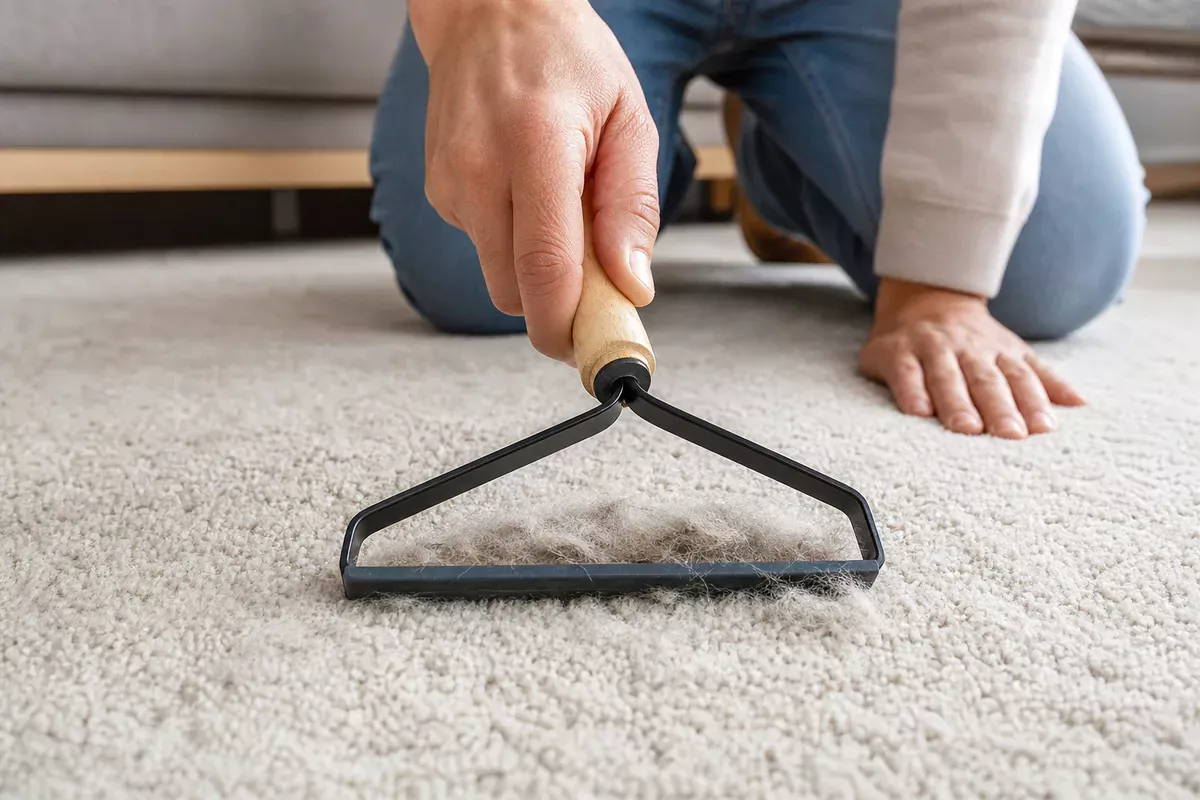
Pet hair settles at different depths. Long strands remain visible near the surface, while fine undercoat can bend around carpet fibers. Foot traffic then pushes loose hair farther into high-use lanes. A single fast vacuum pass may collect surface debris without releasing the strands held by the pile.
The practical fix is not more pressure. It is better sequencing. Start with a dry inspection under side light. Divide the room into small sections. Treat edges, furniture paths, and the pet’s usual resting area as separate zones because each holds hair differently. If the carpet also has a persistent smell, finish removing loose fur before following the separate carpet odor removal routine.
How do you get dog hair out of carpet?
To get dog hair out of carpet, begin by loosening the visible and embedded strands with short, controlled strokes from more than one direction. Gather the released hair into small rows before vacuuming so the machine can focus on finer material left in the pile. Work in sections around resting areas, furniture edges, and walking routes, where dog hair is more likely to collect. Use light pressure, test an inconspicuous area first, and stop if the tool catches loops, pulls fibers, or changes the carpet?s appearance.
What should you prepare before removing pet hair?
Prepare a manual hair-gathering tool, a vacuum suitable for the carpet, a small collection bag, and a clean cloth for the tool. Check the carpet care label and the instructions for every device. Avoid wetting the carpet merely to collect hair because moisture can complicate removal and drying.
| Item | Purpose | Check first |
|---|---|---|
| Manual remover | Loosens and gathers visible hair | Hidden-area test |
| Vacuum | Collects remaining hair and debris | Correct setting and clean airflow path |
| Collection bag | Keeps gathered hair contained | Place within reach |
| Clean cloth | Wipes the tool after use | Use dry unless instructions say otherwise |
If the carpet has loops, delicate fibers, loose seams, or an unknown construction, use a light touch and stop if the tool catches. The hidden-area test is the decision point: continue only when the pile returns to its normal appearance.
How to remove pet hair from carpet step by step
1. Clear and inspect the work area
Move small objects and lift lightweight furniture only when it can be done comfortably. Look for loose threads, damaged seams, damp spots, or recent stains. Hair removal should not conceal a surface problem that needs different care.
2. Start at the room edge
Begin where carpet meets the wall or furniture. Use short strokes and keep the tool nearly flat. Pulling from several directions helps reveal how the pile releases hair. Do not scrape repeatedly in one spot.
3. Gather hair into rows
Work one arm’s-length section at a time. Draw loosened hair toward a small row, pick it up, and place it in the collection bag. This prevents the next pass from spreading the same hair into a cleaned area.
4. Vacuum the finished section
Vacuum after the visible clumps have been removed. Use slow, overlapping passes without forcing the head into the pile. Pay attention to edges and the direction of the carpet fibers. A final pass in the normal pile direction helps leave a consistent finish.
5. Check from a second angle
Side lighting shows fine strands that overhead light can hide. Walk around the section and inspect it from another direction. Touch up only the remaining patches instead of repeating the whole routine.
Which carpet zones need a different approach?
Stairs: Work from a stable position and keep tools away from the step edge. Clean the tread and riser separately. Under furniture: Use an extension designed for the space rather than reaching blindly. Pet beds: Remove and clean washable covers according to their labels before addressing the carpet underneath.
High-traffic lanes: Divide the lane into shorter sections because compacted pile can hide more hair. Room edges: Use a narrow attachment or careful manual strokes. Never force a tool into a seam.
What common mistakes make carpet hair removal harder?
- Skipping the hidden-area test: carpet construction varies, so a tool that works in one room may catch in another.
- Using long, aggressive strokes: this can scatter hair and makes progress harder to measure.
- Vacuuming a full bin or clogged path: inspect the machine according to its manual before starting.
- Mixing hair removal with stain treatment: complete each task separately so the surface condition stays clear.
- Leaving collected hair beside the work area: bag it immediately so foot traffic does not redistribute it.
How do you keep pet hair from building up again?
A short maintenance pass is easier than a full-room recovery. Focus on the pet’s resting zone, the route between doors and furniture, and the carpet beside upholstered seating. Grooming frequency depends on the individual animal and professional guidance, but collecting loose hair near its source reduces what reaches the carpet.
Store the hair-removal tool dry and free of trapped fibers. Empty or maintain the vacuum as its manufacturer directs. For related surface routines, see our guides to removing pet stains from carpet and choosing cleaning supplies for pet-home carpet accidents.
How can you check the result without overworking the carpet?
Use three checks instead of repeating the entire process. First, view the carpet with light coming across the pile. Second, run a clean hand just above the surface to spot loose strands without rubbing them back in. Third, compare the cleaned section with an untouched edge. These checks identify small missed areas while protecting already finished zones from unnecessary passes.
Record which places collect hair fastest. In many homes, the useful maintenance map is smaller than the room: the pet’s resting edge, a route beside the sofa, and the turn near a doorway. Cleaning those precise zones between full-room sessions keeps the routine focused. It also helps you distinguish newly shed hair from material that remained embedded after the previous pass.
If the pile looks uneven after cleaning, stop and let it settle before doing more. Confirm that the tool is clean and that no hair row remains hidden along a furniture edge. A neat result comes from controlled sections and inspection, not from applying increasing pressure.
Frequently asked questions
Should I vacuum before using a manual pet hair remover?
Remove obvious loose debris first, but gather embedded hair before the final vacuum pass. This keeps large clumps from filling the vacuum path and lets the machine collect the finer material that remains.
How do you get dog hair out of carpet without a vacuum?
Without a vacuum, work in small sections with a dry manual hair-gathering tool and collect each visible row before moving forward. Side lighting can help reveal strands left in the pile. This approach can remove loose and embedded hair, but it may not collect fine dust or particles below the visible surface, so vacuuming later may still be useful when an appropriate machine is available.
Can I use the same tool on every carpet?
No. Carpet pile and construction differ. Test a hidden area, use light pressure, and stop if the tool catches fibers, changes the pile, or pulls at a seam.
Why does hair reappear after I finish?
Hair can remain below the visible pile or move from nearby upholstery and bedding. Inspect under side light, clean adjacent pet zones, and repeat only the small patches where strands emerge.
How should I clean the hair-removal tool?
Remove trapped fibers and follow the maker’s care directions. Let any washable component dry completely before storage. Keep the tool separate from items used for stain treatment.
Sources and editorial notes
This guide uses a conservative, surface-first method and avoids guaranteed performance or material claims. For indoor particle context, the U.S. EPA explains that pets can shed biological particles indoors and recommends source control, regular cleaning, ventilation, and filtration as distinct strategies. Source: U.S. EPA, Biological Contaminants and Indoor Air Quality, retrieved July 24, 2026.