Cleaning Supplies for Pets: A Practical Guide to Handling Accidents on Carpeted Floors

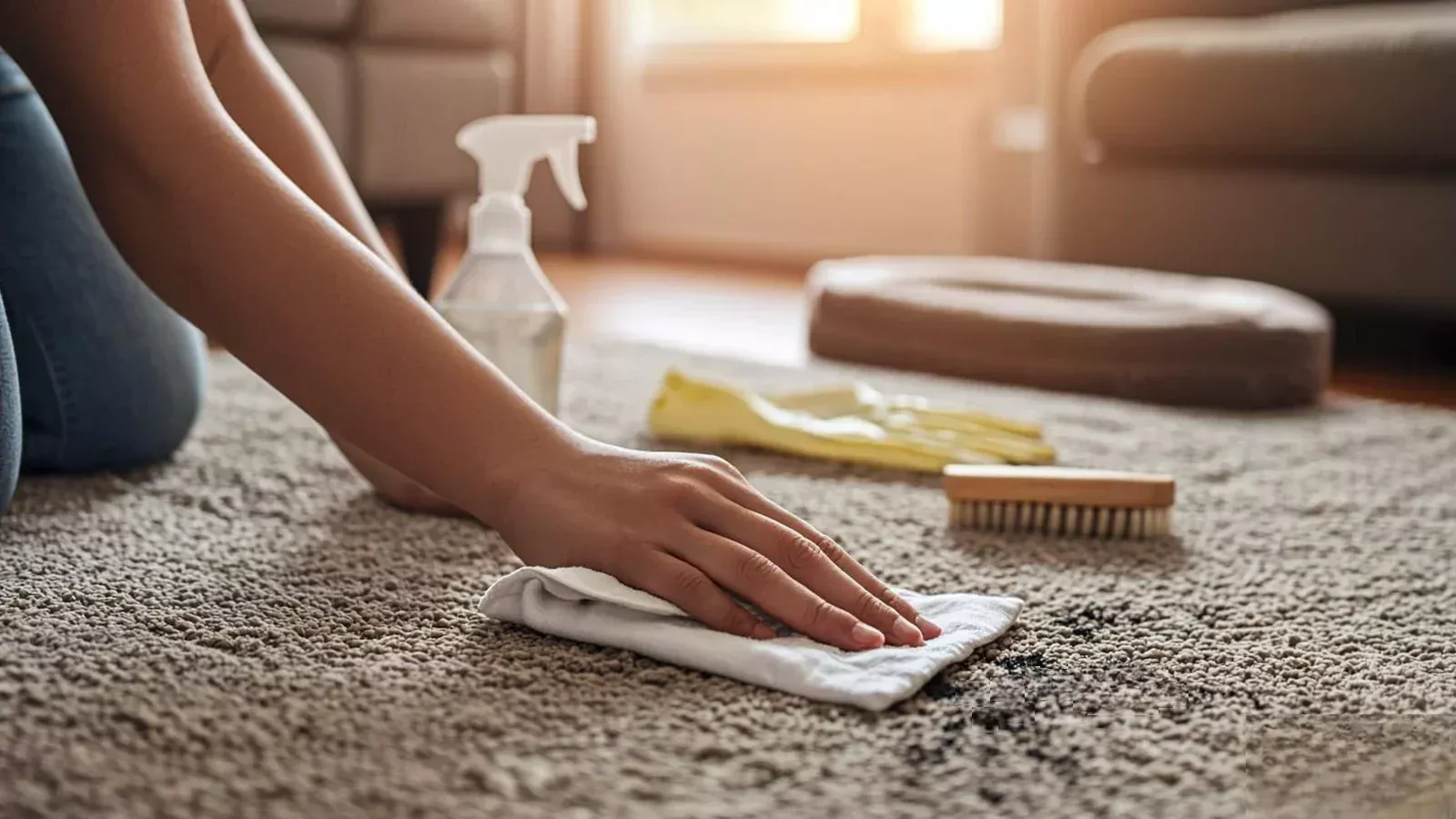
CARPET ACCIDENT FIELD GUIDE
A practical cleanup kit works best when every item has one clear job: absorb, test, apply, rinse when the product label requires it, dry, and store. Carpet and Rug Institute — Cleaning and Maintenance.
When a pet has an accident on the carpet, the first priority is to remove the mess without pushing it deeper into the fibers or leaving behind residues that attract repeat soiling. Having the right cleaning supplies for pets on hand—and knowing how to use them on your specific carpet—makes the difference between a fresh room and a lingering stain.
Key takeaways
- Blot fresh messes immediately with plain white towels before reaching for any cleaning product.
- Test every pet carpet cleaning product on a hidden section of your carpet and check for color transfer or texture change once dry.
- Work from the outer edge of the stain inward to avoid spreading it.
- Rinse extracted areas with plain water and blot dry to remove cleaner residue.
- Store opened cleaning products for pets in a cool, dry place and label bottles with the date you opened them.
What cleaning supplies for pets should you keep in a carpet cleanup kit?
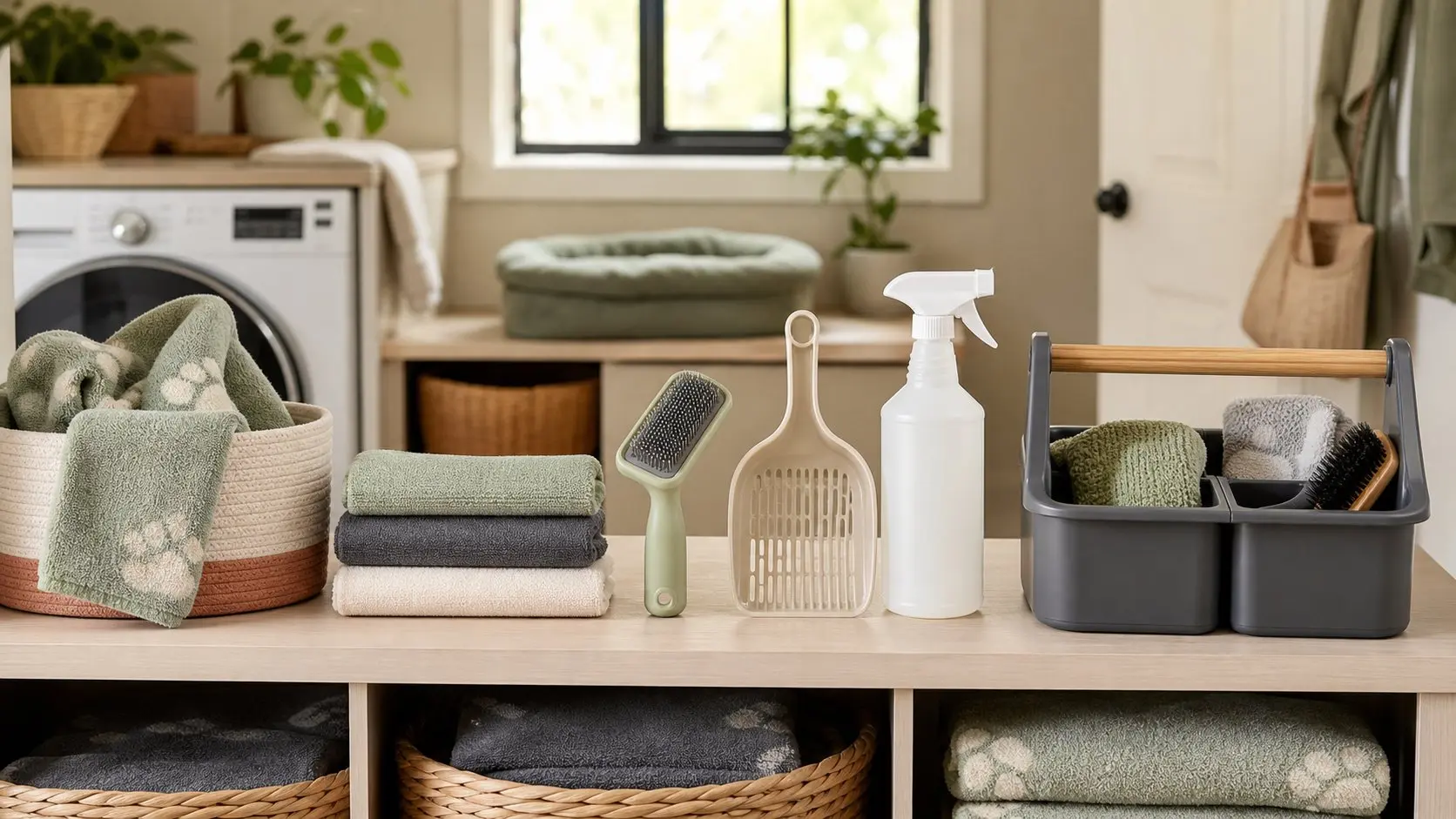
A dedicated kit saves time and prevents you from grabbing a random household spray that might set the stain or damage the carpet backing. Stock your kit with items that match the most common pet messes in your home. For a carpeted living area, consider including:
- Absorbent cloths or plain white paper towels: White fabric lets you see how much soil you are lifting and avoids dye transfer onto the carpet.
- A dedicated pet carpet cleaning product: Choose a liquid cleaner formulated for protein-based stains. Look for products labeled for use on synthetic carpets if that matches your flooring. You can browse different types of cleaning products for pets to see what is available.
- Plain water in a spray bottle: Use this for rinsing after treatment.
- A soft-bristle scrub brush or old toothbrush: Useful for gently working cleaner into the carpet pile without abrading the fibers.
- A wet/dry vacuum or absorbent towels for extraction: Removing moisture thoroughly helps prevent odor and mold.
- Disposable gloves: Keep your hands clean during cleanup.
- A waterproof storage bin: Protects your supplies and contains any leaks.
Before you buy several bottles, read our cleaning guides for advice on matching products to your home’s surfaces.
How do you test a pet carpet cleaning product on your floor?
Every carpet reacts differently to moisture and cleaning agents. Testing prevents surprises like color bleeding, texture stiffening, or adhesive breakdown in the backing. Follow this sequence before you treat a visible area:
- Choose a hidden test spot—inside a closet, under a piece of furniture that can be moved, or in a corner behind a door.
- Vacuum the test area to remove loose soil that could interfere with your observations.
- Apply a small amount of the pet cleaner product to a white cloth, not directly to the carpet.
- Dab the cloth onto the test spot and hold it in place for about 30 seconds.
- Lift the cloth and check for any dye transfer onto the cloth.
- Blot the area with a dry white towel and let it air-dry completely.
- Once dry, compare the test spot to the surrounding carpet under good light. Look for color change, texture difference, or any sticky residue.
If you notice any change you would not want in the middle of the room, try a different product or dilute the cleaner further and retest. For more on product compatibility, visit our product care page.
What is the step-by-step process for cleaning a fresh urine accident on carpet?
Acting quickly on a fresh accident gives you the best chance of full removal. The goal is to lift the liquid, treat the proteins, and leave the carpet as residue-free as possible. Here is a practical sequence using common pet cleaning supplies:
- Put on disposable gloves.
- Blot up as much liquid as possible. Place a thick layer of white paper towels or a clean cotton towel over the wet spot. Stand on it or press firmly with your hands. Replace with dry towels and repeat until no more moisture transfers.
- Apply plain cool water. Lightly spray the area with water to dilute any remaining urine. Blot again with dry towels. Avoid rubbing, which can push the urine deeper or fray carpet fibers.
- Apply your chosen pet carpet cleaning product. Follow the product label for the recommended amount. Generally, you want enough to cover the stained area without soaking through to the carpet pad.
- Work the cleaner in gently. Use a soft-bristle brush or your gloved fingers to distribute the cleaner through the carpet pile. Start at the outer edge of the stain and move inward to prevent spreading.
- Let the cleaner sit. Check the product label for suggested dwell time. If no time is given, five to ten minutes is a common starting point. Do not let the cleaner dry on the carpet.
- Blot or extract the cleaner. Use fresh dry towels to blot up the moisture, or use a wet/dry vacuum if you have one. Repeat until the carpet feels only slightly damp.
- Rinse with plain water. Spray lightly with water and blot or extract again. This step removes cleaner residue that can attract dirt over time.
- Dry the area thoroughly. Place a dry towel over the spot and weigh it down with a heavy object. Leave it for several hours or overnight. Pointing a fan at the area speeds drying.
- Check the result once dry. If a stain or odor remains, you may need to repeat the treatment or try a different product from your kit.
How do you choose among different pet cleaner products for carpet?
Walking down the cleaning aisle can be overwhelming. Instead of focusing on brand promises, compare products by their observable characteristics and how they fit your cleaning routine. The table below looks at three common types of pet carpet cleaning products you might consider.
| Product type | Typical use case | Handling and application | Storage and maintenance |
|---|---|---|---|
| Liquid trigger-spray cleaner | Spot cleaning fresh or light stains on synthetic carpet | Spray onto stain, agitate with brush, blot to remove | Keep bottle upright in a cool, dry place; check spray nozzle for clogs before each use |
| Foam aerosol cleaner | Dried or set-in stains where you want minimal moisture | Dispense foam, work into carpet with a brush or sponge, vacuum when dry | Store can away from heat sources; shake before use if label instructs |
| Concentrated liquid for machine extraction | Whole-room or large-area treatment with a carpet cleaning machine | Dilute according to label, fill machine tank, follow machine instructions | Keep concentrate in original container with cap tight; note dilution ratio on the bottle |
Whichever type you choose, the best pet cleaning supplies for your home are the ones you can use correctly and store safely. For a wider selection, you can explore best pet cleaning products that match your cleaning style.
How should you choose a dog accident cleaner?
Choose a dog accident cleaner by matching it to the affected surface and the product label, not by assuming one formula suits every material. For carpet, first identify the fibre and backing, remove as much of the fresh accident as practical, test the cleaner in a hidden area, and follow the stated dilution, contact, rinsing, and drying directions.
| Cleanup situation | What to check before choosing | Useful kit component |
|---|---|---|
| Fresh liquid accident | Carpet care label, colourfastness, and whether rinsing is required | Absorbent white cloths plus a labelled carpet-cleaning product |
| Dried mark | Whether the visible area is residue, staining, or fibre change | A product explicitly labelled for the carpet type and soil |
| Repeated accident area | Whether moisture or odour may extend beneath the visible surface | Inspection and, when needed, advice from a carpet professional |
This is a selection framework rather than a claim that one cleaner is best. For surface-specific follow-up, see the carpet pet-odor routine and the hardwood-floor pet-stain guide.
What are realistic storage and maintenance tips for pet cleaning supplies?
Proper storage keeps your cleaning products for pets effective and ready for the next accident. It also prevents spills that could damage flooring or pose a hazard to curious pets.
- Choose a cool, dry location. A hall closet, laundry room shelf, or utility cabinet away from direct sunlight and heat sources works well. Avoid under-sink cabinets in bathrooms where humidity fluctuates.
- Keep products in their original containers. The label includes usage instructions and any cautionary information. If you must transfer a product, label the new container clearly with the product name and date.
- Check bottles and caps regularly. Look for cracks, leaks, or swollen containers. Wipe down bottles after use to prevent slippery residue.
- Store out of reach of pets and children. A high shelf or a cabinet with a childproof latch adds a layer of safety.
- Note the date you opened a product. While cleaning products do not have strict expiration dates in the same way food does, their performance can decline over time. If a cleaner changes color, separates, or develops an unusual odor, it is probably time to replace it.
- Keep absorbent materials dry. Store paper towels and cloths in a sealed plastic bag or bin to protect them from moisture and dust.
How can you prevent repeat accidents on the same carpet spot?
Pets often return to areas that still carry scent traces. Even if the spot looks clean to you, residual odor can draw your pet back. After cleaning, consider these steps:
- Use a black light in a darkened room to check for overlooked stains. Urine stains often glow under UV light. Mark any spots you find with a piece of masking tape and treat them.
- Rinse thoroughly. As mentioned in the step-by-step process, rinsing with plain water and extracting it removes cleaner residue that can hold odor.
- Block access temporarily. While the carpet dries, place a piece of furniture, an exercise pen panel, or an upside-down laundry basket over the area.
- Re-evaluate your pet’s routine. Sometimes accidents signal a need for more frequent outdoor breaks, a litter box change, or a visit to the veterinarian. Addressing the underlying cause reduces future cleanup needs.
Common questions about cleaning supplies for pets and carpet care
Can I use the same pet cleaner on wool carpet as on synthetic carpet?
Wool is more sensitive to alkaline cleaners and vigorous scrubbing. Always check the product label for fiber compatibility and test on a hidden area. If the label does not mention wool, contact the manufacturer before use.
What should I do if the stain has already dried?
Rehydrate the area with plain cool water first, then blot to lift as much of the old stain as possible. After that, follow the same treatment steps you would use for a fresh stain. Dried stains may need a second or third treatment.
How many pet carpet cleaning products do I really need?
One general-purpose pet carpet cleaner that matches your carpet type is often enough for spot cleaning. If you own a carpet cleaning machine, you may also want a compatible concentrated solution. Start with a small bottle to see how it performs before buying larger sizes.
Is it necessary to rinse after using a pet cleaner?
Rinsing with plain water and blotting or extracting helps remove cleaner residue. Residue left in the carpet can attract dirt and may cause the area to look dirty again faster than the surrounding carpet.
When odor persists after a carpet accident has dried, review the source-first steps for removing pet odors from carpet before applying an additional product.
Next steps for a cleaner home with pets
Assemble your carpet cleanup kit this week, even if you do not need it right now. Having the right cleaning supplies for pets within easy reach turns a stressful moment into a manageable task. Test your chosen product on a hidden patch of carpet so you know exactly how it behaves. After your next accident cleanup, note what worked and what you would do differently, then adjust your kit accordingly. Before inspecting a carpet accident, remove loose pet hair from carpet so fibers and debris do not obscure the affected surface. If an accident reaches wood instead of carpet, follow our hardwood-floor pet-stain routine rather than applying carpet-cleaner instructions to a different finish. For more practical cleaning advice, explore our cleaning guides and product care resources.
Editorial source: Carpet and Rug Institute — Cleaning and Maintenance, accessed July 23, 2026. Always follow the care label and the directions for the specific surface and product.