How to Clean a Pet Bed: Cover, Filling and Drying

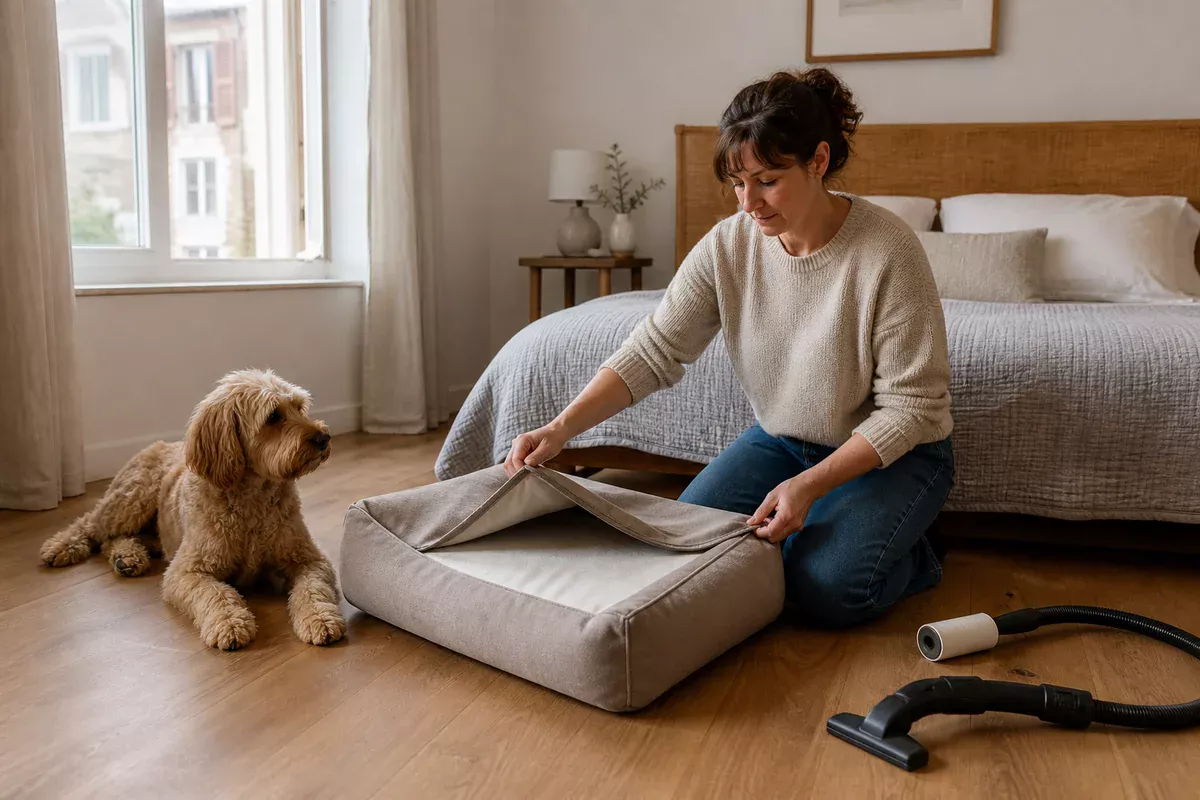
To clean a pet bed, start with its care label and construction. Remove loose hair while the bed is dry, separate any washable cover from the filling, use only the cycle and products allowed by the label, then dry every layer completely before putting the bed back together. A fixed recipe is less reliable than following the instructions for the bed you own.
- Photograph the care label before removing the cover so the instructions stay easy to find.
- Vacuum or lift dry hair before washing. Wet hair is harder to collect from fabric and equipment.
- Treat the cover, insert and rigid base as separate parts because they may have different care limits.
- Do not return the bed to your pet until the seams, underside and filling are fully dry.
Pet beds look simple, but the parts inside them vary. Some have a machine-washable cover around a foam insert. Others use loose fiber filling, a waterproof liner, a rigid frame or a one-piece padded shell. That is why the first useful question is not which wash setting to choose. It is which parts can be removed and what the manufacturer permits.
What should you check before cleaning a pet bed?
Read the bed’s care label before adding water or detergent. Check whether the cover is removable, whether the insert can be washed, which temperature and cycle are allowed, and whether the dryer is permitted. If the label is missing or unreadable, contact the manufacturer rather than assuming every soft-looking part is machine washable.
Inspect the seams, zipper and base while the bed is still dry. A split seam can release filling in a washer. A damaged zipper may catch on other fabric. Crumbling foam, a warped base or an insert with no cleaning instructions needs a more cautious approach. Photographing the label and the assembled bed also makes reassembly easier.
| Bed part | First check | Usual decision | Stop condition |
|---|---|---|---|
| Removable fabric cover | Care label, zipper and seam condition | Wash only by the labeled method | No label, torn seam or damaged fastener |
| Foam or padded insert | Separate insert instructions | Keep dry unless washing is expressly allowed | Crumbling, distortion or retained moisture |
| Loose-fiber cushion | Machine capacity and drying directions | Follow the full-bed instructions | Overfilled machine or filling escaping |
| Rigid or plastic base | Manufacturer cleaning directions | Clean separately by the approved method | Cracks, sharp edges or trapped liquid |
How do you remove pet hair before washing?
Work on dry fabric first. Take the bed to an easy-to-clean area, shake off loose debris if the construction allows it, then vacuum the top, sides, piping and creases with a suitable upholstery attachment. A lint roller or reusable hair tool can collect what remains on a removable cover. Keep the strokes controlled so you do not pull threads or damage the surface.
This dry step matters for both the bed and the laundry area. It reduces the amount of hair entering the washer and makes stains or damaged seams easier to see. If clothes also collect fur, use the separate pet hair removal routine for clothing. For floor fibers around the bed, follow the carpet pet-hair guide.
How do you wash a removable pet-bed cover?
Close zippers or fasteners as directed, place the cover in the washer only if the label permits it, and select the stated cycle and water temperature. Use the amount and type of laundry product allowed by both the cover label and the product label. Do not add homemade mixtures or combine products. They can behave differently on coated fabrics and in washing machines.
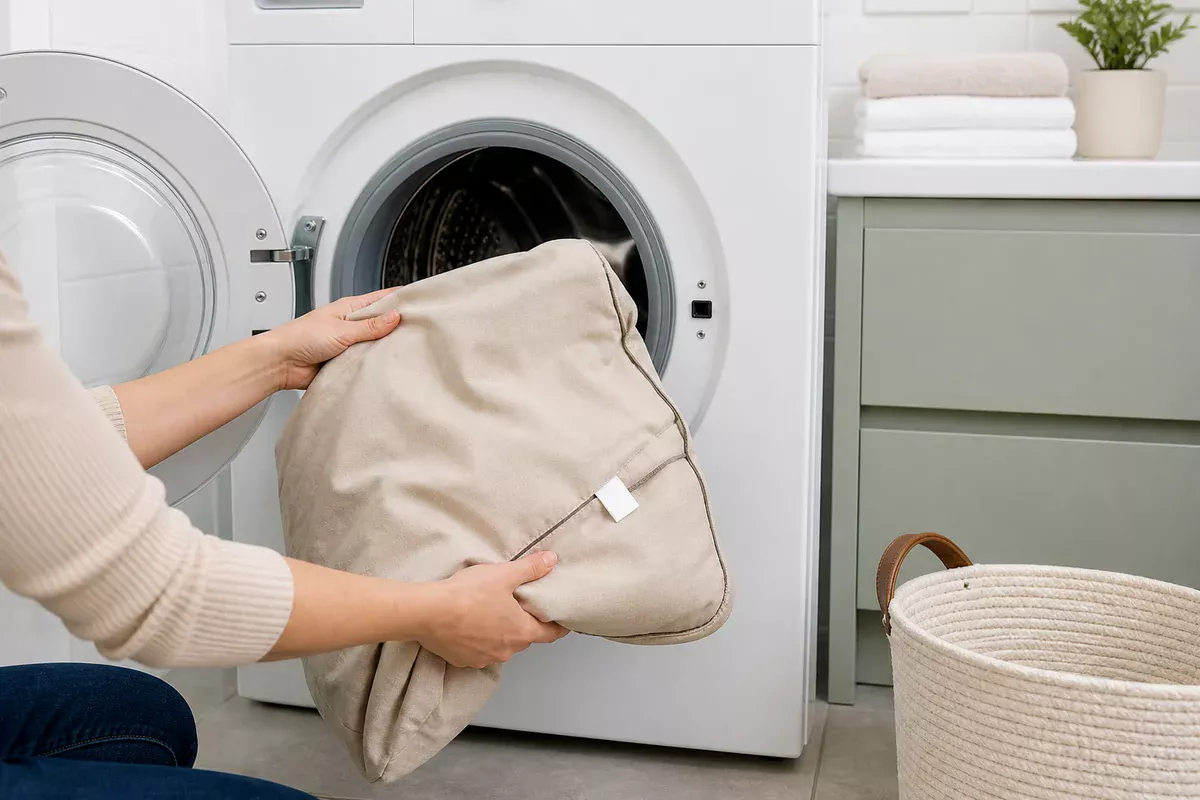
The Centers for Disease Control and Prevention distinguishes cleaning from disinfecting. Cleaning physically removes dirt and germs, while disinfection is an additional chemical step for specific circumstances. Its pet-supply guidance says cleaning is usually enough for most pet items and recommends following the cleaning instructions on the packaging or tag. This is a useful boundary: do not disinfect a bed by default when its materials or label do not allow it.
- Check capacity. The cover or bed should move without tightly packing the drum. If it does not fit, use another label-approved method.
- Use the labeled settings. Match the wash cycle and temperature to the bed, not to a generic online recipe.
- Inspect after washing. Look for trapped hair around seals and filters, then follow the appliance manual for cleanup.
- Dry by the permitted method. Use a dryer only when the bed label allows it. Otherwise, support the fabric so air can reach it.
Can you wash the filling or foam insert?
Only wash an insert when its own instructions say that you can. A removable cover being washable does not mean the filling has the same care method. Foam can hold water, loose filling can shift, and layered inserts may take much longer to dry than the outside suggests. Keep the insert separate unless the label treats the entire bed as one washable unit.
If the insert cannot be washed, follow the manufacturer method for localized cleaning. Avoid saturating it. When a spill has reached deep inside a non-washable insert, or a persistent odor remains after the permitted care steps, replacement or manufacturer guidance may be more sensible than repeated wet cleaning. Our room-by-room pet odor guide can help you check nearby surfaces without turning the bed into a catch-all odor project.
How do you dry a pet bed completely?
Drying is finished only when the outer fabric, seams, underside and filling all feel dry. Follow the care label for tumble drying, air drying, reshaping and heat limits. Thick inserts need airflow around more than one side. Turn or reposition them if the instructions allow, and check concealed areas before reassembly.
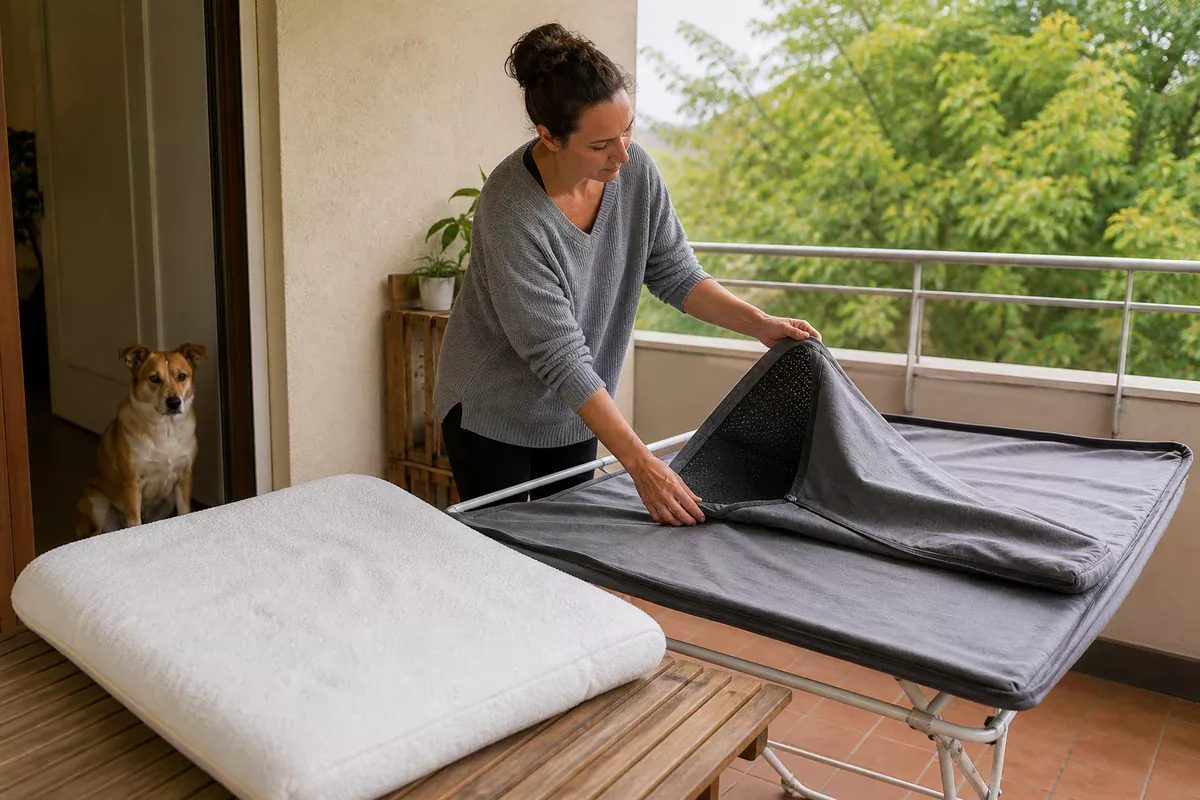
Do not use a hotter setting simply to finish sooner. Heat limits belong to the manufacturer because covers, coatings, zippers and fillings respond differently. Once everything is dry, put the insert back in its original orientation, close the fastener and check the bed for lumps, exposed edges or twisted seams before returning it to its normal place.
When does a pet bed need more than routine cleaning?
The CDC advises more frequent cleaning and disinfection when a pet is sick, when an item has contact with urine or feces, or when someone in the household is more likely to become seriously ill from germs. In those situations, the bed’s care instructions still matter, and veterinary or medical guidance may be appropriate for the specific illness or household risk.
Stop if the bed has damaged wiring, exposed filling, sharp broken parts, heavy contamination the label does not address, or an insert that stays damp. Heated or powered beds need their own manufacturer instructions. Never immerse an electrical component unless its documentation explicitly allows it.
If you use a cleaner or disinfectant, read its entire label. The U.S. Environmental Protection Agency advises following product directions, keeping pets away from treated areas for the stated period, and storing cleaning products out of reach. That guidance does not prove that any particular product is suitable for a particular pet bed. Compatibility must come from the bed and product instructions.
What are the most common pet-bed cleaning mistakes?
- Washing the bed before removing loose dry hair.
- Assuming the cover and insert share the same cleaning instructions.
- Using an online temperature or detergent recipe instead of the care label.
- Combining cleaning products or adding an unapproved home mixture.
- Reassembling the bed while seams or filling remain damp.
- Ignoring a damaged zipper, torn seam or deteriorating insert.
A simple routine is easier to repeat: keep a photo of the care label, remove hair before moisture, wash only the permitted parts, and inspect everything while it is separated. For reusable cleaning tools used around the bed, see the PawPureHome product-care guide. More surface-specific routines are collected in the pet cleaning guides library.
Frequently asked questions
How often should you clean a pet bed?
The CDC gives weekly cleaning as an example schedule for pet beds, blankets and habitats, with more frequent cleaning when an item looks dirty or smells bad. Your bed label, the pet’s routine and any veterinary guidance can require a different schedule. Use the CDC interval as general guidance, not a promise that every bed needs the same treatment.
Can every dog bed go in a washing machine?
No. Some covers are machine washable while their inserts are not. Other beds are designed to be washed as one piece, and some require localized cleaning. Read every care label attached to the bed and check the washer capacity before loading it.
Should you remove pet hair before washing the bed?
Yes. Collecting loose hair while the bed is dry keeps the wash step focused on the fabric and makes seams, stains and damage easier to inspect. Vacuum creases and piping with a suitable attachment, then use a fabric-appropriate hair tool for what remains.
Can you use disinfectant on a pet bed?
Only when both the bed instructions and the disinfectant label permit that use. The CDC says cleaning is usually enough for most pet items and identifies specific situations where disinfection may be added. Follow the full label, including contact time, rinsing, drying and pet-access directions.
What if the pet bed still smells after washing?
First confirm that the cover and insert are fully dry and that nearby flooring has not retained the odor. Repeat only a care-label-approved process. If odor remains deep inside a non-washable or damaged insert, contact the manufacturer or consider replacing that component instead of repeatedly soaking it.
Sources
- Centers for Disease Control and Prevention, About Cleaning and Disinfecting Pet Supplies, updated February 18, 2026, accessed August 25, 2026.
- U.S. Environmental Protection Agency, Read the Label First: Protect Your Pets, updated January 6, 2026, accessed August 25, 2026.