How to Get Pet Hair Out of a Washing Machine

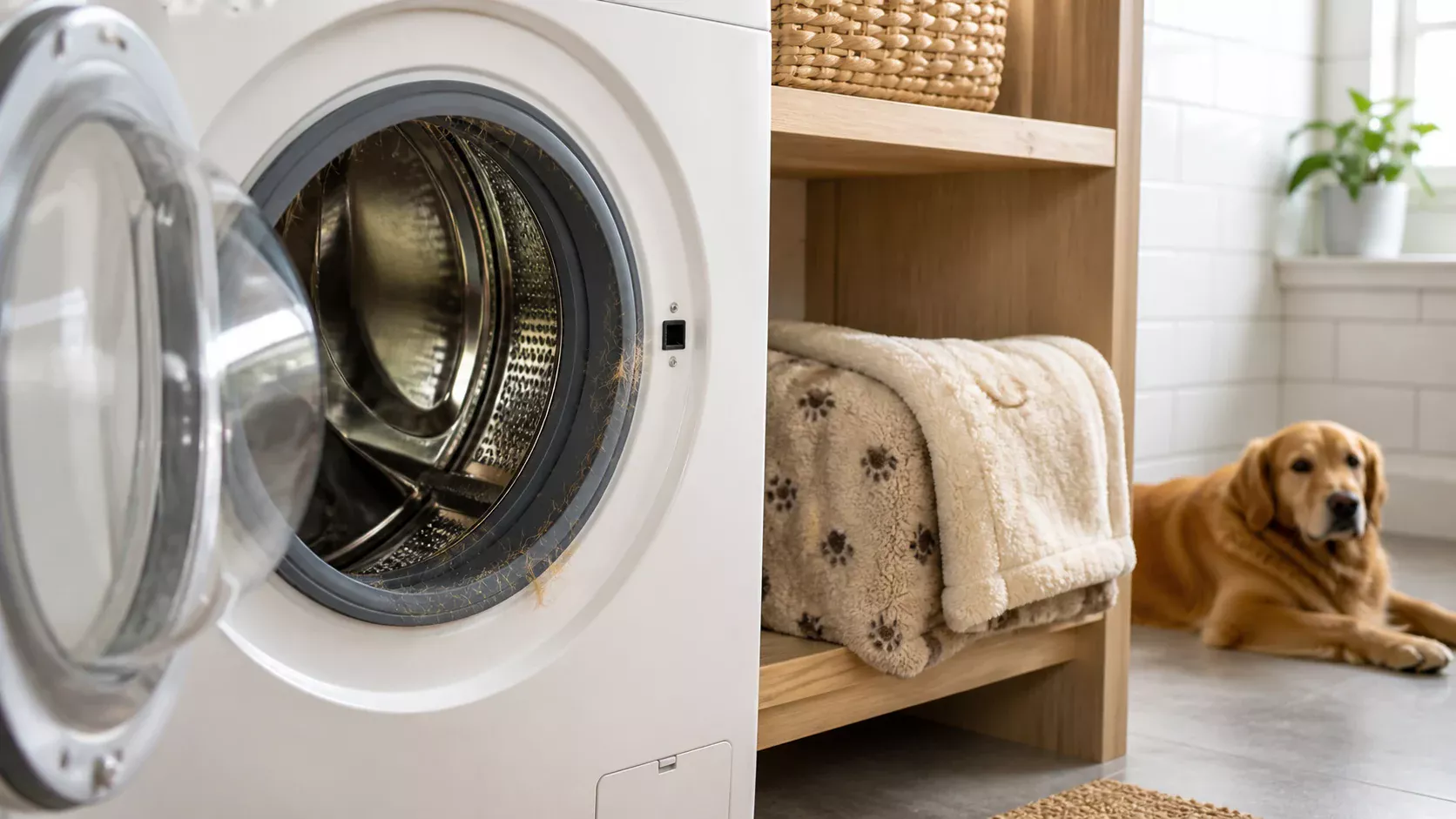
To get pet hair out of a washing machine, remove the laundry, let the drum become safe to inspect, collect visible hair from the drum and door seal with a damp cloth, and clean only the filters or traps identified in your washer manual. Run the manufacturer-approved empty cleaning cycle if residue remains. Stop and arrange service if the machine will not drain, leaks, or shows an error.
Quick answer
- Pick up loose dry hair before washing a heavily furred load.
- After washing, wipe the empty drum, door glass and gasket.
- Clean a lint or pet-hair filter only when your model has one.
- Use the washer’s named cleaning cycle and approved cleaner.
- Do not dismantle a drain pump while the machine is powered.
Pet owners are asking this because the hair often moves instead of disappearing. A recent r/CleaningTips discussion described pet bedding leaving visible hair inside the washer despite shaking it first. Another recent r/laundry thread asked whether in-wash fur-catching devices actually help. Those conversations point to two separate jobs: remove hair from fabric before washing, then clear whatever the machine retains afterward.
Why does pet hair stay in the washing machine?
Water can gather loose strands into wet clumps that cling to fabric, the drum and flexible seals. Consumer Reports explained this in its April 2025 article, Don’t Let Pet Hair Ruin Your Washer, noting that wet hair can collect on the drum and may reach drainage components. The practical response is to reduce the load before washing rather than expecting water to dissolve hair.
Machine design changes where the leftovers appear. A front loader may hold strands around the door gasket. A top loader may have a removable lint filter, an agitator-mounted pet filter, or no user-cleanable hair filter at all. Washer-dryer combinations add another design. Your model number and manual decide what can be opened safely.
How to get pet hair out of a washing machine step by step
- Remove the finished load and check it for remaining hair.
- Turn the washer off and follow its manual before opening any access panel.
- Collect visible strands from the drum, glass and seal.
- Inspect the dispenser and approved removable filter locations.
- Run the maker’s empty washer-cleaning cycle if needed.
- Wipe the accessible surfaces again and allow them to dry as directed.
1. Empty the washer completely
Take out clothing, blankets and any removable laundry aids. Do not reach behind the drum or into a filter access point while the washer is running. If you just used a hot cycle, wait until the accessible surfaces are comfortable to touch. Keep pets away from the open appliance throughout the job.
2. Wipe the drum, door glass and gasket
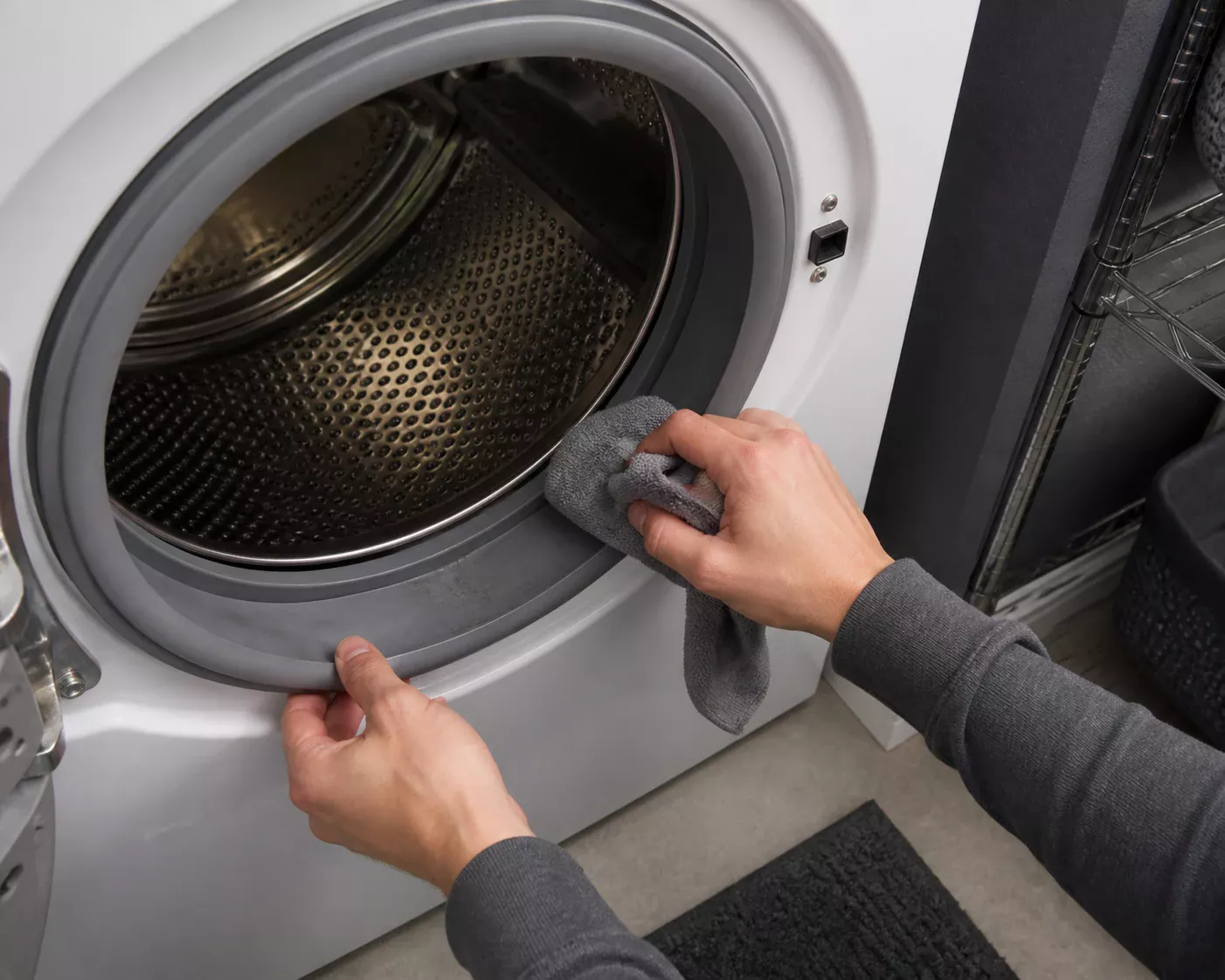
Use a clean, slightly damp microfiber cloth to gather visible hair. Work around the drum opening and door glass. On a front loader, gently inspect the accessible folds of the rubber gasket without stretching, removing or puncturing it. Put the collected hair in the trash instead of rinsing a clump down the sink.
3. Check only the filter named in the manual
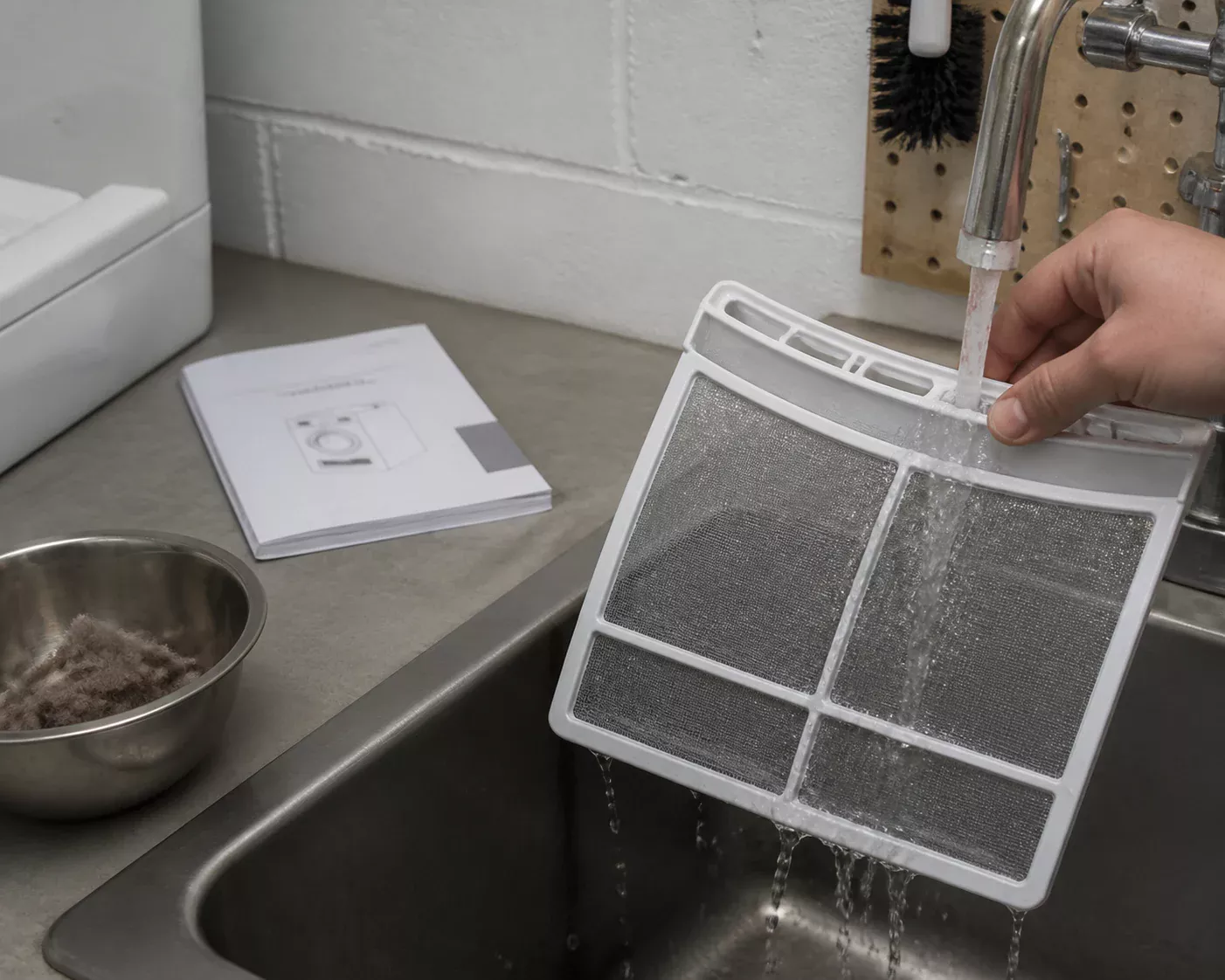
Search the manual using the exact model number. Look for terms such as lint filter, pet-hair filter, drain-pump filter or coin trap. These are not interchangeable. Some are intended for frequent owner cleaning. Others sit behind a service panel and may release retained water when opened. If the instructions are unclear, contact the manufacturer rather than copying a video for a different washer.
Maytag’s current Pet Pro quick-start guidance says its built-in Pet Pro Filter is intended to be cleaned after each cycle. That schedule applies to the described Pet Pro models, not every washing machine. LG’s July 2025 top-loader maintenance guide likewise warns that filter shape and location vary by model.
4. Clean the dispenser if hair or residue reached it
Remove a detergent drawer only if the manual shows how. Wipe the drawer and its accessible housing, then reinstall it fully. Do not push a brush, wire or cloth into an unseen hose. Hair around a dispenser is less common than hair around the drum opening, but checking it makes sense after a heavily covered blanket.
5. Run the approved empty cleaning cycle
Select the cycle named in the manual, often called Clean Washer, Tub Clean or Self Clean. Use only a cleaner and dose allowed by the appliance maker. Do not improvise by combining vinegar, bleach, baking soda or another cleaner. Consumer Reports notes that some manufacturers caution against repeated vinegar use because it can affect washer components.
6. Inspect after the cycle
When the empty cycle ends, wipe the accessible drum and gasket again. Check whether water drained normally. Leave the door or lid in the position recommended by the maker for drying. If hair remains behind an inaccessible part, or the washer drains slowly, arrange qualified service instead of removing panels.
Which washer parts should you inspect?
| Area | What you may find | Safe starting action | When to stop |
|---|---|---|---|
| Drum and door glass | Loose strands or wet clumps | Collect with a damp cloth after the machine stops | Hair is trapped behind a fixed part |
| Front-loader gasket | Hair along accessible folds | Wipe gently without pulling the seal | The gasket is torn, loose or leaking |
| Lint or pet filter | Collected hair and lint | Follow the model-specific removal steps | No filter is shown in the manual |
| Drain-pump filter | Water, lint or small objects | Use the manual’s drainage and access procedure | Standing water, fault code or uncertain access |
| Detergent dispenser | Residue or occasional strands | Remove only as the manual directs | Debris is beyond the accessible housing |
The table is a map, not a repair manual. The same label can describe different parts across brands and model years. For example, a user-cleanable pet filter inside one top loader is not the same component as a front loader’s low-mounted pump filter.
How can you keep pet hair out of the washer?
The most effective prevention happens before the wash cycle. Consumer Reports’ 2025 guidance recommends removing as much hair as possible from clothing and bedding first. Shake suitable items outdoors, use a fabric-compatible brush or roller, and vacuum pet bedding seams. Then follow each textile’s care label.
For clothes, use the full pet hair removal routine before washing. It separates dry hair collection from laundering. If bedding is the problem, remove the washable cover when designed to do so and check the cover and insert separately. A bulky bed that cannot move freely may not belong in a household washer.
Do not overload the machine
A crowded drum gives water and fabric less room to move. Use the washer’s capacity guidance, not a guess based on whether the door can close. Large pet blankets can become much heavier when wet. Take oversized or unusually heavy items to an appropriate laundry service when the appliance instructions require it.
Separate heavily furred items
Washing a dog blanket with ordinary shirts can redistribute hair across the load. Keep heavily covered pet textiles separate when their care labels and your appliance capacity allow. Afterward, inspect the drum before starting the next household load.
Be cautious with washer balls and hair catchers
Forum users report mixed experiences with in-wash pet-hair products. That is not proof that a device works or fails across all washers. Check whether the product maker lists your washer type and whether your appliance manual permits loose laundry accessories. Stop using an item that deforms, sheds or interferes with the door, drum or drain.
What should you avoid when cleaning pet hair from a washer?
- Do not vacuum a wet drum or gasket with an ordinary household vacuum.
- Do not pour an unapproved mixture into the drum, dispenser or filter opening.
- Do not assume every washer has an owner-cleanable drain filter.
- Do not force the gasket, agitator cap, filter door or access panel.
- Do not run repeated cycles when water is not draining normally.
- Do not mix cleaning chemicals.
If pet hair also collects on rugs, sofas and car seats, one laundry routine will not control the whole source. The pet hair removal products guide compares tools by surface. After use, follow the relevant maker instructions and the PawPureHome product care checklist before storing a reusable brush or roller. For the room around the washer, use dry collection first so new hair is not immediately transferred to clean laundry.
When does pet hair in a washer need service?
Contact the appliance maker or a qualified technician when the washer will not drain, leaves standing water, leaks, produces a repeated fault code, makes a new grinding sound, or traps debris behind a fixed component. A damp cloth can handle accessible residue. It cannot diagnose a pump, hose or seal failure.
Before calling, note the model number, the error code, what was washed and when the problem began. Do not keep restarting the machine to test it. A clear description helps support distinguish an ordinary cleaning question from a repair.
Frequently asked questions
Can pet hair clog a washing machine?
Wet hair can form clumps and may reach drainage components, according to Consumer Reports. Remove loose hair before washing and follow the washer manual for filter maintenance. If draining slows or an error appears, stop using the machine and seek model-specific support.
Can I vacuum pet hair out of the washing machine?
Do not use an ordinary vacuum on a wet drum, gasket or filter area. Collect accessible hair with a damp cloth after the washer is off. If the appliance manual permits vacuuming a completely dry, removable component, follow that exact instruction.
Does every washing machine have a pet-hair filter?
No. Some newer machines include a dedicated pet-hair filter or cycle, while many washers do not. Other models have lint filters or pump filters serving different purposes. Search the manual for your exact model before opening anything.
Should I run an empty cycle after washing pet bedding?
Run the manufacturer-approved washer-cleaning cycle when visible residue remains or the manual recommends it. First remove visible hair from the drum and gasket. Use only the cleaner and settings named by the appliance maker.
Why is pet hair still on clothes after washing?
Washing can wet and redistribute hair rather than remove every strand. Collect dry hair before the load, avoid overloading, and use the settings allowed by the clothing and washer instructions. The dedicated guide to getting pet hair off clothes covers the fabric side of the problem.
Sources and discussion signals
- Consumer Reports, Don’t Let Pet Hair Ruin Your Washer, updated April 21, 2025; retrieved August 30, 2026.
- Maytag, Top Loading Washing Machine Quick Start Guide, 2025; retrieved August 30, 2026.
- LG USA Support, Top Load Washing Machine Cleaning, July 9, 2025; retrieved August 30, 2026.
- r/CleaningTips discussion, Cleaning pet hair out of the washing machine, 2026; used as a community-question signal, not technical authority.
- r/laundry discussion, Has anyone had success with washing machine pet fur removal tools?, 2026; used as a community-question signal, not technical authority.
Keep the next load from carrying the last load’s hair
Clear the fabric before it enters the washer, then inspect the machine when the load ends. That two-part routine is more reliable than asking one wash cycle to collect every strand. Continue with the PawPureHome cleaning guides for surface-specific routines, or browse the Fur & Hair collection after identifying the surface you need to handle.