Best Way to Clean Hardwood Floors With Pets

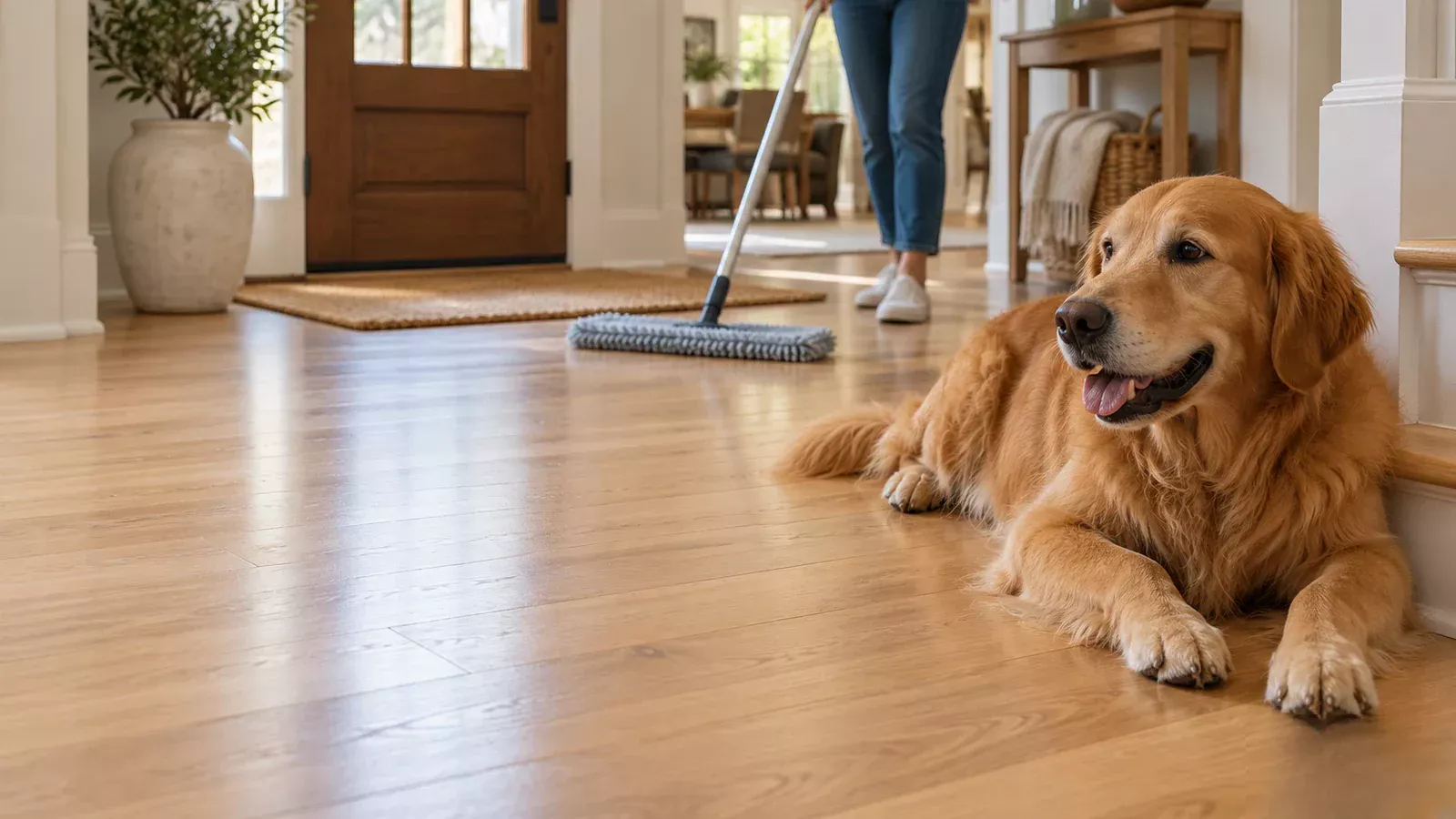
The best way to clean hardwood floors with pets is to pick up grit and hair while they are dry, wipe paw prints and spills promptly, then use a cleaner approved for your floor’s finish. That simple order helps keep everyday mess from turning into a bigger job. The right routine depends on your finish, how much traffic crosses the room, and what your dog or cat brings in.
What is the best everyday routine for pet hair and grit?
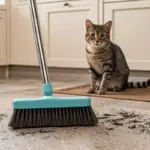
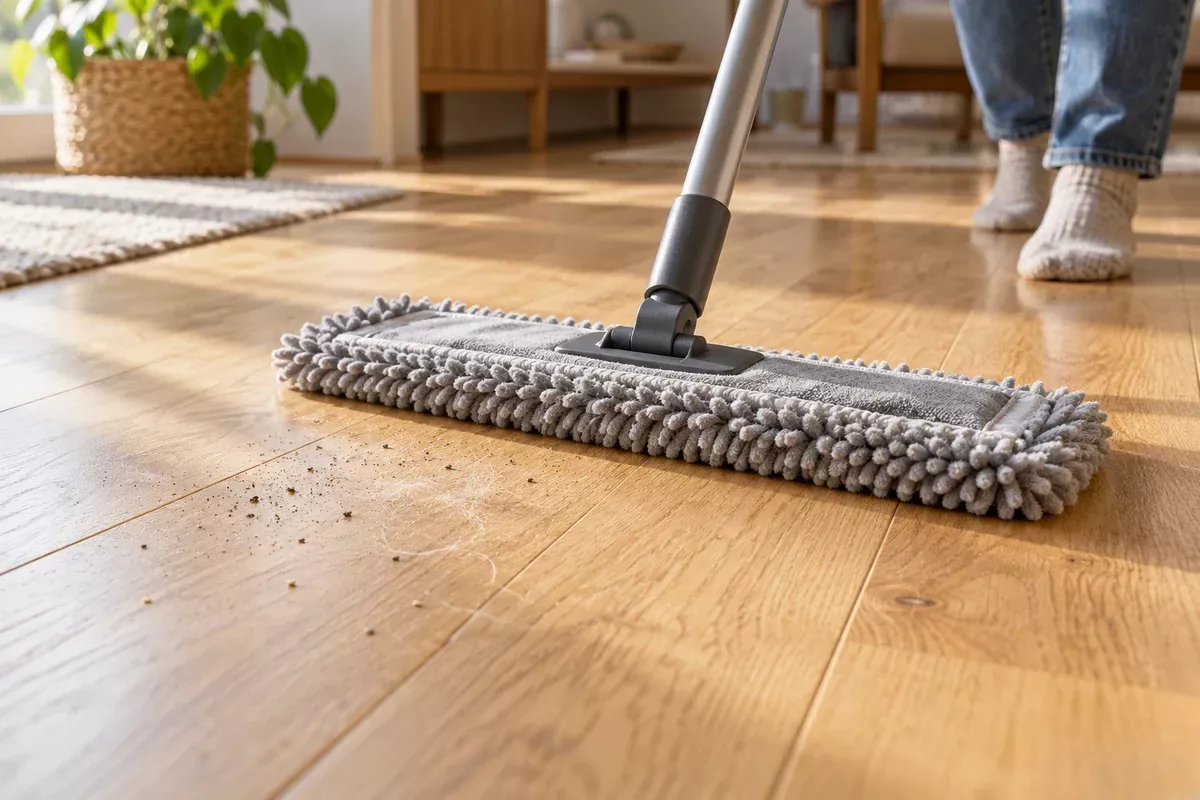
Start dry. Hair, crumbs, and grit are easier to collect before water or cleaner turns them into a smear. Use a broom, dust mop, or vacuum attachment intended for hard floors. Mannington’s hardwood instructions call for a brush or felt vacuum head and say not to use a beater bar; check the care instructions for your own floor and vacuum before choosing an attachment.
The National Wood Flooring Association’s pet guidance says, “Routine cleaning involves daily sweeping or dust mopping, and weekly vacuuming using the bare floor setting to remove dust and dirt.” It also notes that maintenance schedules vary with use, wear, and lifestyle, so the amount of hair, grit, and foot traffic in your home matters.
Pay attention to the routes your pet actually uses: the door to the garden, the water bowl, the favourite sunny spot, and the route to the sofa. A short sweep in those places can be more useful than cleaning the whole floor on a strict timetable. Lift grit rather than pushing it around, and use a clean pad so yesterday’s dirt does not become today’s scratchy layer.
Which tools and cleaners belong on hardwood?
Hardwood care depends on the finish and the product instructions. “Hardwood cleaner” is not one universal formula, and a floor that looks sealed is not proof that every cleaner or amount of water is suitable. Check the flooring or finish manufacturer’s instructions first. If you do not know the finish, ask the installer or manufacturer before trying a new product.
| Job | Start with | Check before using |
|---|---|---|
| Loose hair and grit | Broom, dust mop, or hard-floor vacuum attachment | Mannington says not to use a beater bar; check your floor maker’s instructions |
| Dried paw marks | Dry dust mop first, then a barely damp soft cloth if needed | Whether the finish permits a damp wipe; dry the spot afterward |
| Routine cleaning | A cleaner recommended for the floor’s finish | Label directions and the flooring maker’s approved products |
| Water bowl splash | Absorbent cloth, followed by a dry cloth | Do not leave standing water or a wet mat on the boards |
Mannington’s instructions say, “The vacuum head must be a brush or felt type,” and, “Never mop or flood your floor with water or other products.” The page also says not to use a beater bar and to remove spills with a soft cloth and recommended products. Shaw’s hardwood guidance says to “Dry mop with Shaw Hard Surface cleaner” and “Don’t use wet mops or steam mops.” It also recommends regular sweeping or vacuuming and wiping spills with a soft cloth. These are the manufacturers’ instructions for their own floors, not a universal product recommendation.
How do you clean muddy paw prints without spreading them?
If the prints are wet, blot up visible moisture first. Press a soft cloth onto the spot; do not scrub grit across the boards. Once the area is no longer wet, lift loose dirt with a dry pad. If a mark remains, use a cloth that is only slightly damp, and only if your floor-care instructions allow it. Follow with a dry cloth so moisture is not left sitting on the surface.
For dried prints, remove loose dust first, then spot-wipe. A clean cloth gives you more control than spraying cleaner directly across a broad area. If the mark will not lift with the manufacturer’s recommended method, stop rather than escalating to a rough pad or a stronger household chemical. Ask the flooring manufacturer or a qualified floor professional about a stubborn mark.
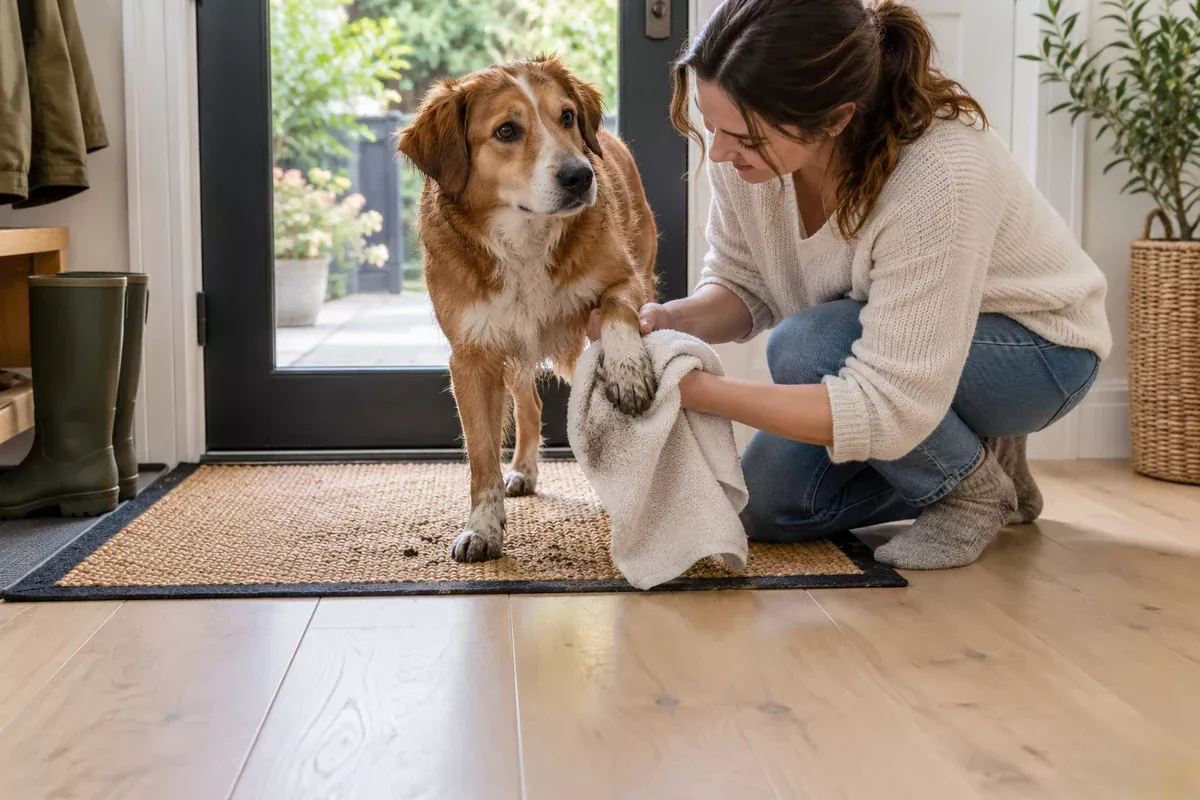
A small towel by the entry makes this routine easier. If paws are carrying in mud, our guide to cleaning a dog’s paws after a walk covers a simple entryway cleanup. The aim is to catch dirt before it reaches the boards, not to turn every walk into a full bath.
How should you handle water bowls and feeding areas?
Water is a small, repeat offender around pet bowls. Wipe splashes when you notice them, and check underneath the bowl and mat rather than only drying the visible edge. The NWFA’s maintenance guidance says to “clean spills immediately with a dry or slightly damp cloth.”
A mat can catch drips, but it should not trap moisture against the floor. Choose one that stays flat and can be lifted for cleaning and drying. If the bowl area is repeatedly damp, move the bowls to a surface that is easier to protect or use a setup that keeps splashes off the boards. Check the floor under the mat as part of normal tidying.
How often should you clean hardwood floors with pets?
Use the care pattern described above, then adjust the quick cleanups to the mess you see. The NWFA notes that individual maintenance schedules vary with use, wear, and lifestyle. Shedding, outdoor access, and foot traffic all affect how quickly hair and grit build up.
Instead of waiting for the whole room to look dirty, watch for hair collecting along edges, grit near the door, or a damp ring near the bowls. Those are useful cues for a quick clean. If your manufacturer specifies a different schedule or product, its instructions take priority.
What should you avoid on pet-used hardwood floors?
- Do not use a steam mop or flood the boards with water unless the floor manufacturer explicitly says that method is suitable.
- Do not experiment with vinegar, bleach, oils, abrasive powders, or multipurpose cleaners. Check the flooring maker’s instructions and use a cleaner recommended for that finish.
- Do not drag a gritty mop pad across the surface. Shake or wash the pad according to its care instructions.
- Do not let a wet pet mat, bowl splash, or damp towel sit on the floor.
- Do not use a vacuum’s rotating brush on hardwood unless the vacuum and floor instructions allow it.
The point is not that every household product will harm every floor. Finishes differ, and the wrong method can leave residue or affect the surface. When the care label is unclear, ask the floor manufacturer before experimenting.
What if there is a pet stain or lingering odour?
Everyday hair and paw marks are different from urine or another accident. Do not scrub a stain into a wider area or assume a general floor cleaner will address the source of an odour. Blot fresh moisture, follow the flooring maker’s instructions, and use a method intended for that specific problem. Our separate guides cover pet stains on hardwood floors and pet odour on hardwood floors. Keeping those topics separate helps avoid applying routine dust-mopping advice to a liquid accident.
Can I use a damp mop on hardwood when I have pets?
Only if the flooring or finish manufacturer permits it, and then use the amount and product it specifies. The NWFA’s pet-specific guidance discourages wet and steam mops and says they can damage the finish and wood over time. For a small mark, a barely damp cloth may be appropriate for some finishes, but do not leave the area wet.
Is a pet hair vacuum suitable for hardwood?
It can be, if the vacuum has a hard-floor setting or attachment recommended for your floor. Check for a rotating brush or beater bar and follow both manufacturers’ instructions. A soft floor brush, dust mop, or broom is another option for picking up loose hair without pushing grit around.
What is the quickest way to keep the routine manageable?
- Keep a soft broom or hard-floor vacuum attachment near the busiest entry.
- Pick up loose hair and grit before wiping with moisture.
- Blot paw prints or bowl splashes as soon as you notice them.
- Use only the cleaner and method approved for your floor’s finish.
- Lift mats and check underneath when you tidy the feeding area.
That is enough for most everyday messes. If you are caring for a new floor, a waxed or oiled finish, or a surface with an unknown coating, ask the flooring maker for the right instructions before changing your routine.
Sources
- National Wood Flooring Association: Flooring Fit for Fido
- National Wood Flooring Association: Maintenance
- Mannington: Hardwood Care and Maintenance
- Shaw Floors: Hardwood Care
For the loose hair that collects around pet beds and feeding areas, compare: pet hair cleanup tools.