How to Clean Dog Toys: Rubber, Plush & Rope

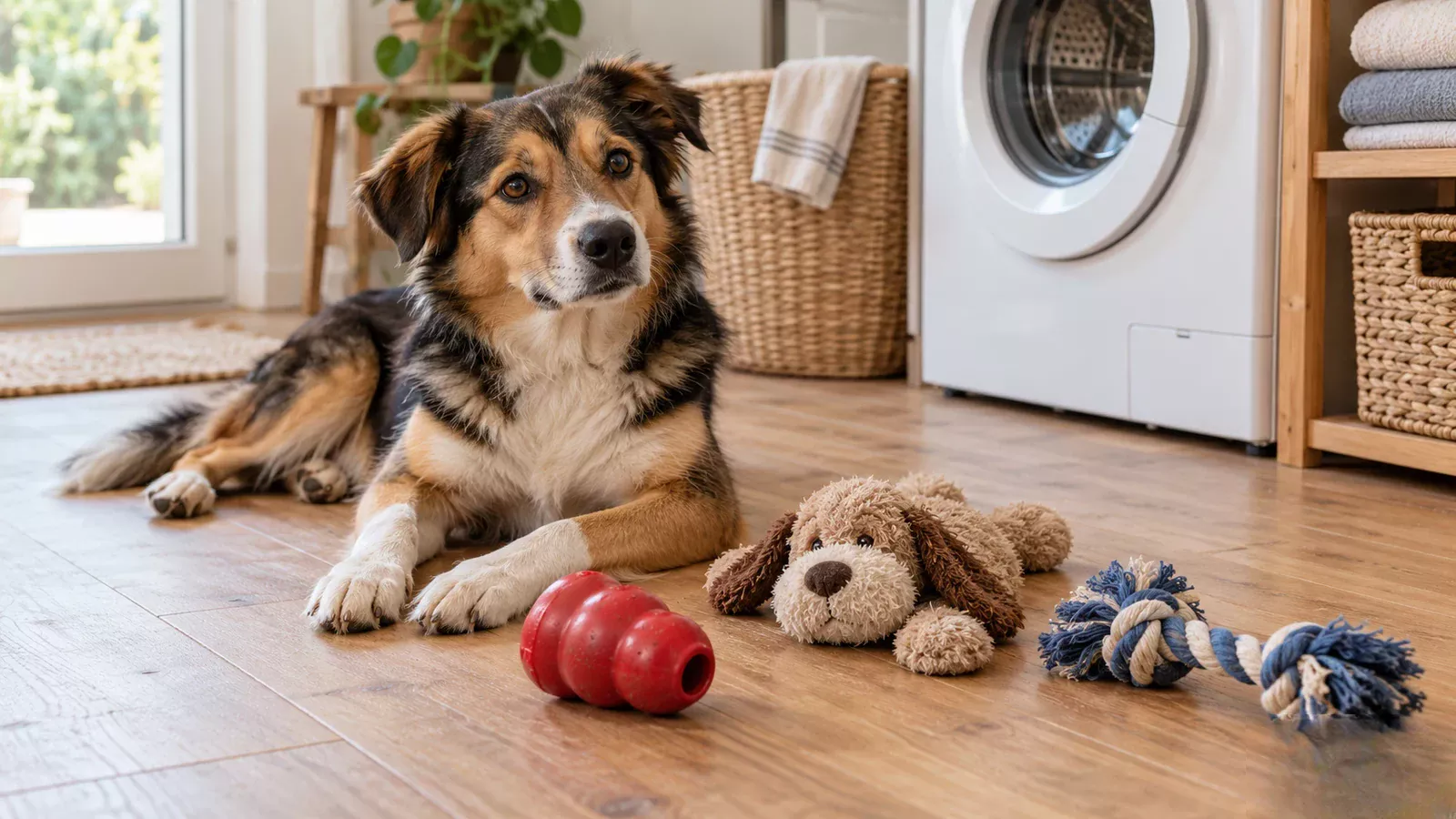
How to clean dog toys depends on the maker’s care instructions and the material. For a rubber or plastic toy without directions, wash with warm water and soap or detergent, scrub off residue, rinse, and let it dry. Plush and rope toys may need a laundry cycle instead. Cleaning removes dirt; disinfecting is a separate step and is only needed in specific situations.
Still choosing a toy? Our guide to dog puzzle toys compares play styles and beginner-friendly options.
| Toy type | Starting point | Appliance check |
|---|---|---|
| Rubber or plastic | Without toy-specific directions, use soapy water, scrub, rinse, and dry | Use the dishwasher only if the toy’s care directions identify it as dishwasher-safe |
| Plush or fabric | Follow the tag for spot-cleaning or a laundry cycle | Use only the cycle and drying method the maker permits |
| Rope | Follow the tag; rinse thoroughly if hand washing is allowed | Do not assume a machine cycle is suitable |
| Toy with a squeaker, glued parts, or electronics | Use only the maker’s specific care directions | Skip soaking or appliances when instructions are unclear |
What should you check before washing a dog toy?
Look for a care label, product page, or instructions from the maker. Toys that look similar may use different materials, stitching, squeakers, or glued parts, and their care directions can differ. If the instructions say hand wash, keep it out of the washing machine or dishwasher. If they specify a machine cycle, temperature, or drying method, follow those details rather than guessing.
Before washing, check the toy’s condition. Set aside one with a cracked body, torn seam, missing part, or frayed section that changes how your dog handles it. Washing does not repair damage. If a toy is falling apart, follow the maker’s replacement guidance instead of returning it to the toy basket.
For toys with no care directions, the CDC’s guidance for pet supplies provides a useful starting point: hard rubber and plastic items can be washed with soap or detergent and warm water, scrubbed, rinsed, and dried. The same page treats plush items differently and distinguishes ordinary cleaning from disinfection.
How do you clean rubber or plastic dog toys?
For a rubber or plastic toy without its own cleaning directions, the CDC’s method for hard items is soapy water. Use warm water and soap or detergent, scrub with a sponge or brush, rinse away dirt and soap, then air-dry or wipe with a clean towel. Follow the toy maker’s instructions when they are available.
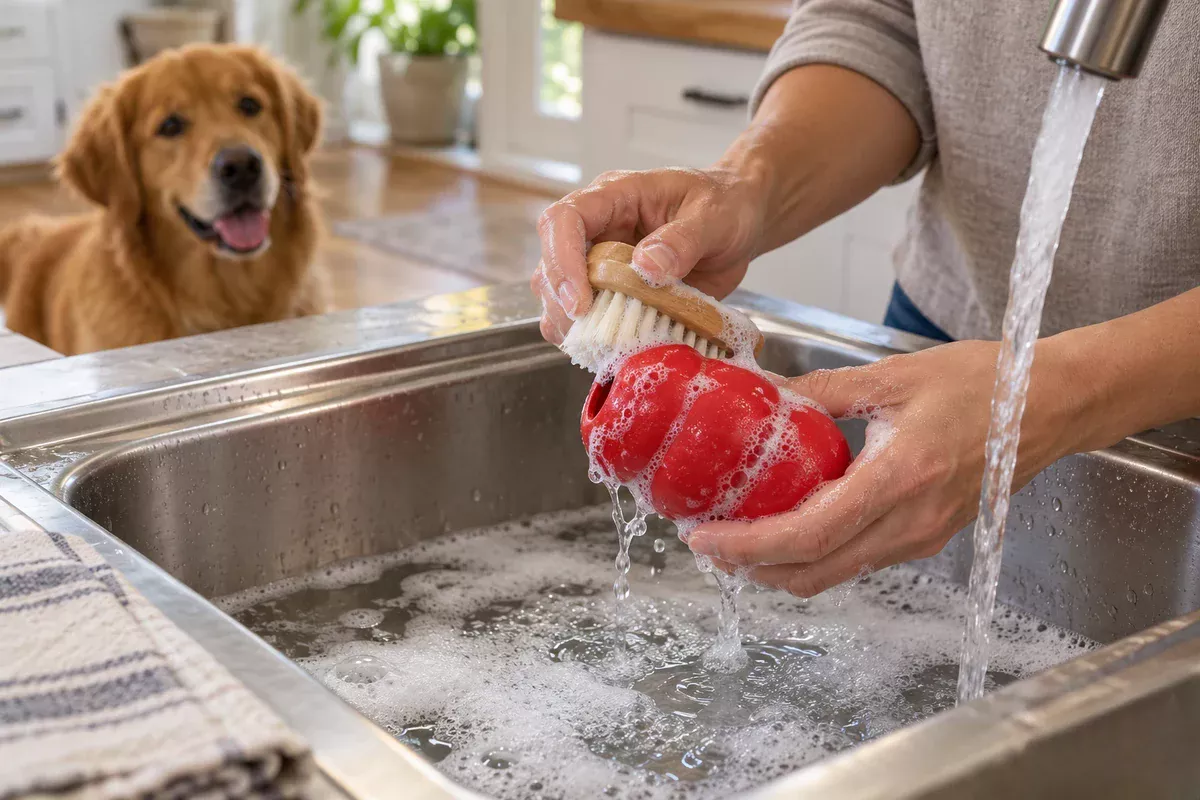
For hard items, including rubber and plastic toys, the CDC says dishwasher-safe bowls or toys can be cleaned and disinfected in a dishwasher. Check the specific toy’s care directions before putting it in; if they do not list a dishwasher, use a hand-washing method permitted by the maker.
As a brand-specific example, KONG’s care FAQ describes washing its rubber toys in a sink with warm water and soap; for tough residue, it says most KONG rubber toys can go on the top dishwasher rack and to “skip the heated dry cycle.” Its KONG cleaning guide says to scrub the inside with a KONG brush or old toothbrush and rinse thoroughly. These instructions are for KONG products, not every rubber toy.
How should you wash plush and rope toys?
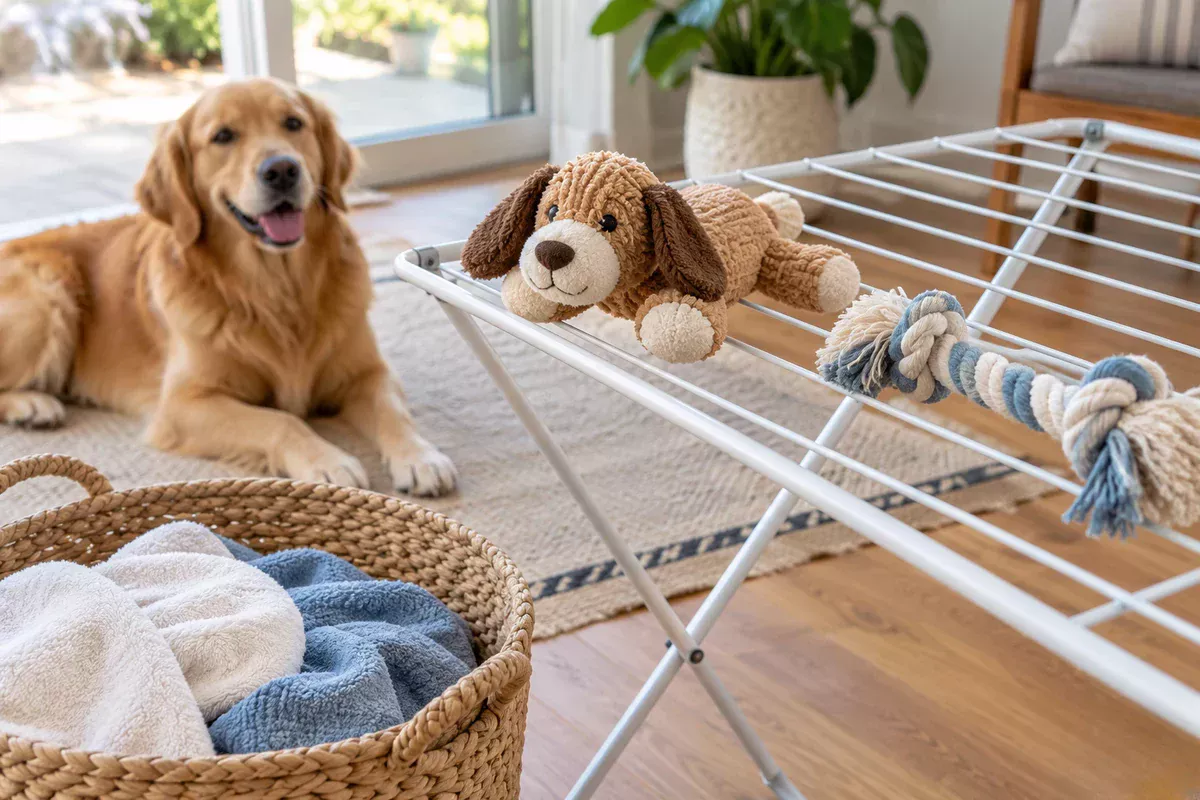
Check the tag for the fabric and the toy’s construction. If the maker allows machine washing, remove loose dirt first and use the cycle and detergent directions given for that toy. A laundry bag can help keep a small toy together in the wash, but it does not replace the maker’s instructions. After washing, use only a drying method the label permits.
Plush toys may contain squeakers, plastic eyes, glued pieces, or stuffing that does not tolerate the same wash as the outer fabric. Rope toys can hold suds between their fibres, so rinse thoroughly if the label allows a hand wash. If you cannot find care instructions, spot-cleaning with a damp cloth may be a cautious first option, but do not soak a toy when you do not know how its parts are attached.
For soft items without care directions, the CDC groups plush toys and rope toys with other soft items and describes using a washing machine and dryer for cleaning and disinfection. Choose the cycle and water temperature for the fabric. Its separate 30-minute, highest-heat dryer step is specifically part of the disinfection instructions, not an everyday setting for every toy. Follow the toy’s label whenever one is available.
Can dog toys go in the dishwasher or washing machine?
Sometimes, when the toy is labelled dishwasher-safe. The CDC lists dishwasher-safe bowls or toys as items that can go in a dishwasher for cleaning and disinfection. Machine-washable plush toys should be washed according to their tag. For other toys, follow the maker’s appliance and cycle instructions rather than guessing from material alone.
For a brand-specific example, KONG’s FAQ gives its fabric toys for dogs and cats a cold-water, delicate machine cycle and says to skip the dryer. Check another maker’s label rather than copying the same method.
What is the difference between cleaning and disinfecting?
Cleaning removes dirt and residue with soap or detergent and water. Disinfecting uses a product or method intended to kill germs. The CDC separates these steps because a toy can look clean without having been disinfected, and a disinfectant must be used according to its label. A disinfectant is not a substitute for first removing visible dirt.
For routine play, do not turn every toy wash into a disinfection project. If a toy has been contaminated by a specific illness or another situation that calls for disinfection, follow the CDC’s current directions and the product label. Keep the item away from your dog until the label’s rinse and drying directions have been followed. The CDC says there is not enough research to show how well vinegar removes dirt or kills germs. It notes that vinegar can kill some germs if it stays on a surface long enough, but it does not kill all germs.
When your question is about a particular illness or exposure, ask your veterinarian for advice that fits your dog and the circumstances. General toy-cleaning instructions cannot diagnose or manage a health problem.
How often should dog toys be cleaned?
The CDC’s example cleaning schedule lists a monthly toy cleaning and says to clean more often when an item looks dirty or smells bad. Use that example alongside the toy maker’s instructions. If a toy is visibly damaged, set it aside rather than relying on a wash to make it usable again.
Keep clean toys somewhere dry and avoid putting a damp toy straight into a closed bin. If the toys share a play area with bedding, our guide to cleaning a pet bed covers care for another fabric item that collects everyday pet dirt. For a wider room-by-room routine, see the PawPureHome cleaning guides. Toys that come back from outdoor play may share a basket with a muddy lead or paws; our guide to cleaning a dog’s paws after a walk covers the entryway part of that routine.
What cleaning methods should you avoid?
- Never mix bleach with other cleaners, such as ammonia; the CDC warns that this can produce dangerous and toxic gases.
- Follow the CDC’s current cleaning guidance and disinfectant label when disinfection is called for.
- Do not leave detergent or disinfectant residue on a toy; follow the rinse and drying directions.
- Do not return a damp toy to a closed storage bin.
These limits are less about finding a magic cleaning ingredient and more about avoiding guesswork. A toy’s material, shape, and attached parts determine what it can handle.
What is a simple step-by-step way to clean dog toys?
- Read the toy’s label or the maker’s product-care page.
- Set aside toys with cracks, torn seams, loose pieces, or heavy fraying.
- Separate hard toys from plush and rope toys so their care instructions do not get mixed up.
- Wash each toy by the method its maker allows. For an unlabelled hard rubber or plastic item, use the CDC’s soap-and-warm-water cleaning guidance.
- Rinse when the instructions call for it, then dry fully using an approved method.
- Return clean toys to a dry storage spot, and keep illness-specific disinfection separate from routine cleaning.
Can I use dish soap to clean dog toys?
For an unlabelled hard rubber or plastic pet item, the CDC describes soap or detergent and warm water as the cleaning method. Check the toy maker’s directions first, use the product as directed, and rinse the toy when required. Do not assume the same approach suits a plush toy or an item with electronic parts.
Should I clean a toy after every play session?
Not necessarily. Follow the manufacturer’s schedule and clean when a toy is visibly dirty or has residue that needs removing. Toys used with food may need more frequent washing than a dry indoor chew toy. There is no universal schedule that applies to every material and household.
Can I use vinegar to disinfect dog toys?
The CDC says there is not enough research to show how well vinegar removes dirt or kills germs. For ordinary dirt, use the toy’s cleaning instructions; when disinfection is needed, follow the CDC’s directions and the product label rather than assuming vinegar will disinfect the item.
Sources
- CDC: About Cleaning and Disinfecting Pet Supplies
- KONG: Frequently Asked Questions and toy-care instructions
- KONG: How to Clean a KONG
Clean and dry toys first; if odor lingers in the room rather than on the toy, see: room odor-control products.