How to Remove Pet Odor From Hardwood Floors Without Overwetting

Direct answer: To remove pet odor from hardwood floors, find the source, absorb fresh moisture without spreading it, and follow the care directions for your floor’s finish. Dry the area fully before judging the result. Odor that remains at seams, unfinished wood, underlayment, or trim may need a flooring professional.
Hardwood needs a different response from carpet. More liquid is not better. The National Wood Flooring Association advises cleaning spills promptly with a dry or slightly damp cloth and avoiding wet or steam mops. That makes moisture control the first rule, even when the odor makes repeated washing tempting.
What should you do first when pet odor is on hardwood?
Start by separating the source from the surrounding floor. Move washable rugs, pet bedding, bowls, and loose objects out of the area. Check whether the odor follows an item or stays with one section of flooring. This simple check prevents unnecessary treatment of a large room.
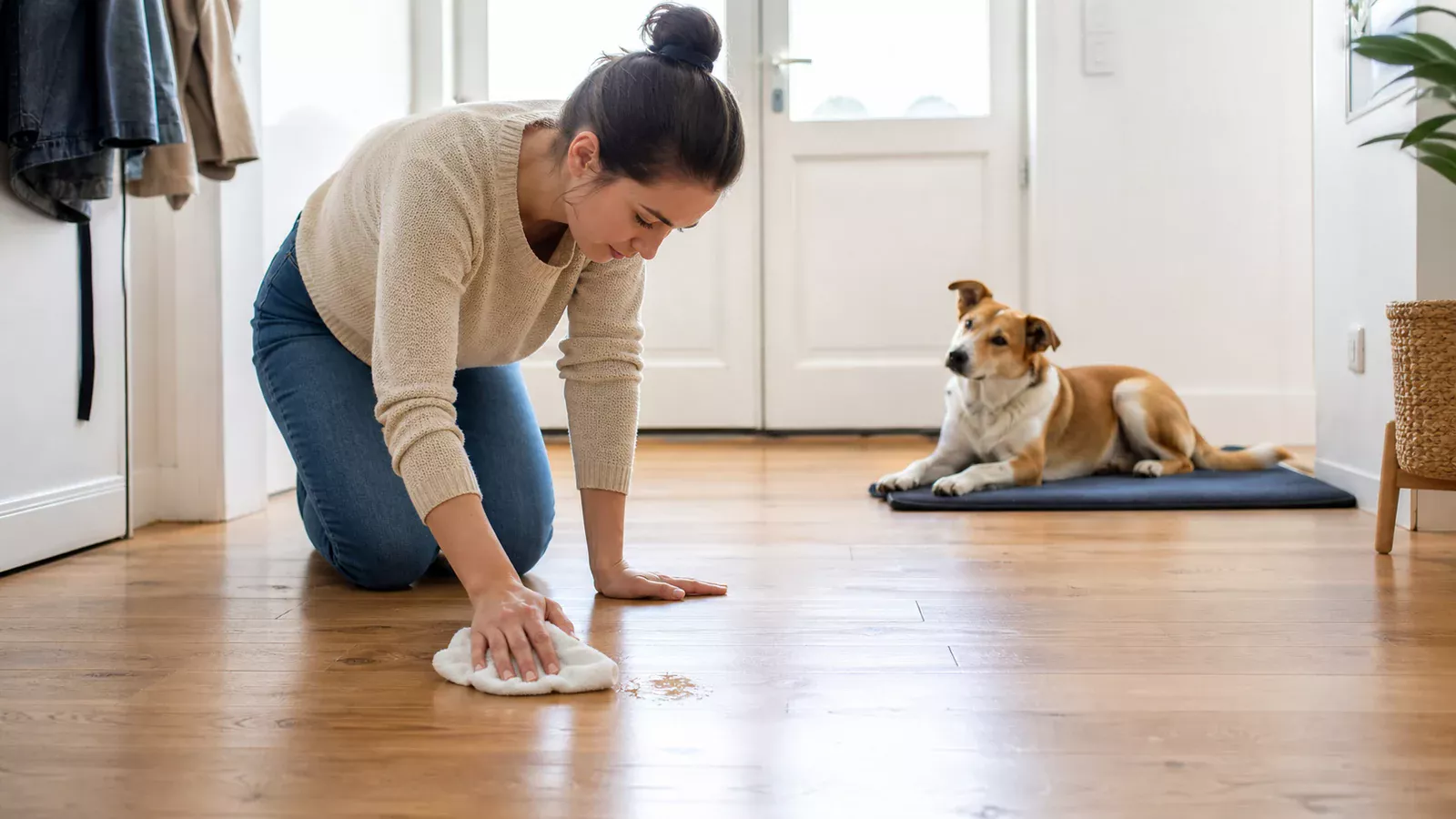
For a fresh accident, press an absorbent cloth over the moisture and replace it as it becomes damp. Do not scrub across plank seams because that can spread moisture.
- Keep the dog or cat out of the work zone until the floor is clean and dry.
- Check nearby baseboards, floor vents, furniture feet, and the underside of a movable mat.
- Identify the floor finish or ask the installer before choosing a cleaner.
If the problem includes a visible mark, use the separate finish-first guide to pet stains on hardwood floors. Odor and discoloration can occur together, but they do not always require the same next step.
How do you remove pet odor from hardwood floors step by step?
Use a controlled routine rather than repeating wet passes. The goal is to remove what remains on the accessible surface, protect the finish from unnecessary moisture, and give the floor enough drying time for an honest reassessment.
- Locate the smallest affected area. Smell nearby removable items separately. Follow plank seams and edges instead of treating the whole room.
- Blot fresh moisture. Press with a clean absorbent cloth. Change cloths until the surface no longer transfers visible moisture.
- Check the finish instructions. Use only a cleaner or method that the flooring maker, installer, or finish manufacturer identifies as suitable.
- Test a hidden spot. Apply the chosen method to a small inconspicuous section and let it dry. Look for haze, softening, color change, or altered sheen.
- Clean the defined area. Put the product on the cloth if the label directs that method. Avoid pouring cleaner directly onto the boards unless the floor-care instructions explicitly require it.
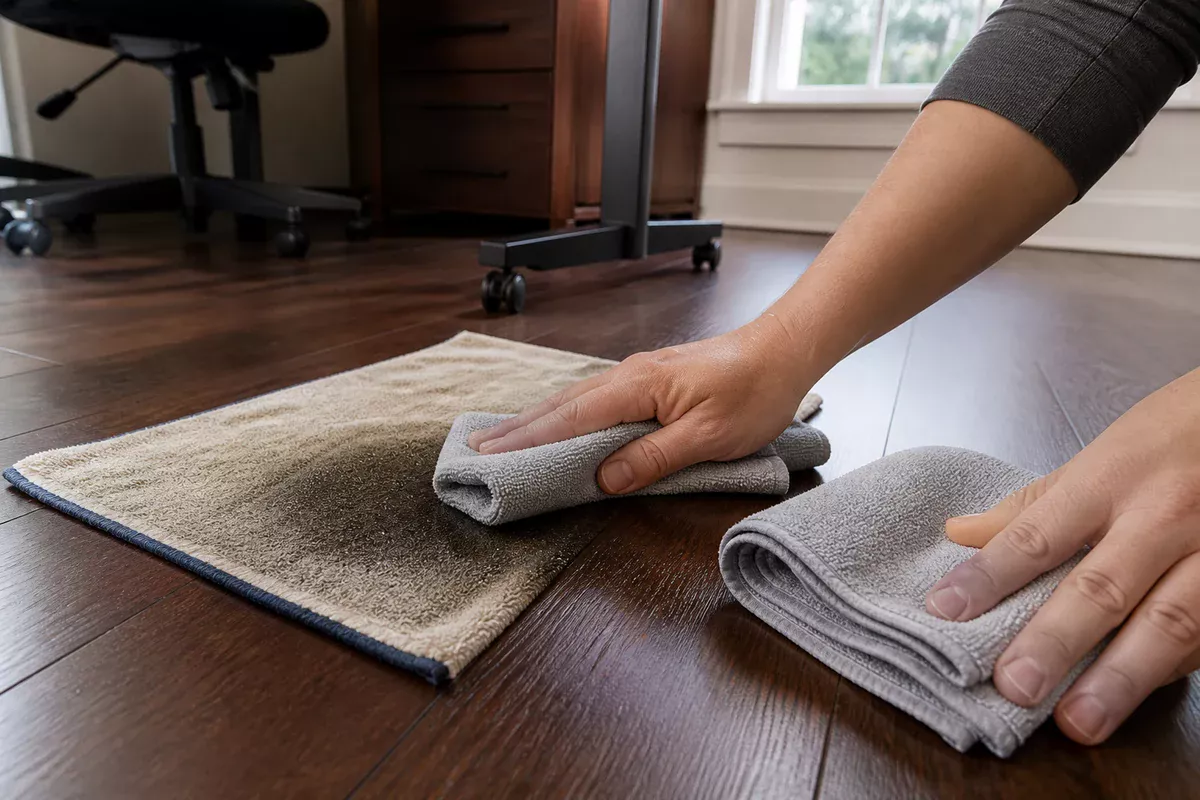
- Remove remaining surface moisture. Use a separate dry cloth. Pay attention to bevels and seams without forcing liquid into them.
- Ventilate and restrict access. Follow the cleaner label for ventilation and re-entry. Keep pets away for the stated period.
- Reassess only after drying. Compare the treated area with the surrounding boards in side light. Check odor at floor level and near the closest wall edge.
Which cleaning method fits the condition of the floor?
The finish and the path of the accident matter more than the wood species alone. A surface spill on an intact factory finish is different from liquid that has entered an open seam or reached unfinished material. Use the table as a stopping guide, not as a substitute for the floor manufacturer’s instructions.
| What you observe | Reasonable next action | When to stop |
|---|---|---|
| Fresh moisture on an intact-looking finish | Blot promptly, use finish-compatible care, dry, then reassess | Stop if the finish becomes cloudy, tacky, soft, or discolored |
| Odor near a plank seam after the surface is dry | Document the location and contact the installer or a wood-floor professional | Do not flood the seam or probe it with sharp tools |
| Darkened wood, lifting edges, cupping, or a softened finish | Keep the area dry and request professional assessment | Stop household treatment because the issue may extend below the accessible finish |
| Odor moves with a rug, pad, or pet bed | Remove the item and clean it according to its own care label | Do not keep treating the hardwood if the floor is not the source |
| Odor is spread through several rooms | Use a room-by-room source check before treating any floor | Avoid applying cleaner across unaffected boards |
For a broader search beyond one floor section, follow the room-by-room plan for locating pet odor at home. If the source is actually a rug or carpet, use the source-first carpet odor routine instead.
What should you avoid on hardwood floors?
Avoid any method that leaves the floor wet or asks you to improvise beyond the product label. The NWFA specifically advises against wet mops and steam mops because repeated moisture and heat can damage the finish and wood over time.
- Do not pour water or cleaner into seams to chase an odor.
- Do not combine household products or change a labelled dilution.
- Do not assume a method described for tile, carpet, or sealed stone also suits wood.
- Do not sand a small spot without identifying the finish and repair plan.
- Do not cover the area with a rug while it is still damp.
The EPA advises reading the cleaner label before buying, using, and storing it. The label supplies directions, precautions, storage information, and first-aid contacts. It also states when pets should remain away from a treated area. Those directions take priority over a general online cleaning routine.
How can you tell whether the odor is below the finish?
A persistent odor does not prove that the wood is permanently damaged. It does mean that more surface cleaning may not reach the source. Check after the area has dried and the room has aired out. Note whether the odor is strongest at a seam, wall edge, threshold, heating vent, or one board.
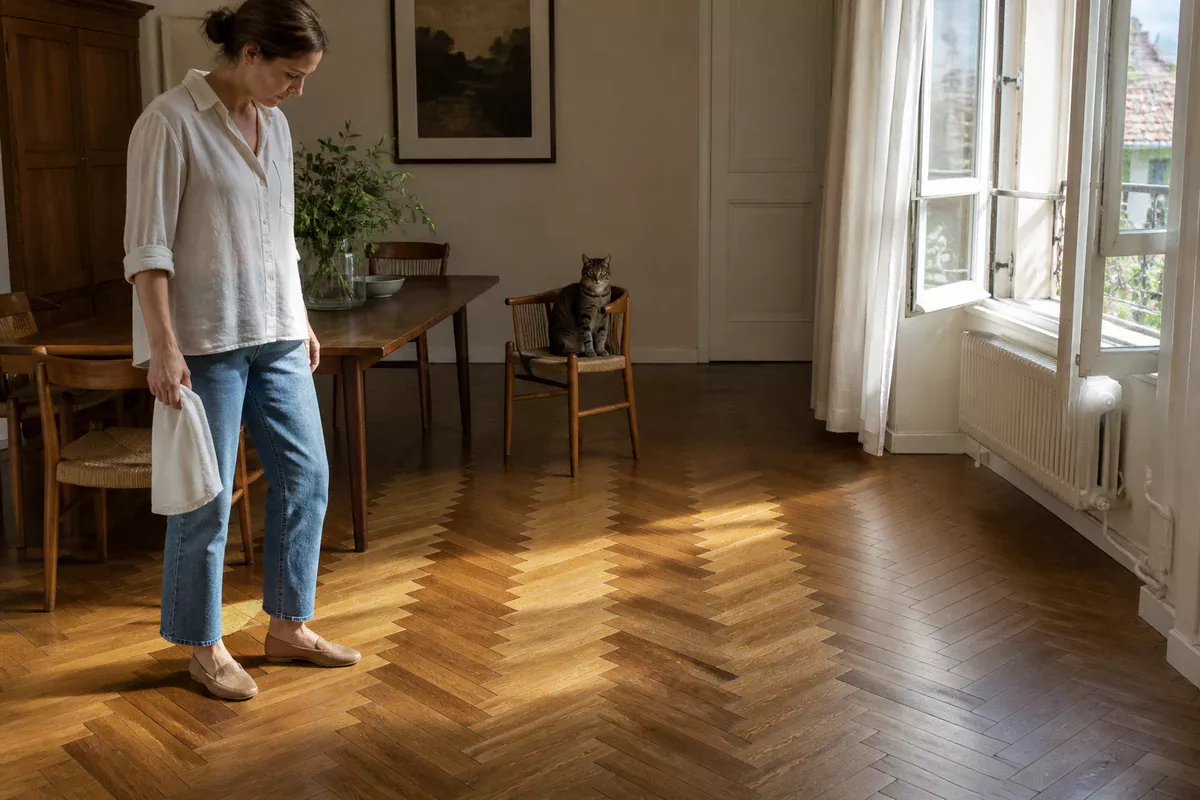
Call a flooring professional when you see cupping, lifted edges, persistent darkening, a soft finish, or odor returning from one seam. Share the floor type, finish, products used, and photographs so the professional can assess the next step.
How do you prevent the same hardwood area from becoming a repeat source?
Keep an absorbent cloth within reach, inspect the floor under bowls and washable mats, and dry paw drips near entrances. Move rugs occasionally so you can check beneath them.
Use the floor maker’s maintenance plan for routine care. Store cleaners in their original containers and away from pet food and water. For reusable cloths and tools, follow their care labels and let them dry before storage. The site’s product care checklist can help keep reusable cleanup items ready without turning a small accident into a larger cleaning session.
Frequently asked questions
Can I use vinegar to remove pet odor from hardwood floors?
Do not assume vinegar suits your floor. Hardwood finishes vary, and a general household recipe does not establish compatibility. Check the floor or finish manufacturer’s maintenance instructions. If they do not approve the method, choose a specifically recommended cleaner or ask a flooring professional.
Should I use a steam mop on a pet odor area?
No. The National Wood Flooring Association advises against steam mops and wet mops on wood floors because they can damage the finish and the wood over time. Use a dry or slightly damp approach that matches your finish instructions.
Why does the odor return after the floor looks clean?
The visible surface may be clean while residue remains in a seam, under trim, in a rug pad, or below the finish. Wait until everything is dry, confirm the exact source, and stop adding moisture if the odor stays concentrated at a joint or board edge.
Can I use the same product that I use on carpet?
Only if the label explicitly lists your hardwood finish or the flooring manufacturer approves it. Carpet instructions do not establish suitability for wood. Test any approved method in a hidden area and stop if the finish changes.
When should I replace or refinish a board?
Do not make that decision from odor alone. A wood-floor professional should assess persistent odor with darkening, cupping, lifted edges, finish failure, or evidence that liquid reached below the surface. Local repair may be possible, but the correct option depends on the construction and finish.
Sources
- National Wood Flooring Association, Maintenance, accessed August 6, 2026. Guidance on prompt spill cleanup, limited moisture, avoiding wet and steam mops, and using a cleaner suited to the floor finish.
- U.S. Environmental Protection Agency, Read the Label First: Protect Your Pets, updated March 23, 2026 and accessed August 6, 2026. Guidance on label directions, storage, ventilation precautions, and keeping pets away as directed.
A practical stopping point
One careful pass followed by full drying tells you more than repeated wet cleaning. If the odor is gone and the finish looks unchanged, return to the floor’s normal maintenance routine. If it remains at a seam or appears with visible floor changes, stop and document the area. Browse the PawPureHome cleaning guide library for related routines by surface and cleanup task.