How to Remove Pet Hair From Clothes Before and After Washing

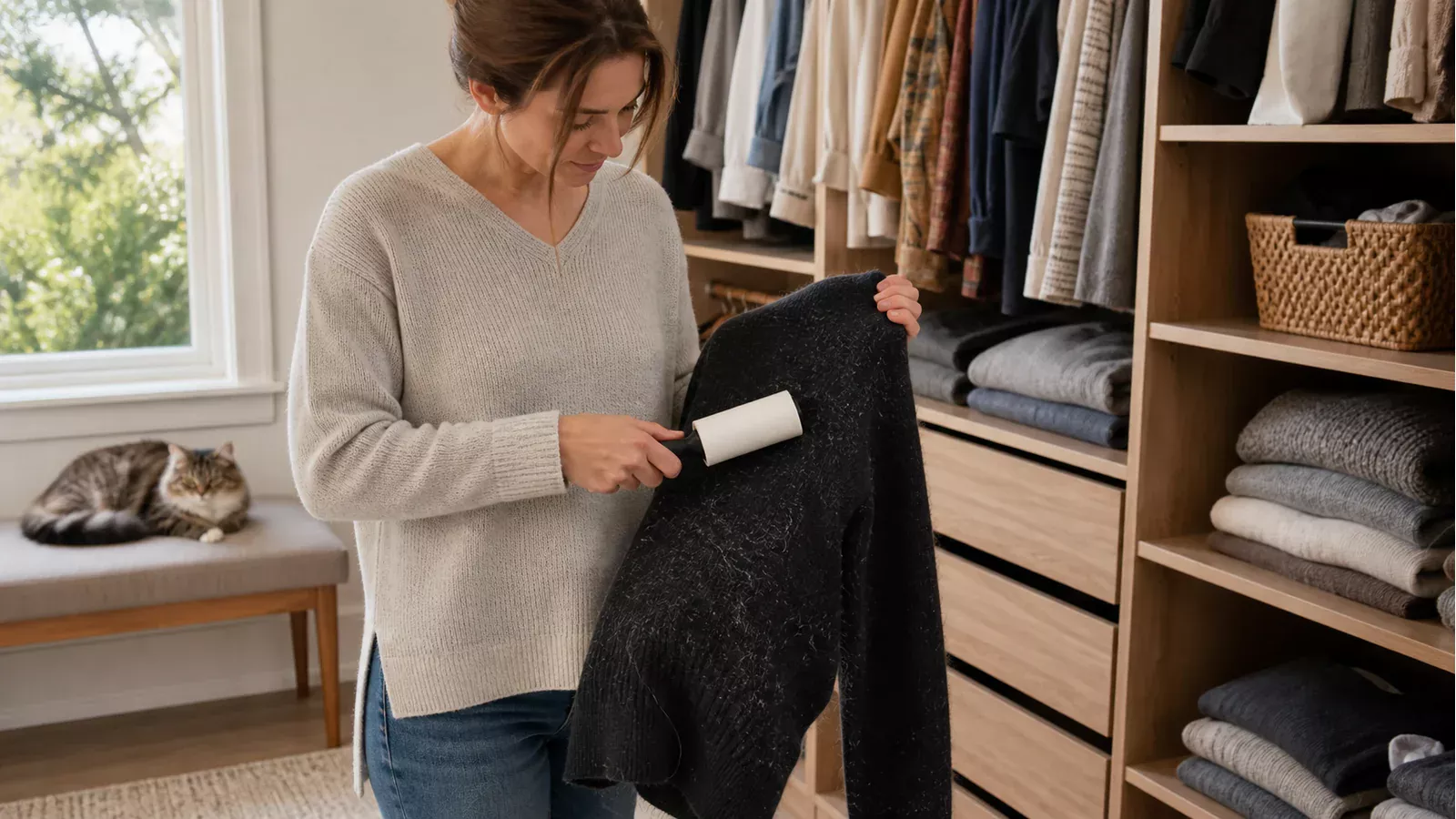
Direct answer: Remove pet hair from clothes while the fabric is dry. Shake the garment outdoors, use a lint roller or clothes brush, then check its care label before washing or tumble drying. If the label permits a no-heat tumble, that step can loosen remaining hair so the lint screen can collect it. Clean the screen afterward.
Putting a heavily furred shirt straight into the washer often turns loose hair into wet clumps. Some of that hair may stay on the fabric or move through the appliance. A better routine starts with dry removal, separates delicate clothing from washable everyday items, and treats the care label as the final instruction.
What is the best way to remove pet hair from clothes?
The most controlled method is to work on dry clothing before washing it. Hang the garment or lay it on a clean, flat surface. Use short passes with a lint roller, fabric brush, or another tool approved for that textile. Work from one section to the next instead of rubbing the same spot repeatedly.
Pay attention to cuffs, waistbands, pocket edges, seams, and textured knits. Hair collects where the fabric bends or where static holds it against the surface. Turn the garment over and check the back before moving it to the hamper.
- Shake sturdy garments outdoors before using a tool.
- Test brushes and reusable hair removers on an inside seam.
- Use lighter pressure on knits, loosely woven fabrics, and decorated clothing.
- Keep hair-covered pet bedding separate from regular clothing.
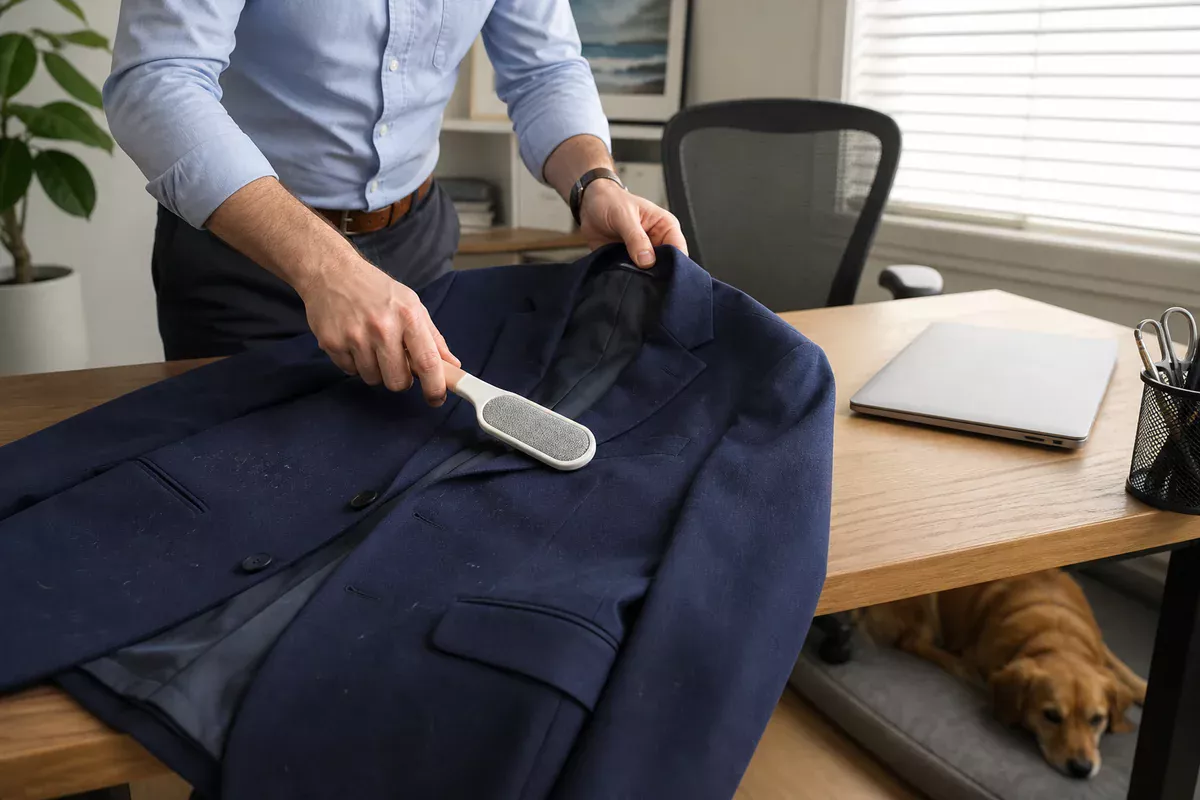
A lint roller is useful for a small area or a last check before leaving home. A broader clothes brush can be faster on coats and trousers. For sofas and other upholstery, use the separate pet hair removal guide for furniture because clothing and fixed upholstery do not share the same construction or care instructions.
How do you remove pet hair from clothes before washing?
Remove as much dry hair as practical before the garment enters the washer. Maytag’s laundry guidance recommends shaking hair-covered clothing outdoors and using a lint roller before a standard wash. It also describes a no-heat tumble before washing when the garment label and appliance instructions permit that method.
- Read the care label. Check whether the garment allows machine washing and tumble drying. Do not assume both are permitted.
- Empty pockets and close fasteners. Secure zippers or hooks that could catch another fabric.
- Shake the garment outdoors. Skip aggressive shaking for delicate construction or loose decoration.
- Lift visible hair. Roll or brush in sections. Replace adhesive sheets when they stop collecting hair.
- Inspect both sides. Turn cuffs, collars, and hems so hidden buildup does not move into the wash.
- Separate the load. Keep heavily furred pet textiles away from ordinary clothes when their care directions allow separate washing.
- Use a no-heat tumble only if permitted. Check the clothing label and dryer manual first. Then clean the lint screen.
- Wash according to the label. Use the stated cycle, temperature, drying method, and warnings.
Which method fits each type of clothing?
The fabric and construction decide how much friction, tumbling, and washing a garment can take. The U.S. Federal Trade Commission explains that clothing care labels identify regular washing or dry-cleaning instructions and provide warnings when an expected procedure could harm the item. Use those directions before trying a general pet-hair routine.
| Clothing condition | Reasonable first step | When to stop |
|---|---|---|
| Sturdy, washable cotton or denim | Shake outdoors, roll or brush while dry, then follow the wash label | Stop brushing if the surface begins to fuzz or abrade |
| Wool coat or structured blazer | Use a garment brush approved for the fabric and follow the care label | Do not machine wash or tumble unless the label allows it |
| Loose knit or embellished garment | Use light dabbing with a lint roller after testing a hidden area | Stop if loops lift, decorations loosen, or adhesive pulls fibers |
| Dry-clean-only clothing | Remove loose surface hair gently and follow the professional cleaning instruction | Do not improvise a wash cycle |
| Pet bedding or blankets | Remove dry hair first and wash separately when the item’s label permits | Stop if the item exceeds the appliance capacity or has damaged seams |
The practical rule is simple: hair removal should not become fabric damage. If a tool pulls threads, changes the nap, or leaves a shiny patch, stop. A slower method on one garment is cheaper than repairing a damaged coat.
Can a dryer help remove pet hair before washing?
A dryer can help only when the garment label permits tumble drying and the dryer offers an appropriate no-heat or air-only setting. Maytag describes a dry, wash, and dry sequence in which an initial no-heat tumble loosens hair and sends some of it to the lint screen. This is an optional step, not a rule for every textile.
Do not use heat to force the process. Check the load after a short interval and follow the appliance manual. The U.S. Consumer Product Safety Commission advises cleaning the lint screen or filter before or after each load. Hair and lint left in the system should not be ignored.
- Confirm tumble drying is allowed.
- Choose no heat or air only when the appliance provides it.
- Do not overload the drum.
- Clean the lint screen after the pre-tumble and again after final drying.
- Inspect the dryer vent and appliance according to the manufacturer schedule.
If the garment cannot tumble dry, skip this step. Continue with gentle dry brushing or follow its professional care instructions.
What should you do after washing?
Check the garment only after it has dried according to its label. Hair is easier to see under side light, especially on dark fabric. Use a clean lint roller for the remaining strands rather than immediately repeating the wash. Rewashing adds time and wear without proving that another cycle will lift dry hair.
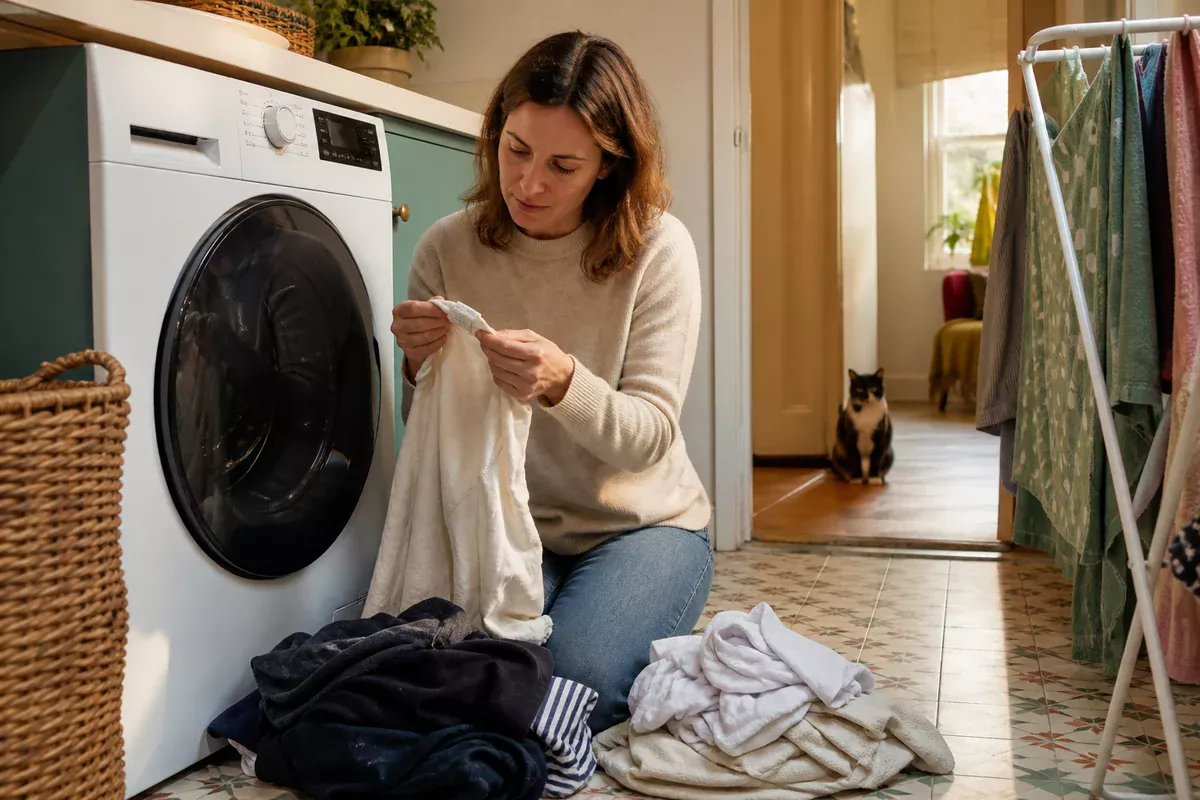
Inspect the washer door seal, drum, and accessible filter only as directed by the appliance manual. Wipe visible loose hair from accessible surfaces after the machine is off. Do not dismantle panels or reach into an appliance beyond its user-maintenance instructions.
Reusable rollers and brushes also need care. Remove collected hair and clean the tool according to its manufacturer directions. The PawPureHome product care checklist covers basic storage and inspection for reusable cleanup tools.
How can you keep pet hair off clean clothes?
Reduce transfer points rather than trying to eliminate normal shedding. Keep clean clothes in a closed wardrobe, place worn clothing in a hamper, and avoid mixing a pet blanket with regular laundry. Vacuum or remove hair from the chair where you set tomorrow’s outfit.
Brushes and lint rollers work best when they are easy to reach. Keep one near the wardrobe and another near the exit. For hair that has already moved to flooring, use the surface-first carpet hair routine instead of using a clothing tool across a whole room.
Regular pet grooming may reduce loose hair around the home, but the correct schedule depends on the animal’s coat and needs. Ask a qualified groomer or veterinarian when you are unsure. This clothing guide does not replace pet-care advice.
Frequently asked questions
Should I wash pet-hair-covered clothes immediately?
Remove loose hair while the garment is dry first. A lint roller or clothes brush keeps more loose material out of the washer. After that, follow the care label. Washing is appropriate only when the label permits it and the garment actually needs laundering.
Can I use a damp rubber glove on every fabric?
No. Moisture and friction can affect some finishes, dyes, knits, and delicate surfaces. Test any tool on an inside seam and check the care instructions. A dry lint roller or garment brush is easier to control for many everyday items.
Will one wash remove all pet hair?
Not necessarily. Results depend on the textile, amount of hair, static, load size, and appliance. Remove dry hair first, avoid overloading the washer, follow the garment label, and use a final lint-roller pass after drying if strands remain.
Can I put a wool coat in the dryer to loosen pet hair?
Only when the coat’s care label specifically permits tumble drying. Many structured or wool garments require different care. Use a suitable garment brush after testing a hidden area, or follow the listed professional cleaning instruction.
How often should I clean the dryer lint screen?
The U.S. Consumer Product Safety Commission advises cleaning the lint screen or filter before or after drying each load. Follow the dryer manual for deeper cleaning and vent maintenance. Stop using the appliance if it behaves abnormally and arrange qualified service.
Sources
- U.S. Federal Trade Commission, Clothes Captioning: Complying with the Care Labeling Rule, accessed August 8, 2026. Guidance on washing, drying, warnings, and following garment care instructions.
- Maytag, 4 Hacks for Removing Pet Hair from Your Laundry, accessed August 8, 2026. Manufacturer guidance on dry removal, lint rollers, and an optional no-heat tumble before washing.
- U.S. Consumer Product Safety Commission, Overheated Clothes Dryers Can Cause Fires, accessed August 8, 2026. Dryer lint-screen and vent maintenance guidance.
A simple finishing check
Before putting the garment away, inspect the front, back, cuffs, and seams in good light. One final dry pass is usually more controlled than another unnecessary wash. For more routines organized by surface and cleanup task, browse the PawPureHome cleaning guides or compare practical tools in the pet cleaning shop.