Dog Grooming Kit for Beginners: A Calm First Setup

BEGINNER DOG GROOMING
A dog grooming kit for beginners should support calm brushing, controlled bathing, drying, and basic inspection before it attempts any technical cutting. Choose tools for the dog’s coat and size, learn one tool at a time, stop when the dog is uncomfortable, and ask a veterinarian or qualified groomer to demonstrate nail, ear, mat, or clipper work before trying it alone.
What belongs in a dog grooming kit for beginners?
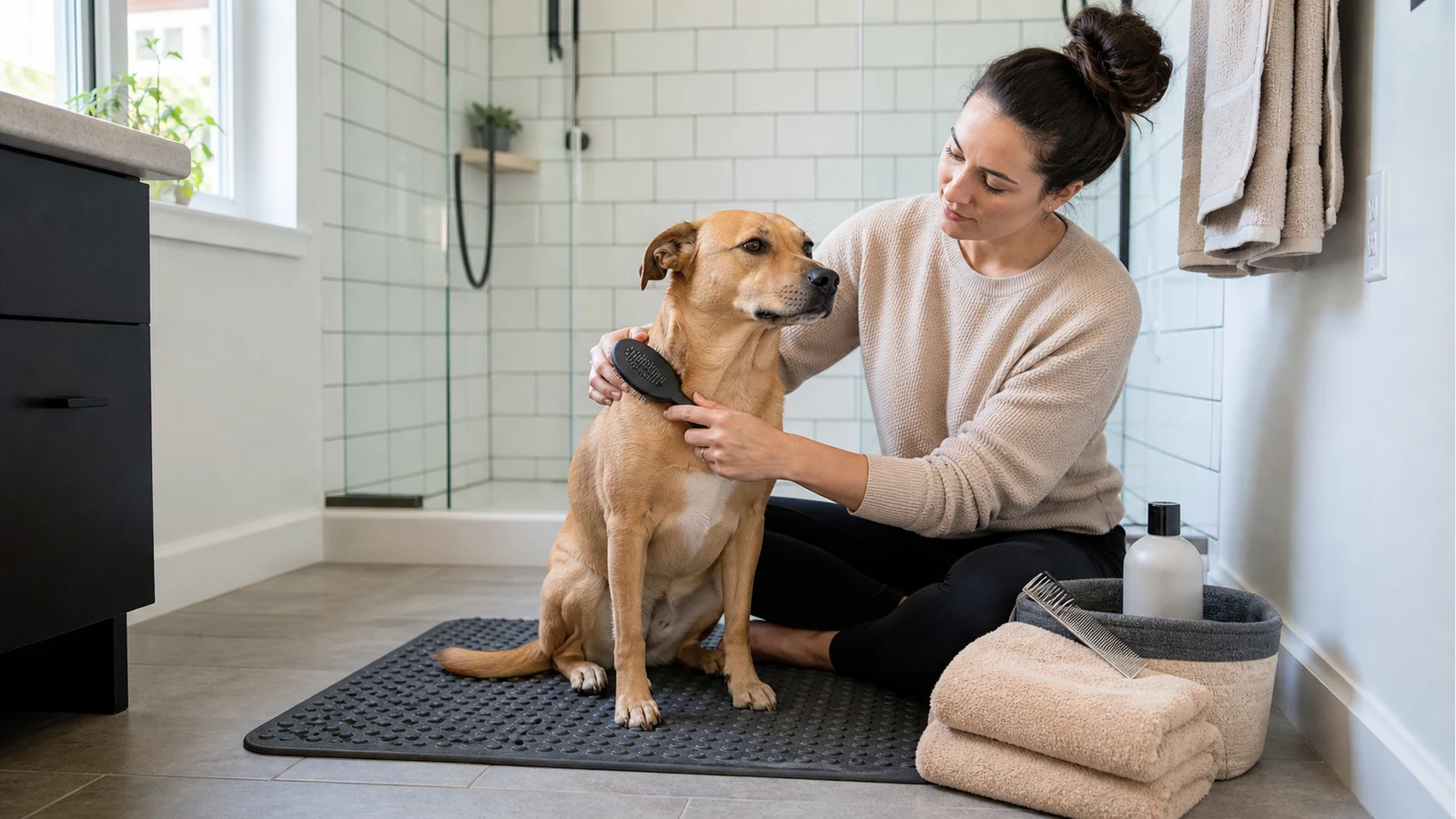
The useful starter kit is smaller than many boxed sets. It needs one brush suited to the coat, one comb for checking the result, two absorbent towels, a stable non-slip mat, and a washable tray or bag. If bathing is part of the plan, add a dog-specific wash product chosen with veterinary guidance when the dog has skin or medical needs.
AKC veterinary guidance notes that the right brush depends on coat type. It also advises owners to seek instruction before clipping dark nails, where the quick can be difficult to see. That is a good dividing line for a beginner kit: brushing and handling tools can come first, while tools that can cut skin or nail tissue wait until the owner has been shown how to use them.
| Starter item | Purpose | Beginner check |
|---|---|---|
| Coat-appropriate brush | Lift loose hair and separate the coat | Ask which brush suits the dog’s coat |
| Metal comb | Check small sections after brushing | Teeth are smooth and intact |
| Absorbent towels | Control water and dry the coat | Large enough for the dog and easy to wash |
| Non-slip mat | Provide stable footing | Lies flat in the selected work area |
| Dog-specific wash product | Wash the coat when a bath is needed | Directions and dog suitability are clear |
| Washable storage tray | Keep clean tools together | Can dry fully before closing |
Items that can wait
Clippers, scissors, nail tools, ear solutions, and high-velocity dryers are not automatic beginner purchases. Their use depends on coat, anatomy, condition, and instruction. A large kit does not create skill. If an owner cannot explain the stopping point or what tissue a tool could contact, that tool should stay out of the first session.
How do you match grooming tools to a dog’s coat?
Identify the coat before choosing a brush. Short, smooth coats do not need the same teeth or pressure as long, dense, curly, wiry, or double coats. Ask the dog’s breeder, veterinarian, or qualified groomer to identify the coat and demonstrate the direction, section size, and pressure that works without scraping the skin.
The AKC notes that some short-coated dogs may need only weekly brushing, while long-coated dogs can need attention several times a week or daily. Those are examples, not a universal schedule. The dog’s coat condition, activity, age, health, and professional advice should determine the routine.
Work from an easy area
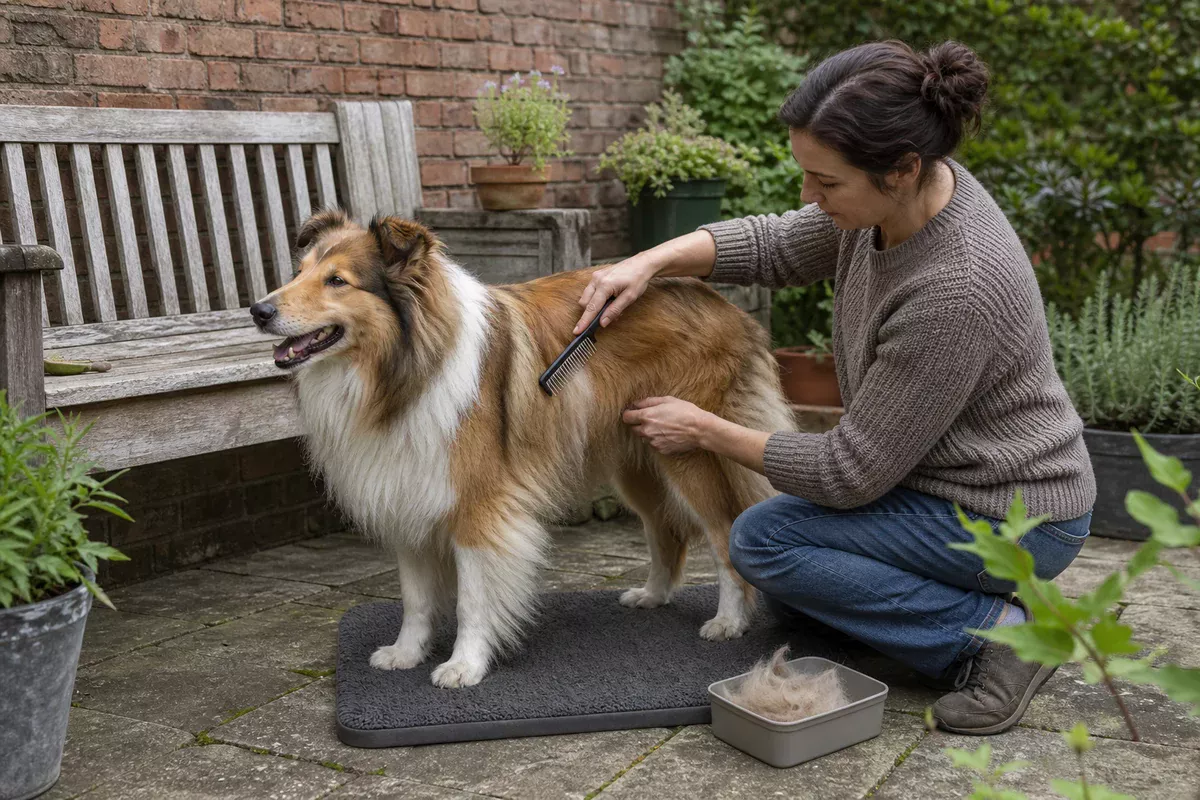
Begin where the dog already accepts touch, often the shoulder or upper back. Use a short stroke and pause. Check the skin and the brush. Move to another small section only while the dog remains comfortable. Do not pull through resistance. A tight tangle close to the skin can be difficult to distinguish from skin under a dense coat.
Do not cut out a mat with household scissors
AKC veterinary guidance advises keeping household scissors away from coat mats because a nervous movement can cause injury. A mat may also conceal irritated skin. Stop brushing if the area is tight, painful, damp, inflamed, or close to an eye, ear, paw, or skin fold. Ask a professional to assess the safest removal method.
How should a beginner run the first grooming session?
The first session is a handling lesson, not a full makeover. Place the mat in a quiet area, let the dog inspect one tool, touch the shoulder briefly, and finish while the dog is still settled. Repeating several short sessions gives the owner better information than restraining the dog through a long first attempt.
- Choose a quiet, stable area with clear floor space.
- Inspect the brush, comb, mat, and towels before bringing in the dog.
- Let the dog approach and examine one inactive tool.
- Brush one accepted area with light, controlled strokes.
- Pause when the dog turns away, pulls back, or becomes tense.
- Record what was comfortable, then clean and store the tools.
Watch the dog instead of the clock
There is no correct first-session length. The useful stopping point arrives before the dog begins struggling. Watch for repeated attempts to leave, a tucked posture, hard staring, rapid panting unrelated to heat, pulling the handled body part away, or a sudden change in behavior. These observations do not diagnose a problem, but they are reasons to stop.
Know when discomfort needs veterinary attention
Contact a veterinarian when grooming reveals a wound, swelling, discharge, strong ear odor, marked redness, a painful area, parasites, a new lump, sudden sensitivity, or a foreign object. Do not use the grooming session to treat an unexplained condition. AKC veterinary guidance specifically advises against removing foreign objects from the eyes, ears, nose, mouth, or paw pads at home.
What should a beginner prepare before bathing a dog?
Brush and inspect the coat before turning on the water. Gather towels, place the non-slip mat, set the dog-specific wash product within adult reach, and clear the floor. Use the temperature and method recommended for the dog and product. Keep water and wash product away from the eyes, ears, and mouth, and do not leave the dog unattended.
AKC grooming guidance recommends removing dead hair and mats before bathing, using cool or lukewarm water rather than hot water, and controlling water direction around the face. It also warns that daily bathing is unnecessary for most dogs. Bath timing depends on coat, activity, medical needs, and veterinary or grooming advice.
| Before the bath | Reason | Stop or revise when |
|---|---|---|
| Brush and inspect the coat | Find tangles and skin concerns before they are wet | The dog shows pain or the coat has a tight mat |
| Place a non-slip mat | Give the dog stable footing | The mat shifts or blocks drainage |
| Read the wash-product label | Confirm method, amount, and rinse directions | The product is unmarked or unsuitable |
| Prepare dry towels | Control water before the dog leaves the area | There are not enough towels for the coat |
A bath is not the place to improvise with a household surface cleaner, human shampoo, perfume, or disinfectant. CDC guidance says not to wipe or bathe pets with disinfection products. If the dog has a skin condition or needs a medicated wash, follow the veterinarian’s instructions for that dog.
How should grooming tools be cleaned and stored?
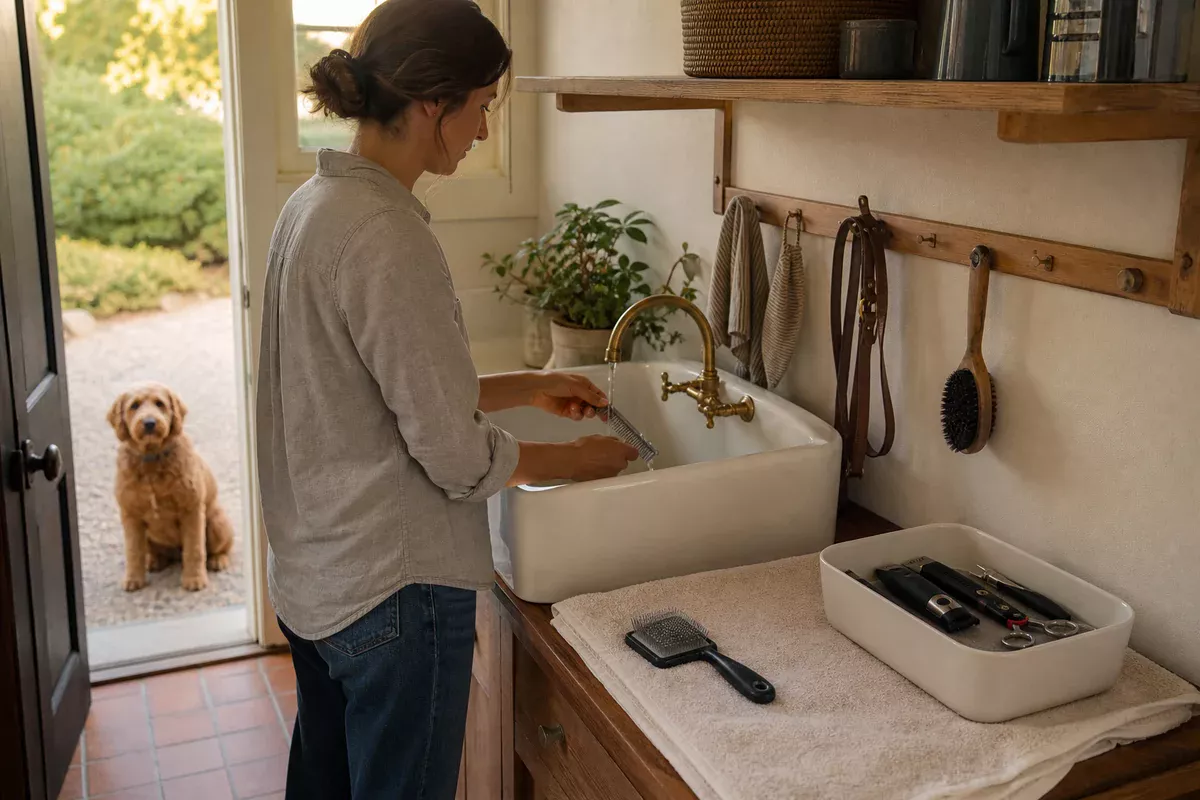
Remove captured hair after every session. Follow the manufacturer’s care instructions for each brush, comb, clipper attachment, mat, and towel. Wash only the parts designed for water exposure. Dry metal teeth, padded handles, and storage trays completely before closing the kit. Inspect for bent teeth, cracks, rust, loose parts, or residue before reuse.
The CDC recommends cleaning pet items according to their packaging or tags and allowing them to dry. It also distinguishes hard items from soft washable items. Apply that same material logic to grooming tools. A metal comb, rubber brush, textile towel, and electric clipper cannot be dropped into one sink and treated as if they share the same care method.
Separate clean and used tools
Use a washable tray for tools that have been used and another dry compartment for clean tools. Do not close damp towels into the kit. If several dogs use the same tools, ask a veterinarian or professional groomer about an appropriate cleaning and disinfection procedure rather than assuming an ordinary household routine is sufficient.
Connect grooming to household cleanup
Collect loose coat before it spreads through the home. The guide to removing pet hair from laundry explains how to handle fur before washing towels and covers. For floor cleanup, use the pet hair from carpet routine. After outdoor activity, the dog paw cleaning guide helps decide whether a simple inspection, wipe, or rinse is appropriate.
Frequently asked questions
Is a preassembled dog grooming kit good for beginners?
It can be, but inspect every included tool before use. A set may contain brushes, clippers, or nail tools that do not suit the dog’s coat or the owner’s skill. Build the working kit from the items that have a clear purpose and reliable instructions.
Which brush should a beginner buy first?
Choose the brush after identifying the dog’s coat. Short, smooth, long, dense, curly, wiry, and double coats have different needs. Ask a veterinarian, breeder, or qualified groomer to demonstrate one appropriate brush and the pressure to use.
Should nail clippers be in the first kit?
Only after the owner has learned nail anatomy and correct technique. Dark nails can make the quick difficult to see. If the owner is uncertain, a veterinarian or qualified groomer should demonstrate the process or perform the trim.
Can I use human shampoo on my dog?
Do not assume a human product suits a dog. Use a product intended for dogs and follow its label. Ask a veterinarian for product guidance if the dog has itching, redness, a diagnosed skin condition, or a prescribed bathing routine.
How often should a beginner groom a dog?
Frequency depends on coat, activity, age, health, season, and the type of grooming. Some short coats may need occasional brushing while some long coats need much more frequent work. Follow professional guidance for the individual dog rather than a fixed universal schedule.
Sources and further reading
- CDC: About Cleaning and Disinfecting Pet Supplies, updated February 18, 2026, retrieved July 28, 2026.
- CDC: When and How to Clean and Disinfect a Facility, retrieved July 28, 2026.
- American Kennel Club: The Dos and Don’ts of Home Dog Grooming and Hygiene, reviewed by AKC Chief Veterinarian Dr. Jerry Klein, retrieved July 28, 2026.
- American Kennel Club: Dog Grooming Tools and Supplies, retrieved July 28, 2026.
- American Kennel Club: At-Home Dog Grooming Tips, retrieved July 28, 2026.