Pet Hair Removal Products: Match Tools to Surfaces


Direct answer: Choose pet hair removal products by the surface you need to clean, not by the broadest marketing claim. A garment brush or lint roller suits clothing. A reusable roller or fabric tool is easier to control on upholstery. Carpet and car interiors need tools shaped for larger areas, seams and tight gaps. Check the product instructions and test an inconspicuous area before wider use.
The same tool rarely feels equally useful on a sweater, sofa, rug and car seat. Pet hair removal products should be compared against the actual task: clothing needs light, controlled contact, a large sofa rewards a wider working face, carpet calls for reach and manageable pressure, and car interiors add narrow gaps and mixed materials.
Why surface match matters more than a long feature list
Recent cleaning coverage has moved toward tested use cases rather than one universal winner. In a 2026 comparison, the Good Housekeeping Institute evaluated more than 25 pet hair removal tools on carpet, clothing, velvet and polyester-knit-covered pillows. Its results also showed a practical limitation: a tool that handled a broad upholstery surface well could be awkward around smaller parts of a garment.
That distinction is useful even if you buy a different model. Width, edge shape, grip, collection method and fabric contact all affect where a tool is convenient. Product type tells you what to inspect. It does not guarantee that every model in that type will behave the same way.
Pet hair removal products compared by everyday task
| Task | Practical first option | What to verify | Common limitation |
|---|---|---|---|
| Clothing touch-up | Lint roller or garment brush | Fabric instructions, brush direction, refill size | Small tools take longer on blankets or sofas |
| Sofa or chair | Reusable roller, fabric brush or textured hand tool | Upholstery compatibility, cleaning method, working width | Edges, piping and buttons need a smaller follow-up tool |
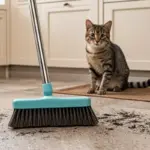
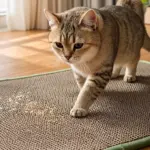
| Low-pile rug | Floor brush or broom listed for that surface | Pile guidance, head width, pressure and handle length | Not every floor tool suits loops, fringe or deep pile |
| Car seats and mats | Compact brush or hand tool | Seat material, tool edges and access around seams | Large rollers may not reach bolsters or seat rails |
| Pet bedding | Brush, roller or vacuum attachment allowed by the textile maker | Care label, seam condition and appliance capacity | Heavy buildup should be reduced before laundering |
Use this table to narrow the type, then compare the actual product instructions. A product page should tell you where the tool is intended to work and how it is maintained. If the description skips both points, you are being asked to guess.
How to choose a pet hair remover for clothes
Clothing is where control matters most. A broad reusable roller may be quick on the front of a coat, while a narrow lint roller is easier around cuffs and collars. A directional garment brush can avoid disposable sheets, but it must be used in the direction shown by its maker.
Before buying, look at the garment types you actually wear. Smooth cotton, structured wool, fleece and loose knits do not react to friction in the same way. The U.S. Federal Trade Commission explains that care labels provide regular washing or dry-cleaning instructions and warnings when a normal procedure could harm the garment. The clothing label therefore outranks a general cleaning hack.
For the full dry-removal and laundry sequence, use the dedicated guide on how to remove pet hair from clothes. It covers care labels, pre-wash brushing, optional no-heat tumbling and lint-screen cleaning without turning this selection page into a duplicate laundry article.
Check these details on a clothing tool
- Is the working face small enough for cuffs, seams and collars?
- Does the maker list suitable fabrics or warn against specific textiles?
- Does the tool require adhesive refills, a cleaning base or manual hair removal?
- Can you test it on an inside seam before treating the visible panel?
How to compare reusable tools for furniture
A sofa changes the equation. Covering a large seat with a tiny lint roller is slow and creates refill waste. A reusable roller or wider brush may be easier to use, but the working edge must still move safely across the upholstery. Check the furniture care code and the tool instructions before applying pressure.
Look closely at piping, tufting and loose covers. These areas often need a second, smaller tool. A reusable roller that works on a flat cushion may not reach the line beside an armrest. Our furniture pet hair routine explains how to divide fixed upholstery into manageable sections.
Glove or roller?
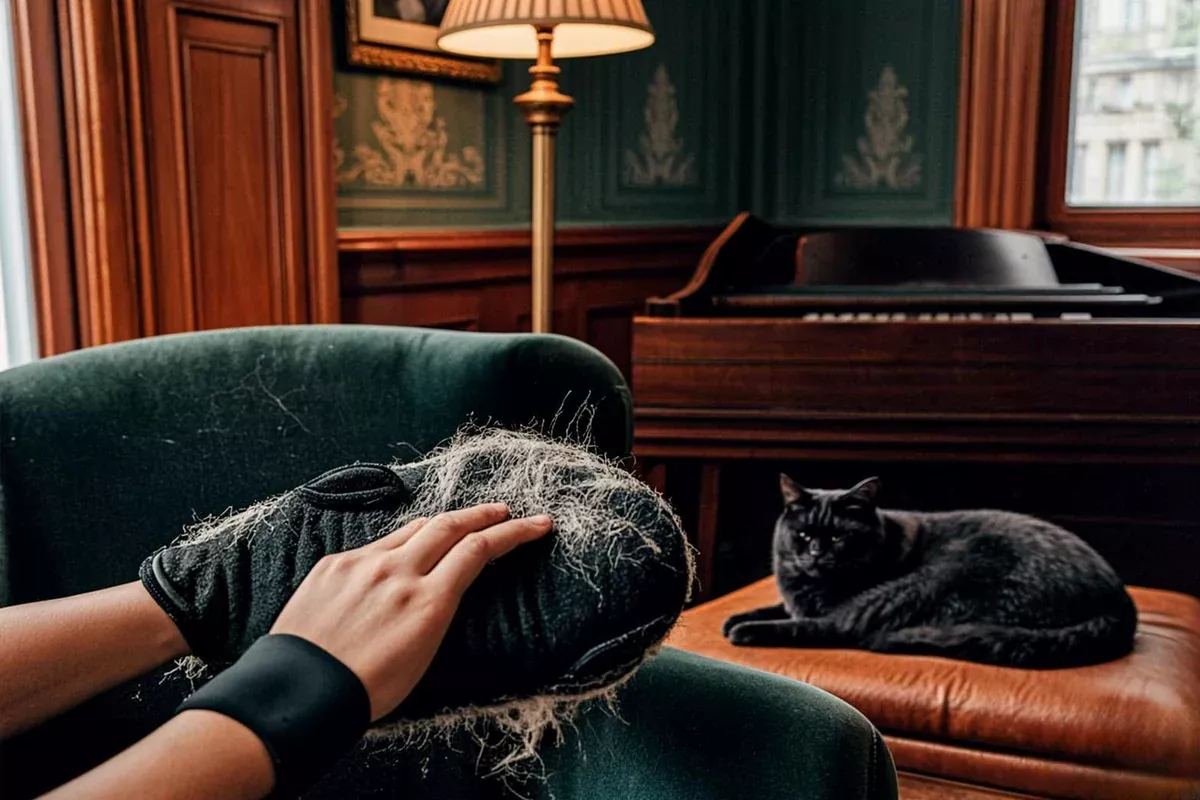
A glove follows curved cushions and lets you feel how much pressure you are applying. A roller keeps the working face more consistent and may collect hair in a compartment. Neither format is automatically better. Fit, grip, upholstery texture and cleaning effort decide which one is less frustrating in your home.
What to inspect in a carpet or rug tool
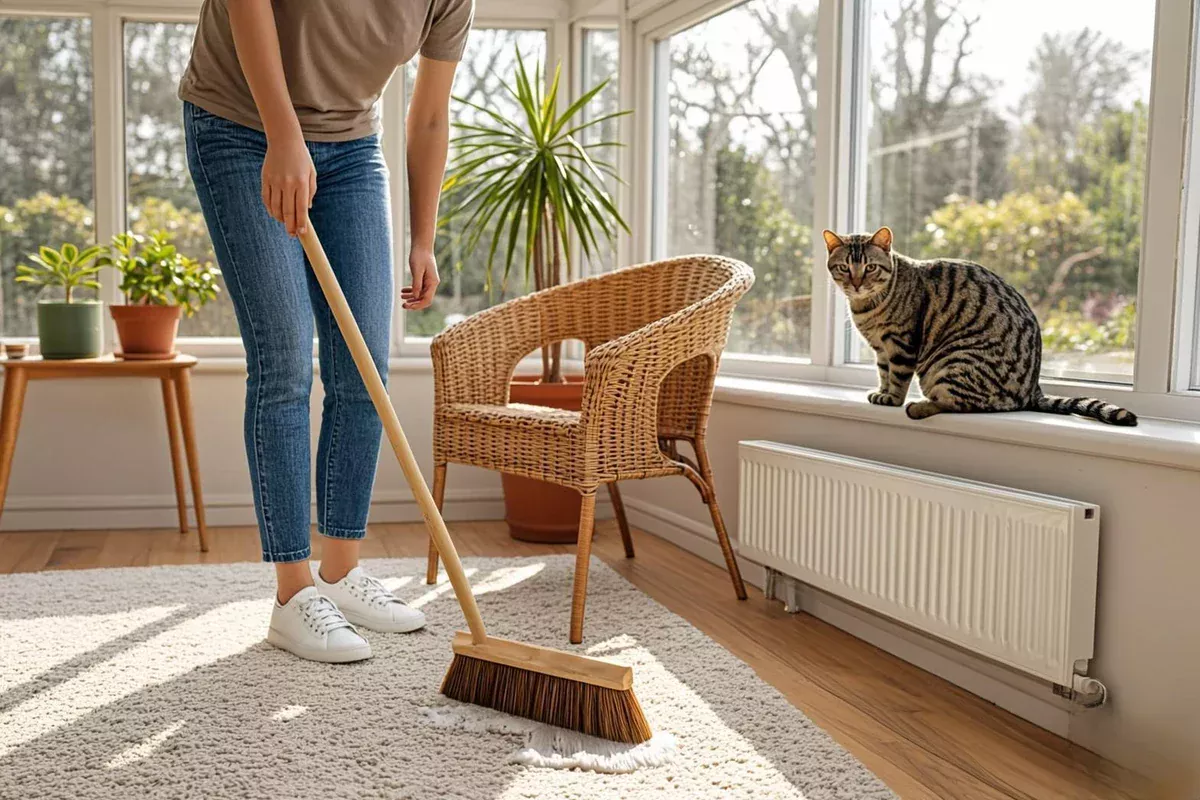
Start with the rug or carpet construction. A listing that only says “works on carpet” leaves out the important part. Look for guidance on pile height, loops, fringe and pressure. A stiff scraping edge that looks efficient in a short video may not suit a looped or delicate surface.
Handle length also matters. A long handle reduces bending across a room but can be clumsy on stairs. A wide head covers open floor faster, while a compact head reaches around furniture. If your main problem is a fitted carpet, compare the tool against the steps in the pet hair from carpet guide before buying a second device.
A small-area check before wider use
- Choose an inconspicuous area away from the main sight line.
- Read both the surface-care instructions and the tool directions.
- Use light pressure and the recommended direction.
- Stop if fibers lift, loops catch, color transfers or the texture changes.
- Clean the tool before moving to another surface.
Choosing a pet hair removal tool for the car
Car interiors combine fabric panels, seat seams, mats, plastic trim and narrow spaces. A compact tool is often easier to position than a broad household roller. Inspect its edges and grip, particularly if you will work beside stitched seams or plastic trim.
Do not assume the same method suits the seat and floor mat. Treat each material separately and follow the vehicle or seat maker’s care instructions. The step-by-step car pet hair guide covers seats, mats and tight gaps without turning this page into another car-cleaning tutorial.
Disposable and reusable options have different costs
Disposable lint rollers are simple to understand. Their ongoing cost comes from replacement sheets, and a small roll can disappear quickly on a heavily covered sofa. Reusable products avoid those sheets but still need maintenance. Hair may need to be removed from a chamber, brush face or textured surface after each session.
Compare the full routine, not only the purchase price. Check whether refills use a standard size, whether the collection chamber is easy to open, and whether the cleaning instructions fit your schedule. A reusable tool that is difficult to empty tends to remain in a cupboard.
Seven checks before buying
- Name the main surface. Clothing, upholstery, carpet and vehicles require different handling.
- Read compatibility guidance. Look for specific surfaces rather than a vague all-purpose claim.
- Inspect the working edge. Consider width, corners, texture and the chance of snagging.
- Check the grip and reach. A comfortable hand tool and a useful floor handle solve different problems.
- Understand upkeep. Find out how collected hair leaves the tool and whether replacement parts are needed.
- Confirm storage space. A broom needs a hanging point; a garment tool is more useful near the wardrobe.
- Review the return terms. Keep packaging until you have completed an allowed small-area trial.
Good Housekeeping’s recent laboratory comparison also found that size changes usability. Its larger reusable roller cleaned broad test surfaces effectively but was less convenient on clothing, while a garment brush was easier to direct on clothes. The useful lesson is not to copy a single winner. It is to match tool geometry to the job.
Common buying mistakes
Choosing one tool for every room
A single tool can cover several compatible surfaces, but the largest and most delicate tasks often need different handling. Buy for the surface that creates the most work first.
Ignoring the cleanup after cleanup
Every pet hair remover eventually holds hair. If the product page does not show how to empty or wash it, look for the manufacturer’s manual before purchasing.
Using laundry advice on upholstery
Maytag recommends a dry, wash and dry sequence for suitable machine-dryable clothing, including an optional no-heat tumble before washing. That guidance belongs to compatible laundry, not a fixed sofa or a garment whose label forbids tumble drying.
Assuming more pressure means better pickup
Extra pressure can change a fabric surface or catch a loop. Follow the tool directions and stop when the textile begins to react, even if some hair remains.
Frequently asked questions
What is the best pet hair removal product?
There is no single best format for every surface. A garment brush or lint roller is easier to control on clothing. Wider reusable tools suit broad upholstery. Long-handled tools are more practical on open floor areas. Choose by the main surface and the maker’s compatibility instructions.
Are reusable pet hair removers better than lint rollers?
Reusable tools reduce the need for adhesive refills, but they must be emptied or cleaned. Lint rollers are convenient for small clothing areas and travel. The better choice depends on area size, storage and how much maintenance you will actually do.
Can the same tool be used on clothes and furniture?
Only when the manufacturer lists both uses and the fabrics tolerate the contact. Test an inconspicuous area first. A large furniture roller may also be awkward around garment seams even when it does not damage the fabric.
Should pet hair be removed before washing clothes?
Removing loose dry hair first keeps more of it out of the washer. Maytag advises using a lint roller and describes a short no-heat tumble before washing when the care label and appliance directions allow it. Do not tumble a garment that is not approved for that method.
Where should I compare products on PawPureHome?
Browse the Fur & Hair collection for available product types, then use the relevant surface guide to check whether the format fits your routine. The product care page covers inspection, cleaning and storage after use.
Sources
- Good Housekeeping, The 8 Best Pet Hair Removers for Clothes, Furniture, Carpets, and More. Laboratory comparison of more than 25 tools across clothing, carpet and upholstered test surfaces.
- Maytag, 4 Hacks for Removing Pet Hair from Your Laundry. Manufacturer guidance on lint rollers, no-heat tumbling, load size and lint-screen care.
- U.S. Federal Trade Commission, Clothes Captioning: Complying with the Care Labeling Rule. Guidance on garment washing, drying and care warnings.
Make the first purchase solve a real task
Write down the surface, area size and awkward spots before opening a product list. That short note makes comparison easier and reduces the chance of buying a clever tool that does not fit the room. For more task-specific help, use the PawPureHome cleaning guides or compare the current pet hair removal products by their stated use.