How to Use a Pet Stain Odor Remover on a Couch

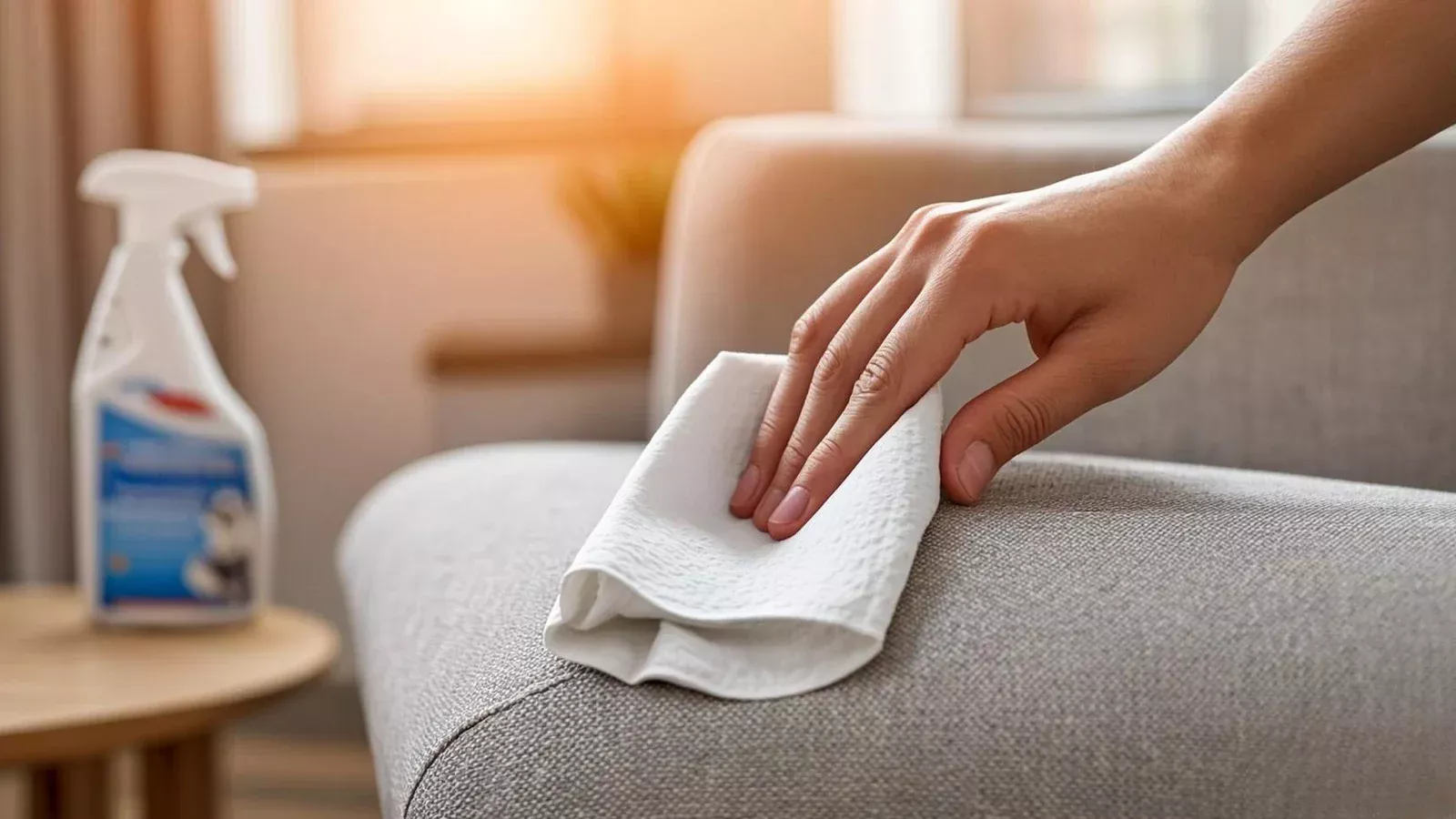
When a pet has an accident on the couch, the smell can linger long after the stain fades. A pet stain odor remover works by breaking down urine components that ordinary cleaners leave behind. The key is to act quickly, test the fabric, and use a product designed for organic messes. This guide walks you through a realistic cleanup for a fabric sofa, from blotting fresh urine to storing your cleaner safely.
Key takeaways
- Blot the area immediately with a dry cloth to remove as much liquid as possible before applying any cleaner.
- Always test the pet stain odor remover on a hidden spot of the upholstery to check for colorfastness or texture changes.
- Work from the outside of the stain inward to avoid spreading the urine further into the fabric.
- Allow the treated area to air-dry completely before allowing pets or people back on the couch.
- Store the cleaner in a cool, dry place with the cap tightly sealed to maintain its effectiveness.
What should you do right after you find a fresh urine stain on the couch?
Blot a fresh damp area with plain white paper towel or a clean white cloth, working without rubbing. The Carpet and Rug Institute’s pet-urine guidance also starts with blotting damp areas promptly; couch construction differs from carpet, so treat that as a general blotting principle and follow the upholstery maker’s care instructions.
Before applying a pet stain odor remover, read the upholstery care label and the cleaner label. The US EPA advises reading directions before using and storing household cleaners. Do not improvise mixtures or assume a cleaner is suitable for every fabric.
How do you test a pet stain odor remover on upholstery before full use?
Upholstery fabrics vary widely—cotton blends, microfiber, velvet, and synthetics all react differently to moisture and cleaning agents. Before applying any pet stain and odor remover to the visible area, find an inconspicuous test spot. The lower back corner of the couch, the side of a seat cushion that faces inward, or the area under a removable skirt are good choices.
Apply a small amount of the cleaner to a white cloth—never directly onto the fabric for the test—and dab it onto the hidden area. Wait for the interval stated on the product label, then blot with a dry white cloth. Check the cloth for any dye transfer and examine the test spot for color lightening, darkening, or texture changes such as stiffening or puckering. If the fabric looks unchanged and no color appears on the cloth, you can proceed with the main stain. If you notice any alteration, stop and consult a professional upholstery cleaner instead. This step is especially important for vintage, hand-dyed, or delicate fabrics where water alone can leave a ring.
What is the step-by-step process for using a pet odor remover on a couch cushion?
Once the test confirms the fabric is stable, follow these steps to treat the accident area thoroughly. The goal is to saturate the affected fibers enough for the best pet odor remover for your situation to reach the urine residue, without over-wetting the cushion to the point of mold risk.
- Blot again if needed. If any dampness remains from the initial blotting, press with a fresh dry towel until the surface feels cool but not wet.
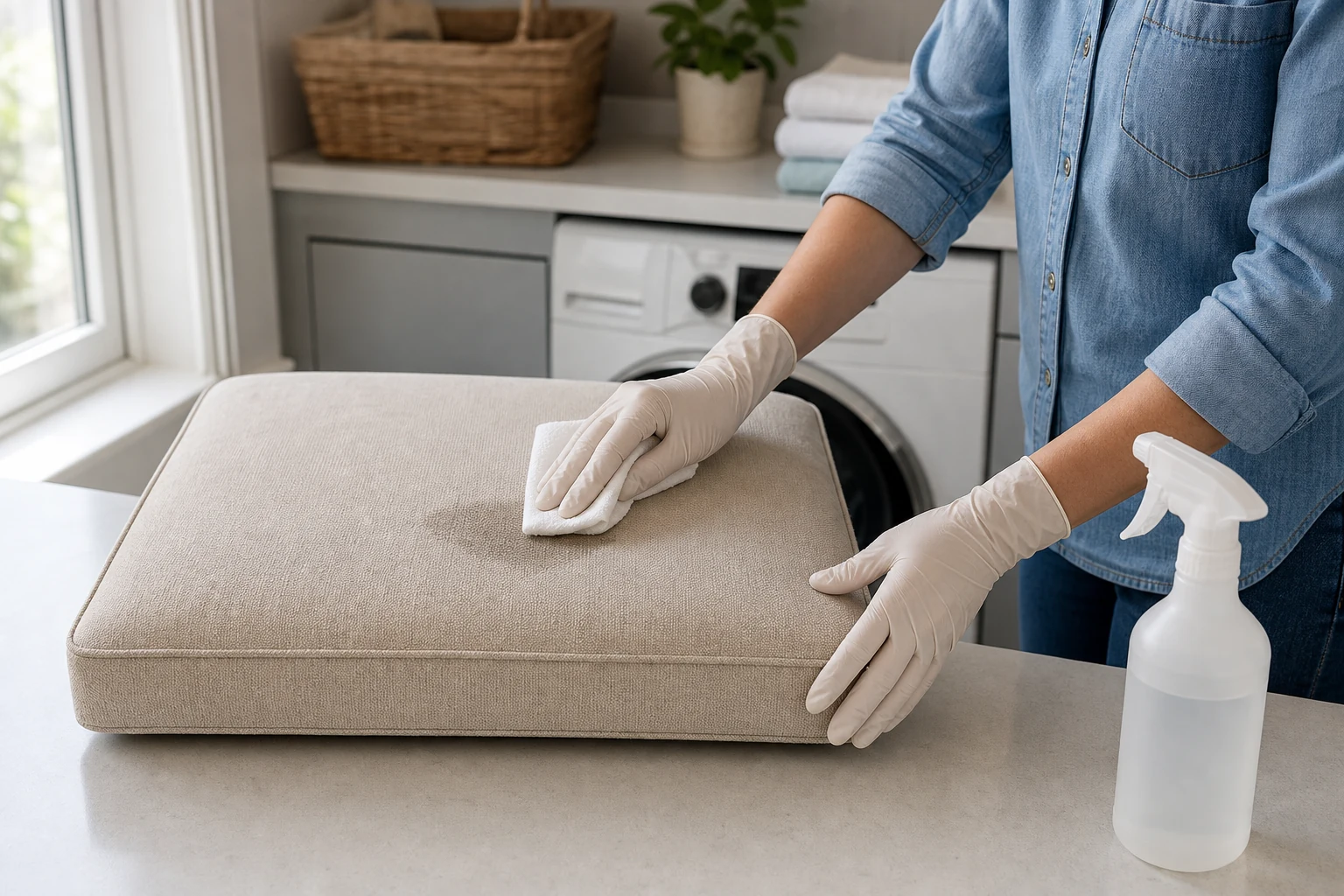
- Apply the cleaner to a cloth, not the couch. Pour or spray a small amount of the pet odor & stain remover onto a clean white microfiber cloth. Avoid saturating the fabric directly from the bottle; controlled application prevents the cleaner from pooling inside the cushion.
- Work from the outer edge inward. Starting at the perimeter of the stain, gently dab the cloth onto the fabric. Move in a spiral toward the center. This technique contains the urine residue and prevents a larger ring from forming.
- Use a blotting motion, not scrubbing. Press the cloth into the fabric and lift. Scrubbing can distort the weave or push the stain deeper. Replace the cloth with a clean section as it picks up soil.
- Allow dwell time according to the product label. Many pet odor and stain removers need several minutes of contact time to break down odor-causing compounds. Set a timer and keep the area undisturbed. If the label does not provide usable directions for upholstery, contact the manufacturer or choose a product with clear instructions.
- Blot away excess moisture. After the dwell time, press a dry towel onto the treated area to absorb the cleaner and any loosened residue. Repeat with fresh towels until the fabric feels only slightly damp.
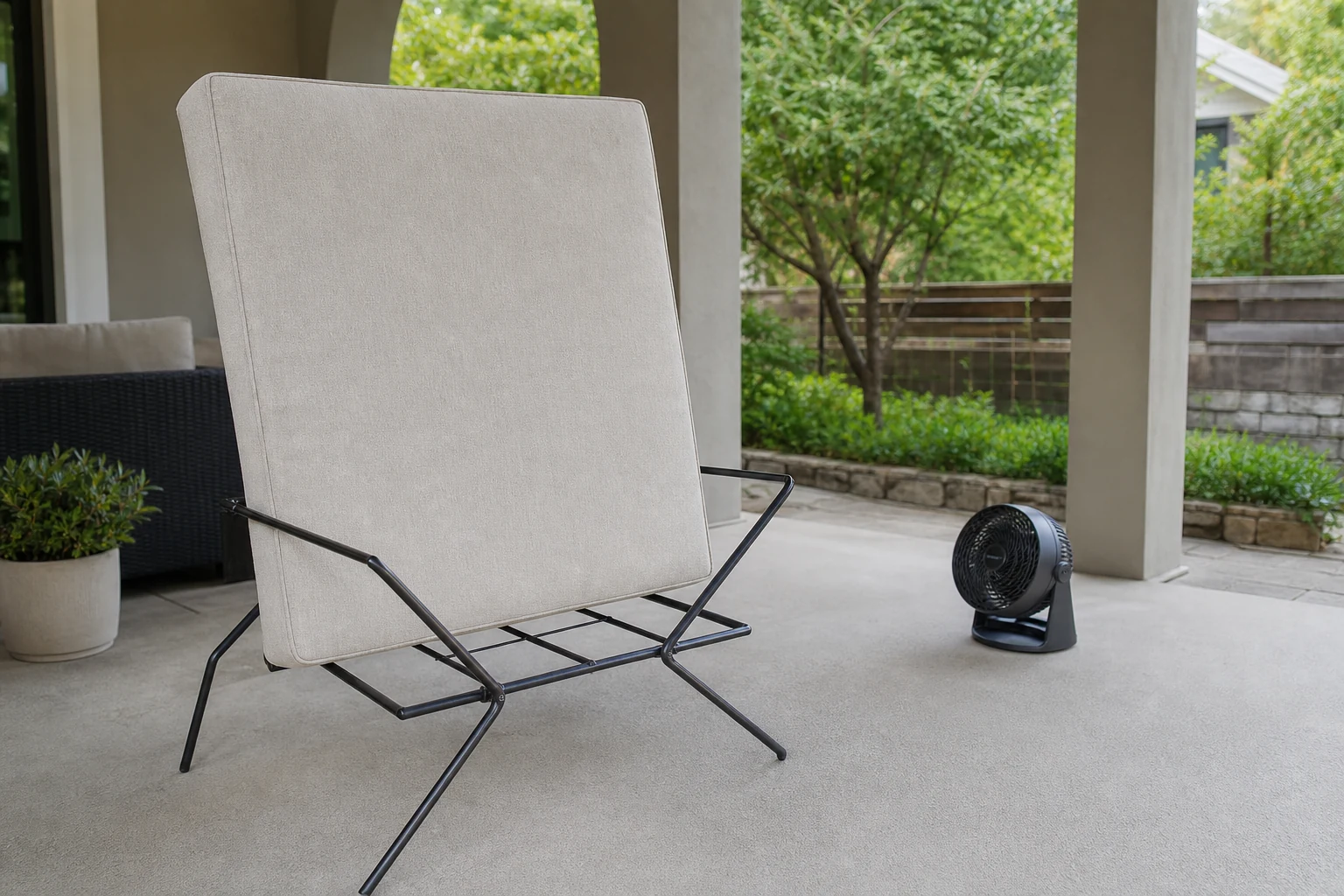
- Speed up drying with airflow. Point a fan toward the cushion or open windows to encourage evaporation. Avoid adding heat unless the upholstery and product care instructions explicitly permit it.
- Inspect once dry. When the couch is completely dry, smell the area closely. If a faint odor persists, a second application may be necessary. Some best pet stain and odor remover options require a repeat treatment for old or deep-set stains.
How should you reassess an older or recurring couch odor?
First confirm where the odor is strongest without soaking a wide area. Remove a cushion cover only if its construction and care label permit it, then inspect the cover, insert, seams, and deck separately. This helps you avoid repeatedly treating the wrong layer.
Use only the amount and contact method stated on the cleaner label. If the odor remains after the treated parts are fully dry, stop repeating applications and contact the furniture maker or a qualified upholstery cleaner. Replacement of an insert is a case-specific decision, not a guaranteed outcome of any one product.
How should you store a pet stain odor remover to keep it working well?
Proper storage extends the usable life of your pet odor remover and prevents accidental spills. Keep the bottle in a cool, dry location away from direct sunlight and heat sources like radiators or sunny windowsills. Temperature extremes can affect the stability of the formula. Make sure the cap is tightly closed after each use; a loose cap can allow evaporation or contamination. Store the product in its original container with the label intact so you can always refer to the instructions and any precautionary statements. Place it on a high shelf or in a cabinet with a child- and pet-proof latch if your household includes curious animals or young children. Do not transfer the cleaner to unmarked spray bottles or food containers, as this creates a risk of accidental misuse.
Comparing common pet stain odor remover formats for couch cleanup
Different product formats suit different cleanup styles. The table below compares observable handling characteristics of sprays, foams, and concentrated liquids when used on upholstery. Choose the format that matches your preference for application control and drying time.
| Format | Application method | Typical dwell time | Ease of storage | Best for |
|---|---|---|---|---|
| Trigger spray | Mist onto cloth or directly onto stain from distance | a short interval | Compact bottle, fits in cabinet | Quick spot treatments on surface stains |
| Foam | Dispense foam onto cloth, then dab | a short interval | Aerosol can requires upright storage | Vertical surfaces or cushions where liquid might run |
| Concentrated liquid | Dilute per label, apply with cloth or sponge | Varies, often a short interval | Small bottle, long shelf life | Large or deep-set stains needing saturation |
Questions you might have about using pet odor removers on furniture
Can I use a pet stain odor remover on a leather couch?
Leather requires a different approach because it is porous and can be damaged by water-based cleaners. Check the manufacturer’s care tag. If the leather is sealed, you might be able to use a product labeled for leather, but always test on a hidden area first. For unsealed or absorbent leather, contact a professional cleaner to avoid discoloration or stiffening.
Why does the smell come back after the couch dries?
Recurring odor can indicate that the source was not fully located or that more than one cushion layer was affected. Let treated parts dry according to their care directions, reassess each layer, and avoid repeated saturation.
How long should I keep pets off the couch after cleaning?
Wait until the treated area is completely dry to the touch and no longer smells of the cleaner. This can take several hours to overnight depending on humidity and airflow. Keeping pets away prevents them from licking any residual product or re-soiling the damp fabric.
Is it safe to use a pet odor remover around children?
Read the product label for any precautionary statements regarding use around children. Store the cleaner out of reach and ensure the couch is dry before children come into contact with it. If the label advises keeping children and pets away during application, follow that guidance.
Next steps for keeping your couch fresh
Once the stain and odor are gone, consider adding a washable, waterproof couch cover or a throw blanket that can be laundered regularly. This simple layer can protect against future accidents and makes cleanup faster. For ongoing odor control, browse odor control products that can be used between deep cleanings. If you are dealing with multiple problem areas around the house, our cleaning guides offer step-by-step advice for carpets, car interiors, and pet bedding. When you need to restock your supplies, visit the PawPureHome shop to find a pet stain and odor remover that fits your cleaning routine.
When the same accident also reaches the floor, use a separate method for pet odors in carpet instead of transferring upholstery instructions to the carpet.
Sources
- Carpet and Rug Institute: Pet Urine and Carpet — supports prompt blotting and explains why outcomes vary; upholstery owners should still follow furniture-specific care directions.
- CDC: Cleaning and Disinfecting Pet Supplies — distinguishes cleaning from disinfecting and emphasizes following label directions.
- US EPA: Read the Label First—Protect Your Pets — supports label-led use and storage of household cleaners.