Removing Pet Stains From Hardwood Floors: A Finish-First Routine

PET STAINS & HARD FLOOR CARE
Removing pet stains from hardwood floors starts with immediate blotting, not scrubbing. Keep the pet away, absorb the liquid from the edges toward the center, identify the floor and finish, use only a compatible method with minimal moisture, dry the area completely, and reassess it in normal light before repeating any treatment.
Quick answer
- Blot a fresh accident immediately with clean absorbent cloths.
- Do not flood, steam, or soak the boards and seams.
- Check whether the floor is solid wood, engineered wood, laminate, or another material.
- Follow the floor manufacturer or installer’s care instructions.
- Stop if the finish turns cloudy, sticky, rough, dark, or discolored.
Why must hardwood pet stains be treated by finish?
The visible wood species is only part of the cleaning decision. A floor may have a factory finish, site-applied coating, oil, wax, or an older worn surface. Engineered wood and laminate can also resemble solid hardwood. Moisture behavior, approved cleaners, and repair options therefore differ even when two floors look similar.
The National Wood Flooring Association advises wiping spills immediately with a dry or slightly damp cloth and using maintenance products recommended for the particular floor finish. That finish-first approach matters because a dark mark may be residue on top, moisture at a seam, discoloration within the coating, or a deeper change that ordinary surface cleaning cannot reverse.
How do you clean pet stains from hardwood floors?
To clean a fresh pet stain from hardwood floors, blot the source promptly without rubbing it across adjoining boards. Check the flooring and finish instructions before introducing a cleaner, then test the least aggressive approved method in an inconspicuous area. Keep moisture on the surface rather than allowing it to collect in seams, remove the remaining dampness, and reassess only after the area has dried. If the finish looks worn, lifted, discolored, or unknown, stop adding liquid and consult the installer or a wood-floor professional.
What should you do during the first five minutes?
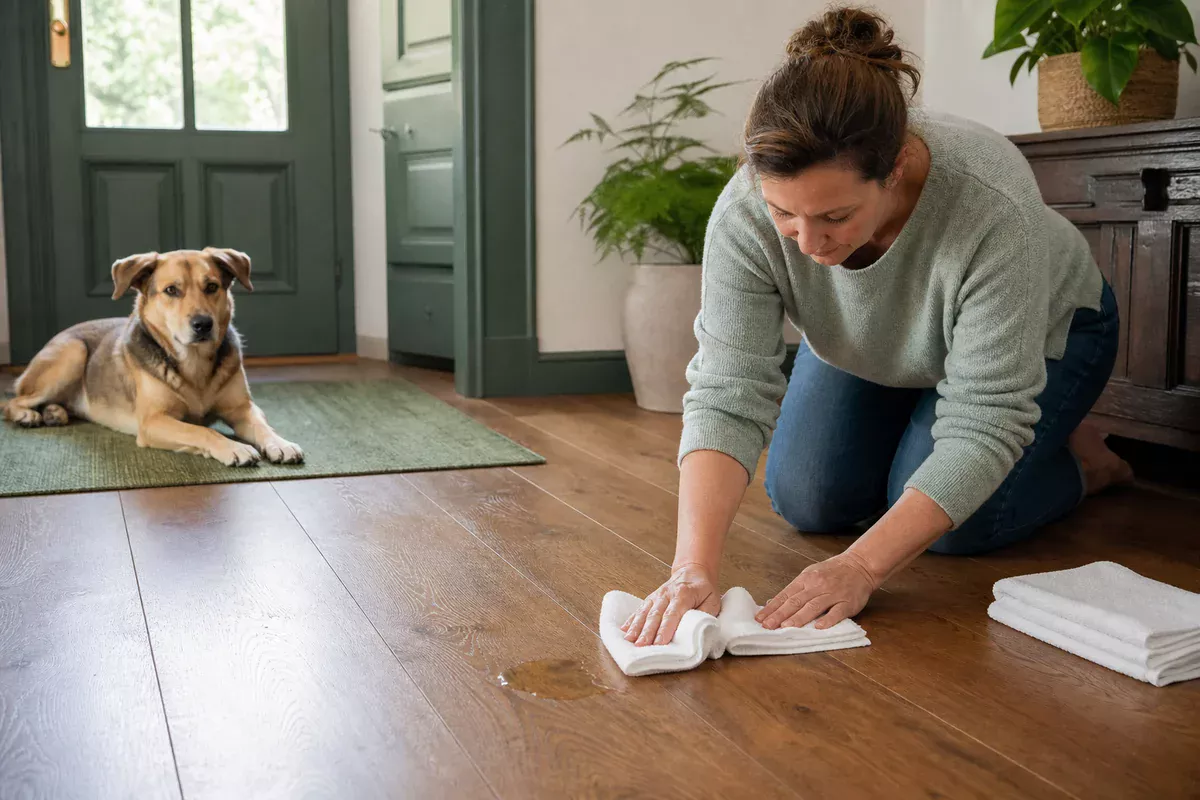
Move the pet and other people away from the wet area. Put on any protection required by the product or situation. Lay clean white absorbent cloths over the liquid and press gently. Work from the outside toward the center so the spill does not spread across more boards or into additional seams.
Replace each cloth when it becomes wet. Do not scrub rapidly across the grain, because that spreads moisture and makes it harder to see whether color is coming from the accident, the floor, or the cloth. When the surface feels dry, inspect the seams and edges under good light.
How do you identify the floor before cleaning?
Check purchase records, leftover cartons, installer documents, or a manufacturer label. Look at a floor vent or threshold only if it can be viewed without dismantling anything. Do not rely on appearance alone: printed laminate, engineered veneer, and solid wood can share similar grain patterns.
| What you know | Next step | What not to assume |
|---|---|---|
| Manufacturer and finish are known | Use the published spot-care instructions | That a stronger mixture will work better |
| Wood floor, finish unknown | Blot dry and seek finish-specific guidance | That all hardwood tolerates the same moisture |
| Laminate or wood-look floor | Use that product’s instructions | That hardwood advice applies |
| Worn, cracked, or unfinished area | Stop after dry absorption and consult a professional | That surface cleaning can remove a deep mark |
How to remove a fresh pet stain from hardwood
- Keep pets and foot traffic away from the wet area.
- Blot the liquid with white absorbent cloths without spreading it.
- Identify the flooring and finish before choosing a cleaner.
- Test the smallest practical amount on a hidden area.
- Wipe with the grain and remove remaining moisture promptly.
- Dry, inspect from several angles, and stop if the finish changes.
1. Absorb the source
Use clean white cloths so color transfer is easier to notice. Press rather than rub. Keep switching to a dry section until the cloth no longer picks up visible liquid. Remove nearby rugs only when they can be lifted without dragging the accident across the floor.
2. Check the approved care method
Read the floor maker’s instructions before applying a cleaner. A product labeled generally for hard floors may not suit the exact finish. Do not mix products or improvise with acids, oxidizers, disinfectants, fragrances, or abrasive powders. More chemistry can create a second problem without correcting the first.
3. Test a hidden area
Apply the smallest amount permitted by the instructions to a cloth rather than pouring it onto the floor. Test a concealed section of the same flooring. Let it dry, then check color, gloss, texture, and tackiness from more than one angle.
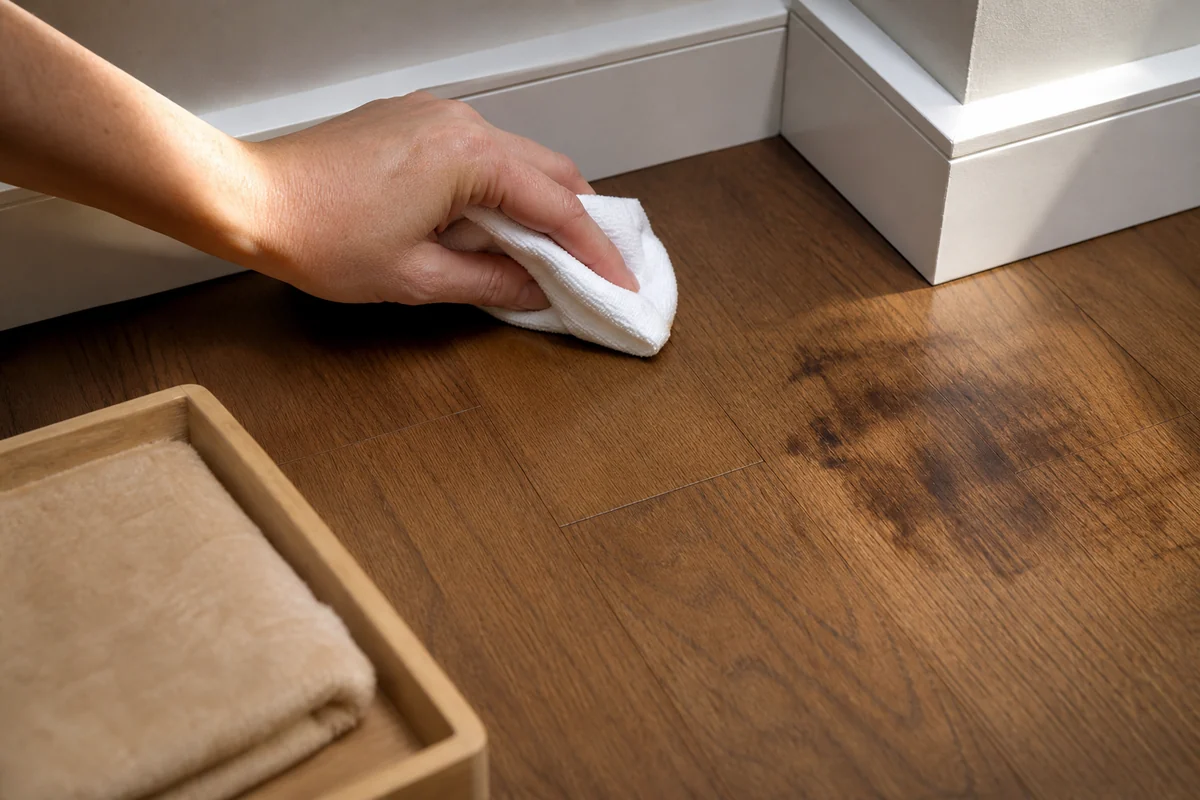
4. Clean the affected surface minimally
If the test passes, treat only the marked area using the maker’s directions. Keep moisture on the surface instead of allowing it to sit in joints. Use a fresh cloth when the first one becomes soiled. Avoid heavy friction that can change sheen or leave a visibly polished patch.
5. Remove remaining moisture
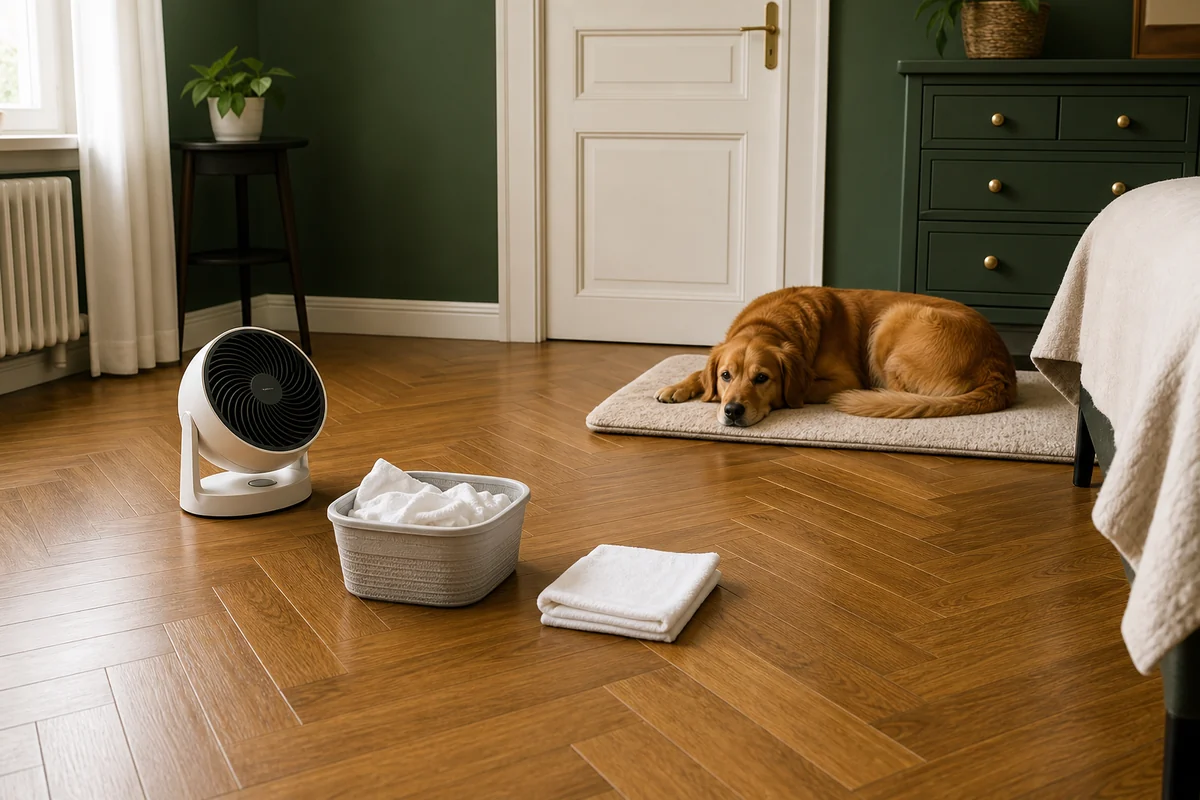
Blot with a dry cloth. Increase ordinary room airflow when practical, without aiming high heat at one board. Keep traffic off the area until it is fully dry. Do not cover it with a rug while moisture may remain.
6. Reassess after drying
Look again in daylight. If the surface is clean and unchanged, stop. Repeating treatments can increase moisture and finish wear. If a dark outline, cloudy coating, raised edge, or persistent odor remains, document the condition and ask the appropriate flooring professional about repair.
What changes when the stain is old or set in?
An older mark is not simply a fresh spill that needs more scrubbing. It may sit below the coating or within the wood. Surface residue can sometimes be removed with an approved finish-specific cleaner, but darkened wood, separated seams, or finish loss may require professional assessment, localized repair, recoating, or board work.
Avoid promises that a household recipe will extract every old pet stain. Test results depend on the actual flooring construction and depth of the change. Stop when treatment would require sanding, bleaching, refinishing, or opening the floor; those are repair decisions rather than routine cleaning.
How can you distinguish a stain, residue, and damage?
| Observation after drying | Possible category | Practical response |
|---|---|---|
| Surface film lifts with approved care | Residue on the finish | Stop when the area is clean and uniform |
| Dark mark remains below the sheen | Deeper discoloration | Request professional assessment |
| Cloudy or sticky finish | Finish reaction or residue | Stop adding products and identify what was used |
| Raised edge, gap, or cupping | Moisture-related board change | Keep dry and consult a flooring professional |
| Odor remains without a clear mark | Source may extend beyond the visible spot | Map the source before masking it |
Which common methods should you avoid?
- Flooding the area: excess liquid can move into seams and beneath the finish.
- Steam cleaning: NWFA guidance advises against wet and steam mops for routine wood-floor care.
- Mixing vinegar, peroxide, bleach, or other household products: compatibility and concentration are unknown for the particular finish.
- Using abrasive pads: they can change gloss and scratch the coating.
- Covering the mark before it dries: this hides changes and can hold moisture near the boards.
- Assuming odor equals a surface stain: the source may be a rug pad, baseboard edge, seam, or another nearby material.
How can you reduce repeat accidents near wood floors?
Respond to recurring elimination changes with appropriate veterinary guidance rather than treating cleaning as the only solution. Use washable barriers where practical, keep an absorbent spill kit nearby, and clean muddy paws before the dog crosses the floor. The dog-paw cleaning routine provides a calm entryway sequence.
If the accident affected a rug or carpet, use the separate guide for removing pet stains from carpet: When odor remains beyond the visible spot, work through the source-mapping steps in how to remove pet odor from home.
What evidence supports a low-moisture response?
Removing pet stains from hardwood floors calls for restraint. The National Wood Flooring Association advises wiping spills promptly and avoiding wet or steam mops on wood floors. Its care guidance also tells owners to follow the flooring or finish manufacturer’s directions. That makes the floor’s finish and installation condition part of the decision, not an afterthought.
Pet accidents on carpet need a different routine because carpet has fibers, backing, and padding rather than a finished wood surface. Use the separate guide to cleaning supplies for pet carpet accidents instead of carrying hardwood advice onto a textile floor.
How can you reduce repeat accidents near the same boards?
First confirm that the surface is dry and that no residue remains. Then look at the route into the room. A washable entry mat and a consistent paw check can catch water and grit before they reach the boards. The dog paw cleaning routine explains how to inspect and wipe paws without turning the entryway into a wet cleaning zone.
A repeated accident in one location may also need a pet-care response that sits outside floor cleaning. Discuss changes in elimination habits with an appropriate veterinary professional. For the floor itself, document recurring marks with dates and photos so an installer or wood-floor professional can see whether the finish is changing over time.
If an accident reached a sofa or chair as well as the floor, use the separate couch accident and odor guide: Upholstery, cushion filling, and hardwood do not share the same moisture limits or cleaning instructions.
Frequently asked questions
Can I use vinegar on a pet stain on hardwood?
Do not assume it is compatible. Use the floor manufacturer’s care directions for the exact finish. An acidic household mixture may alter some coatings, and a general online recipe cannot verify your floor construction.
Can I use hydrogen peroxide on a dark pet stain?
Not without finish-specific professional guidance. It can change color and may create a lighter patch while failing to correct deeper damage. Old dark marks often need assessment rather than repeated spot experiments.
Should I disinfect the hardwood after a pet accident?
Cleaning and disinfection are separate tasks. If disinfection is appropriate for the situation, use only a product and method approved for the exact floor finish, follow its label, and keep the pet away as directed.
Why did the stain return after the floor dried?
The visible source may extend into a seam, under a rug, or below a worn finish. Stop adding moisture, document the area, and ask the installer or a wood-floor professional to determine whether repair is needed.
How do you remove pet stains from a wood floor without damaging the finish?
No cleaning method can guarantee that an existing finish will remain unchanged. Start by blotting, identify the floor and finish, and use only a method the manufacturer or installer approves. Test a hidden area, work with minimal moisture, and stop if the surface changes in color, sheen, texture, or adhesion. A mark that remains after drying may involve the finish or wood rather than removable surface residue.
Can the same routine be used on laminate?
No. Laminate is a separate product category even when it resembles hardwood. Follow its manufacturer’s instructions and treat seams carefully. Do not apply wood-floor repair advice automatically.
If the visible mark is gone but a smell remains around a seam or board edge, switch from stain treatment to the source-first routine for pet odor on hardwood floors. It explains how to reassess after drying and when to stop adding moisture.
Sources and further reading
- National Wood Flooring Association: Care for Your Floor: finish-aware maintenance guidance.
- National Wood Flooring Association: How to Maintain Wood Floors: immediate spill response and avoiding wet or steam mops.
- CDC: About Cleaning and Disinfecting Pet Supplies: cleaning versus disinfecting and label directions.