Removing Pet Stains from Carpet: A Practical Guide for Fresh and Set-In Accidents

SURFACE-FIRST WORKSHOP
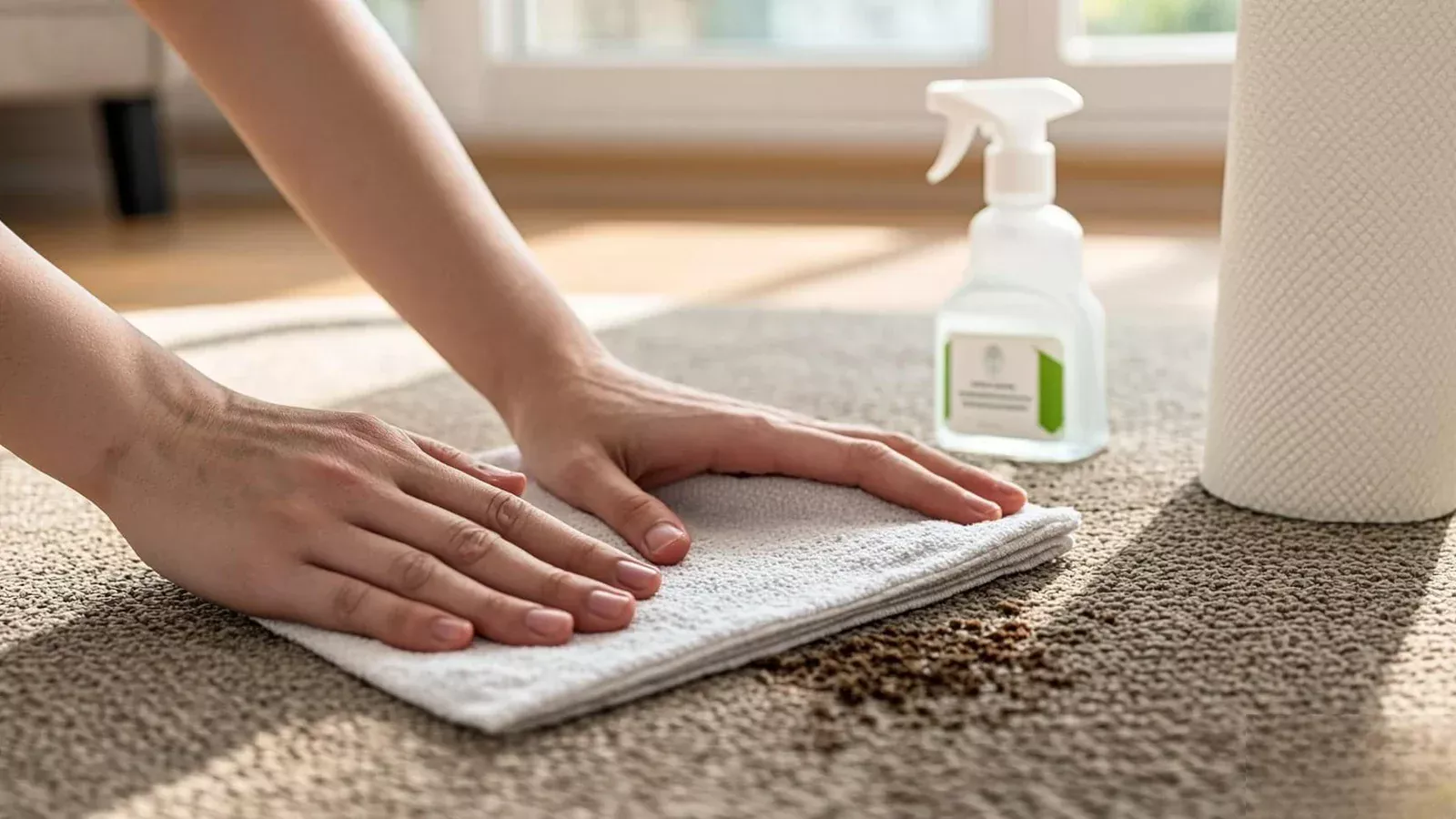
For a fresh carpet accident, remove excess material first, blot rather than scrub, and pretest any cleaner in an inconspicuous area. Carpet and Rug Institute — Pet Urine and Carpet Technical Bulletin.
Removing pet stains from carpet starts with quick blotting and a simple rinse to lift as much of the accident as possible before it sets. Whether you are dealing with a fresh puddle or a dried spot you just discovered, the approach is similar: remove excess moisture, apply a cleaning solution, and rinse thoroughly.
Key takeaways
- Blot fresh stains immediately with a dry white cloth or paper towel—never rub or scrub.
- Always test any cleaning solution on a hidden area of your carpet before using it on the stain.
- Rinse thoroughly with plain water after using a cleaner to avoid sticky residue that attracts dirt.
- For set-in stains, rehydrate the area with water before applying a cleaning solution.
- Store your pet stain remover in a cool, dry place and check the label for any specific storage instructions.
What to do the moment you spot a fresh pet stain
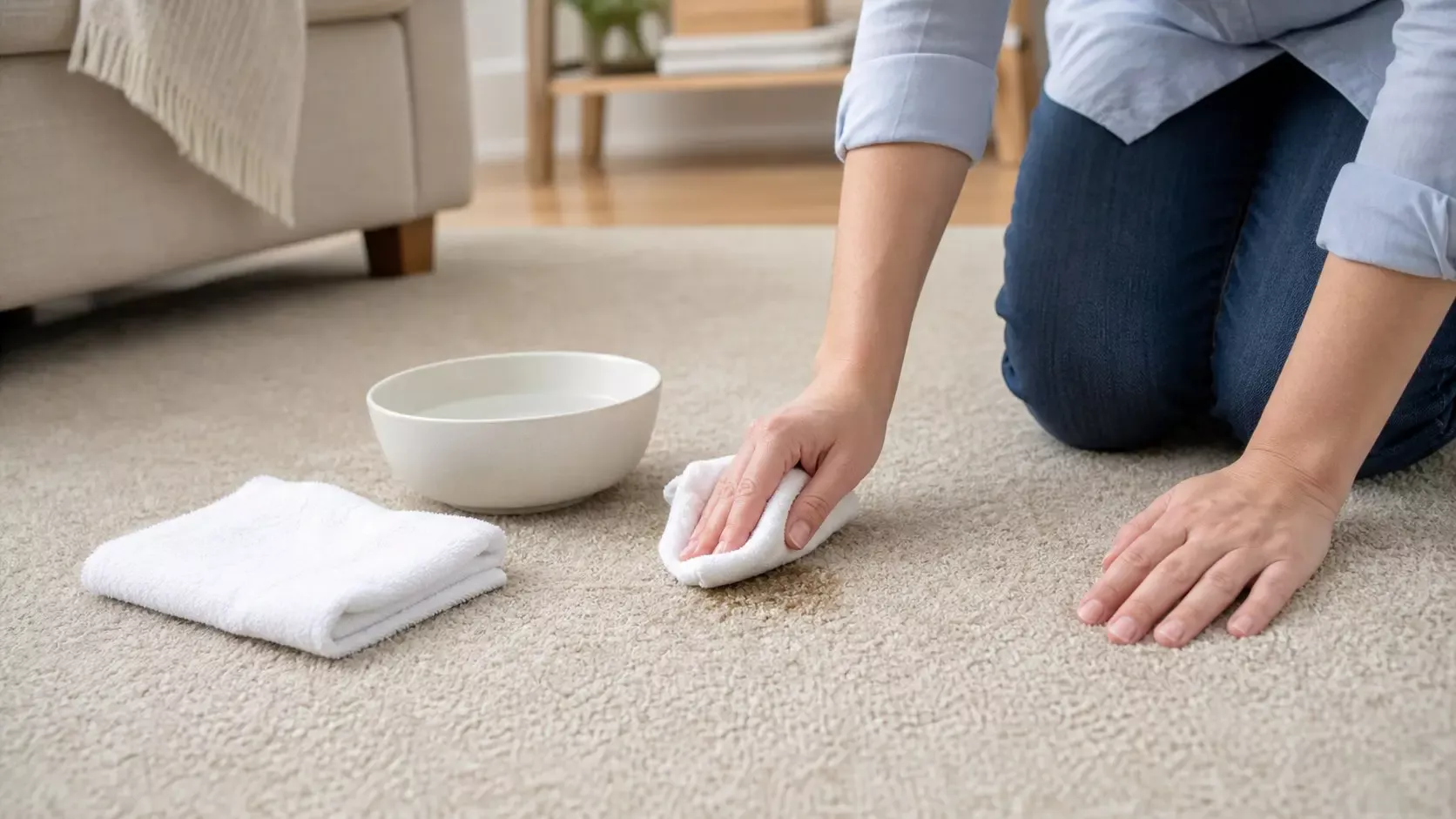
A fresh stain is easier to lift because the liquid has not yet dried and bonded with the carpet fibers. Start by picking up any solid matter with a paper towel or a plastic bag turned inside out. Then place a thick layer of dry white paper towels or a clean white cloth over the wet area and press down firmly with your foot or hand. Stand on it for a minute or two to absorb as much liquid as possible. Repeat with fresh dry towels until the area feels only slightly damp to the touch.
Once you have blotted up the excess, pour a small amount of cool water directly onto the spot—just enough to cover the stained area. Blot again with a dry cloth. This rinse step dilutes any remaining urine or other substance and makes the next cleaning step more effective. Avoid using warm or hot water, which can set protein-based stains and make odors harder to remove.
How to test your carpet before using any cleaner
Before you apply a pet stain remover for carpet, even one you have used before, test it on a hidden section of your carpet. Choose a spot inside a closet, under a piece of furniture, or in a corner. Apply a small amount of the cleaner to a white cloth and dab it onto the test area. Wait a few minutes, then blot with a damp cloth and let it dry completely. Check for any color change, bleeding, or texture difference. If the carpet looks unchanged, you can proceed with the stain treatment. If you notice any alteration, stop and consider a different product or method.
This step is especially important for wool, sisal, or antique carpets, but it is a good habit for any carpet type. The backing and dyes in modern wall-to-wall carpet can react differently depending on the manufacturer and age. A quick test takes only a few minutes and can prevent a permanent bleached or discolored patch.
Choosing a pet stain remover for your cleaning kit
There are several types of pet stain removers available, and keeping one on hand means you can treat accidents as soon as they happen. The table below compares common options based on observable use cases, handling, and maintenance, without making claims about effectiveness or safety.
| Type | Typical use case | Handling notes | Storage and maintenance |
|---|---|---|---|
| Liquid spray pet stain remover | Fresh or lightly set stains on synthetic carpet | Spray directly onto the stain; often requires blotting and rinsing | Store upright in a cool, dry place; check label for temperature limits |
| Foam pet stain remover | Set-in stains where you want longer contact time | Apply foam, let it sit, then blot and rinse; can be messier to handle | Keep cap closed; avoid freezing; some foams separate if stored too long |
| Powder or dry pet stain remover | Wet stains on delicate or moisture-sensitive carpets | Sprinkle on, let it absorb, then vacuum; may require repeat applications | Store in a sealed container away from humidity; clumps if moisture gets in |
| Concentrated liquid (dilute before use) | Large or recurring stain areas | Mix with water according to label; apply with a spray bottle or cloth | Keep out of direct sunlight; diluted solution may have a limited shelf life |
When you shop for a carpet pet stain remover, look for products that clearly state they are formulated for pet stains. You can browse stain and accident products to see what types are available. The label should include instructions for use on carpet and any precautions about materials or finishes.
Step-by-step: how to remove pet stains from carpet
This process works for most water-soluble pet stains, including urine, vomit, and drool. Adjust the amount of cleaner and water based on the size of the stain.
- Blot up excess liquid. Use a dry white cloth or paper towels. Press firmly and repeat until no more moisture transfers to the cloth.
- Rinse with cool water. Pour a small amount of cool water onto the stain. Blot again with a dry cloth. This dilutes any remaining substance.
- Apply your chosen pet stain remover. Follow the product label. Typically you spray or dab the cleaner onto the stain until it is damp but not soaked.
- Let it sit. Check the label for recommended contact time. If no time is given, let it sit for a few minutes while you watch for any color change.
- Blot again. Use a clean dry cloth to absorb the cleaner and lifted stain. Do not rub. Repeat the application and blotting if the stain is still visible.
- Rinse thoroughly. Pour cool water over the area to flush out any remaining cleaner. Blot until the carpet is just damp.
- Dry the area. Place a stack of dry paper towels over the spot and weigh them down with a heavy object like a book. Leave them in place for several hours or overnight. This wicks moisture up from the pad and fibers.
- Vacuum when dry. Once the carpet feels completely dry, run a vacuum over the area to restore the pile.
If the stain has already dried, start by rehydrating it with cool water. Blot the water up after a few minutes, then follow the steps above. You may need to repeat the process two or three times for older stains. For more general cleaning advice, see our cleaning guides.
What to do when the stain keeps coming back
Sometimes a stain seems to disappear after cleaning, only to reappear a day or two later. This usually happens because some of the liquid soaked into the carpet pad or subfloor and is wicking back up as the carpet dries. To address this, after your final rinse, place a thick stack of paper towels over the area and put a heavy weight on top. Leave it for at least eight hours. The towels will draw moisture up from the pad. If the stain returns again, you may need to repeat the cleaning process and ensure you are extracting as much liquid as possible during the blotting and rinsing steps.
In some cases, a pet urine stain remover designed for deep-set stains may be helpful. These products are often applied more heavily and left to soak into the pad. Always check the label to see if the product is intended for use on carpet backing and subfloor materials.
How to store your pet stain removers so they stay usable
Proper storage keeps your pet stain remover ready for the next accident. Keep liquid and foam cleaners in a cool, dry place away from direct sunlight and heat sources. Extreme temperatures can cause ingredients to separate or lose effectiveness. If the product has a spray nozzle, rinse it with warm water after use to prevent clogging. For powders, make sure the lid is tightly sealed and store the container in a low-humidity area. If a powder clumps or hardens, it may not spread or absorb as intended.
Check the product label for any specific storage instructions, such as “do not freeze” or “use within 12 months of opening.” If you have mixed a concentrated cleaner with water, write the date on the bottle and discard any leftover solution after the time recommended on the label. Keeping a small, dedicated caddy with your pet stain remover, cloths, and gloves near the area where accidents happen most often can help you respond quickly.
Common questions about removing pet stains from carpet
Can I use the same pet stain remover on upholstery?
Some pet stain removers are labeled for both carpet and upholstery, but always check the product label. Upholstery fabrics can be more delicate, and the cleaning code on the furniture tag (W, S, SW, or X) tells you which type of cleaner is appropriate. Test on a hidden area first, just as you would with carpet.
Why does my carpet smell even after the stain is gone?
Odor can linger if the liquid reached the carpet pad or subfloor. The stain may be invisible, but the source of the smell remains below the surface. A thorough rinse and extended drying with weighted towels can help. If the odor persists, you might need a product specifically labeled for odor removal, or you may need to lift the carpet to check the pad.
How do I know if I need a professional cleaner?
If you have repeated the cleaning process several times and the stain or odor remains, or if the affected area is larger than a few square feet, a professional carpet cleaning service may be able to extract moisture from deeper layers. Professionals have equipment that can reach the pad and subfloor more effectively than home methods.
Can old pet stains be removed completely?
Old, set-in stains can be more challenging because the substance has had time to bond with the fibers and oxidize. Rehydrating and repeating the cleaning steps can reduce the appearance significantly, but some discoloration may remain, especially on light-colored carpets. In some cases, the stain may have altered the dye of the carpet itself, which cannot be reversed with cleaning.
What should I do if my pet has an accident on a rug that cannot be soaked?
For rugs that cannot handle much moisture, such as those with natural fibers or glued backing, use a dry or foam pet stain remover that requires minimal water. Blot gently and avoid saturating the rug. You can also try sprinkling a dry absorbent powder, letting it sit, and vacuuming it up. Always check the rug’s care label and test a small corner first.
Sources
The techniques described in this guide are based on widely available carpet care practices. For additional information on pet stain removal products, you can visit PawPureHome’s stain and accident category and cleaning guides. General carpet maintenance resources are also available at PawPureHome’s shop.
If the visible stain improves but odor remains after drying, follow the separate guide to remove pet smell from carpet and check whether the backing or pad may be involved.
Next steps
Build a small cleaning kit with a pet stain remover for carpet, white cloths, and a spray bottle of water so you can treat accidents immediately. Practice the blot-and-rinse routine on a small spill so you are ready when it counts. If the accident is on a wood surface rather than carpet, use the separate guide to clean pet stains from hardwood floors and follow the applicable finish instructions. If you are looking for a dedicated carpet pet stain remover, explore the stains and accidents collection to find a product that fits your home and cleaning habits.
Editorial source: Carpet and Rug Institute — Pet Urine and Carpet Technical Bulletin, accessed July 23, 2026. Always follow the care label and the directions for the specific surface and product.