How to Remove Pet Odors From Carpets: A Source-First Routine

PET ODOR & CARPET CARE
How to remove pet odors from carpets starts with locating the full source area, absorbing fresh moisture, checking the carpet maker’s care guidance, testing the chosen method in a hidden spot, treating without uncontrolled overwetting, rinsing when required, and drying the carpet completely. If odor returns after drying, the source may extend into the backing, cushion, seam, edge, or subfloor and may need professional assessment.
Why does pet odor return after a carpet looks clean?
Odor can return when the visible carpet fibers were cleaned but residue or moisture remains below them. Carpet is a layered installation. A spill may reach the pile, primary and secondary backing, cushion, seams, edge, or subfloor. A removable rug adds another surface underneath. Before wet treatment, collect loose fur with the separate pet hair removal routine for carpet so the source area remains easier to inspect. Humidity and foot pressure can make an incomplete treatment noticeable again after the top looks dry.
The Carpet and Rug Institute warns that pet urine can affect carpet dyes and weaken bonds between layers. Its technical bulletin also notes that complete odor removal is unlikely unless the urine source is completely removed. That is why adding fragrance to the room is not a source-control plan. The first task is mapping where the accident traveled and deciding whether the area is suitable for household spot care.
How do you remove pet odors from carpet?
To remove pet odors from carpet, identify the affected area and determine whether the source is fresh moisture, dried residue, or material below the carpet face. Blot a fresh accident without scrubbing, check the carpet and product directions, and use only a surface-compatible method after a hidden-area test. Keep the treatment localized, dry the carpet fully, and reassess it under normal room conditions before adding another product. If the odor extends across rooms or the source is uncertain, use the whole-home pet odor source plan rather than assuming the carpet is responsible.
What should you do first for a fresh pet accident?
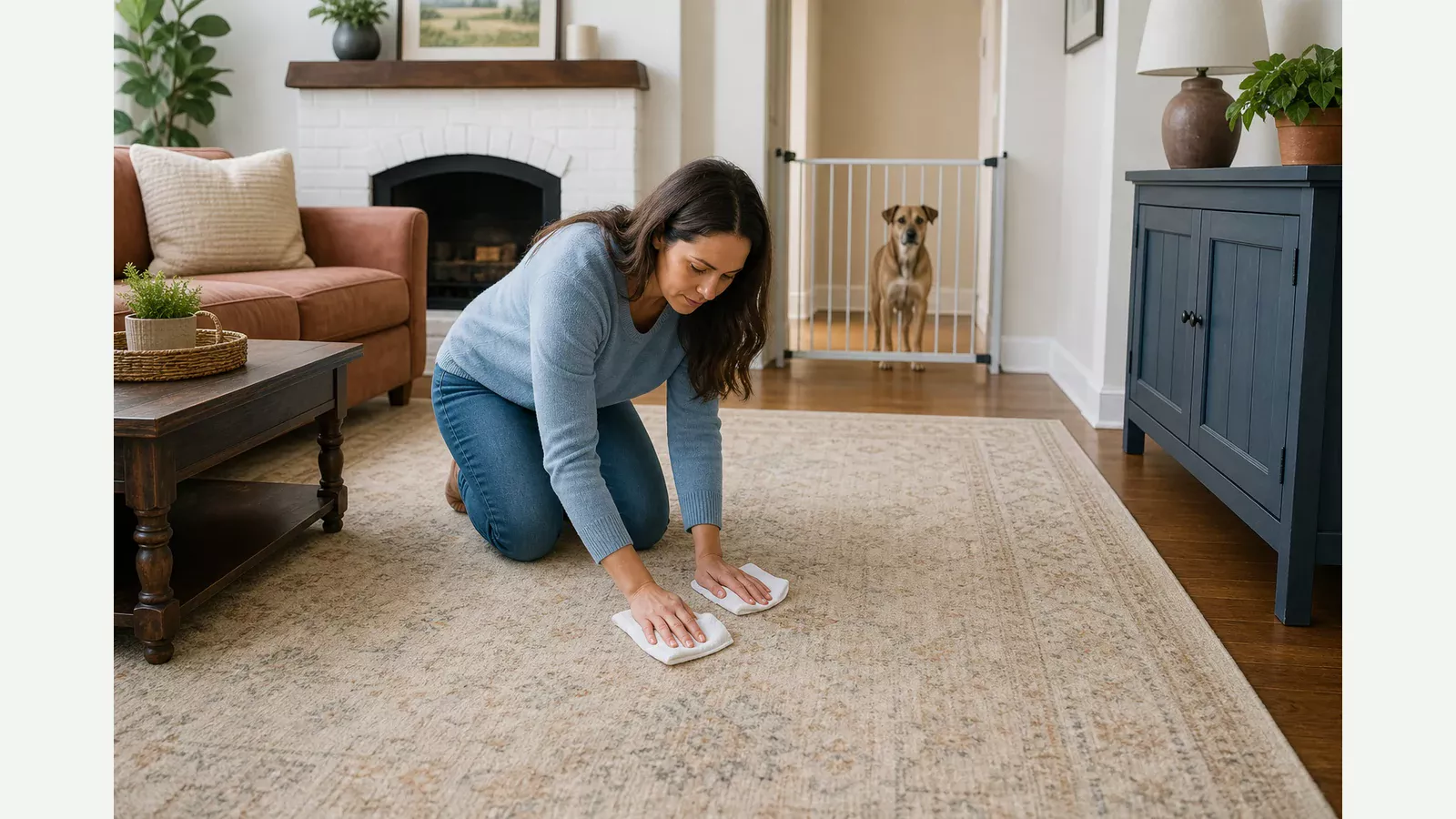
Keep pets and foot traffic away, then place clean white paper towels or absorbent cloths over the wet area. Press rather than scrub. Replace each cloth as it becomes damp and work from the outside toward the center. White material makes color transfer easier to see and avoids introducing dye from a colored towel.
- Separate the pet and protect the route around the accident.
- Lift solids carefully, then blot liquid with white absorbent material.
- Identify the carpet, rug, backing, and care instructions.
- Test the selected method on an inconspicuous area.
- Treat and rinse only as the instructions require.
- Dry fully, inspect, and reassess odor before repeating.
Do not rub quickly across the pile. Rubbing spreads moisture, changes the pile direction, and makes the boundary harder to judge. Do not stand on a wet towel if the carpet construction is unknown. The added pressure can move liquid deeper. If the spill reaches a seam, stair edge, wall, electrical floor outlet, or valuable rug, stop and seek appropriate help.
CRI’s pet-urine bulletin recommends blotting damp areas as soon as they are found and cautions against overwetting. The institute’s Spot Solver also advises pretesting any solution for color transfer or damage and working from the edge toward the center. Those are useful controls even when the carpet manufacturer specifies a different approved product.
How do you choose a carpet odor treatment without guessing?
Begin with the carpet or rug maker’s instructions, warranty terms, and the exact product label. Determine whether the item is wool, synthetic, natural fiber, hand-dyed, machine-made, loose-laid, or fitted. Check whether the backing and cushion can be accessed. A method suitable for a colorfast synthetic carpet may be wrong for a delicate rug or an older installation.
| Situation | Household next step | Reason to stop |
|---|---|---|
| Fresh spot on known colorfast carpet | Blot, pretest, and follow maker-approved spot care | Color transfers or pile changes |
| Removable rug with known care label | Check both sides and follow the rug instructions | Dye movement, fringe damage, or unknown foundation |
| Old odor with no visible boundary | Map likely source and request professional assessment | Repeated surface treatment has failed |
| Moisture reached a seam or edge | Limit traffic and seek carpet-specific advice | Backing separation, swelling, or persistent dampness |
| Valuable, antique, or hand-dyed rug | Contact a qualified rug specialist | Do not test internet mixtures on the piece |
Do not mix cleaners. Do not increase concentration because the first pass was slow. Residue can attract soil, affect texture, or interfere with a later professional treatment. If a product requires rinsing, use the amount and method stated on its label. If it says to keep people or pets away until dry, follow that direction.
The broader guide to removing pet stains from carpet separates stain appearance from odor source. If the accident occurred on wood beside the carpet, use the hardwood-floor routine rather than carrying carpet instructions onto a finished wood surface.
How should the carpet be dried and checked?
Remove as much remaining moisture as the approved method allows, then support ordinary room airflow. Keep traffic off the area and do not return furniture, rugs, or pet bedding until the carpet is dry. Check the spot from several angles and compare it with the untreated surroundings. A darker area may still be damp even when the surface feels less wet.
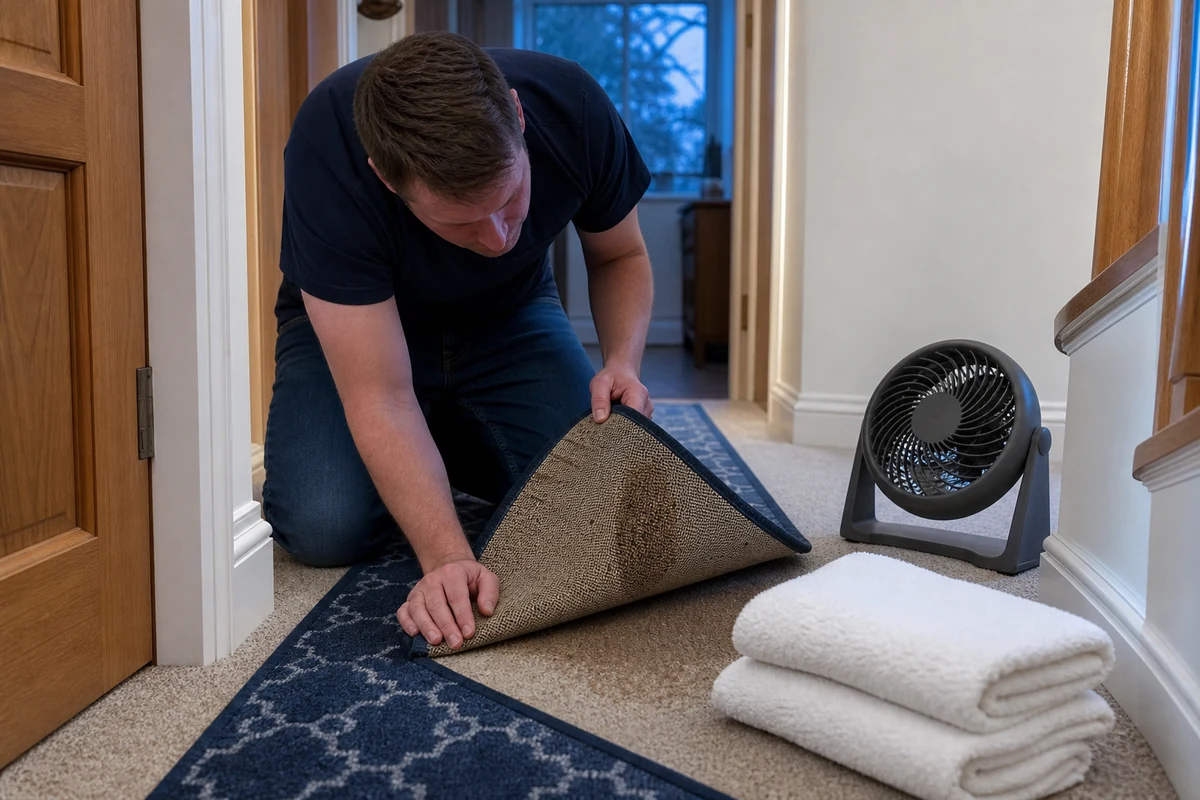
For a removable runner or rug, inspect the underside and the floor below without dismantling fitted carpet. If moisture has reached a separate pad, wood floor, or seam, those materials may need their own care. Do not point high heat at the area or assume a strong fan can correct uncontrolled saturation.
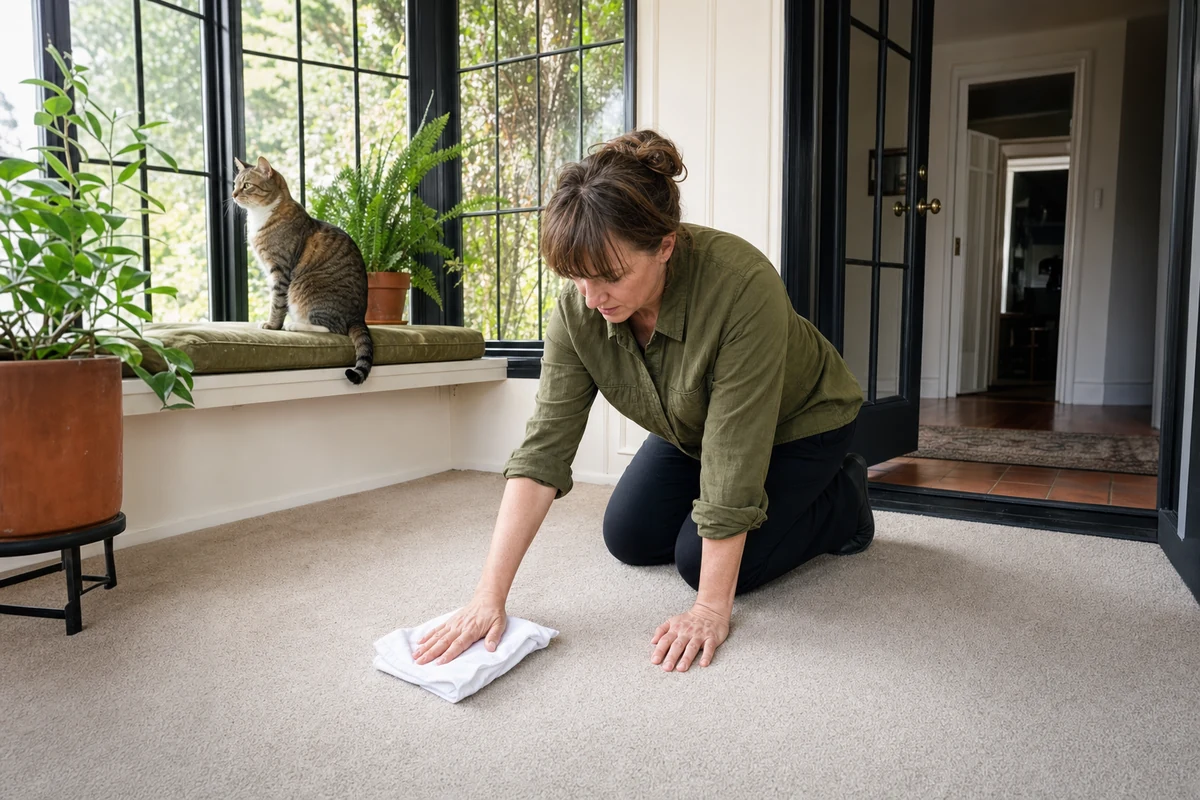
Use a fresh white cloth to check whether pressing the area still lifts moisture or color. Smell the room from outside the doorway first, then move closer. This helps separate a whole-room odor from a localized carpet source. Check nearby throws, pet bedding, baseboards, furniture, and the underside of removable rugs before treating the same spot again.
When should you call a carpet or rug professional?
Seek professional help when odor persists after an appropriate treatment and full drying, the affected boundary is unknown, liquid reached a seam or wall edge, the backing separates, dyes transfer, or the carpet remains damp. Valuable rugs, natural fibers, and old installations also deserve specialist assessment before repeated household treatment.
- The accident covered a large or uncertain area.
- Repeated wetting has already occurred.
- The carpet has ripples, separated backing, damaged seams, or changed color.
- Odor returns during humid weather or after foot traffic.
- The subfloor, stair structure, or wall edge may be involved.
- The pet repeatedly eliminates in the same place.
Repeated accidents also need a pet-care response. A sudden change in urination or elimination can have behavioral or medical causes, so contact an appropriate veterinary professional. Cleaning the carpet is not a diagnosis. For odor in several rooms, use the room-by-room pet odor source plan to check other textiles and surfaces.
Frequently asked questions
Can baking soda remove every pet odor from carpet?
No. A powder on the pile may not reach residue in the backing, cushion, seam, or subfloor. It may also be unsuitable for a particular carpet or vacuum. Follow the carpet maker’s guidance and do not treat masking or temporary improvement as source removal.
Should I use hot water on a pet accident?
Use only the temperature specified by the carpet and treatment instructions. CRI spot guidance commonly refers to lukewarm water for rinsing particular solutions, but that does not make hot water a universal method for every carpet, dye, backing, or stain.
Why does the odor come back when the room is humid?
Residual material below the pile may become noticeable again as conditions change. CRI notes that pet-urine odor can reappear during high humidity when the source was not completely removed. Reassess the affected depth instead of covering it with fragrance.
Can I use a steam cleaner immediately?
Not without checking the carpet, machine, treatment, and manufacturer instructions. Heat and moisture may be unsuitable, and a household machine cannot confirm how far the accident traveled. Blot a fresh spill first and seek specialist advice when the backing or cushion may be involved.
How do I know the carpet is dry?
Check the pile, edges, underside of removable rugs, and any accessible adjacent surface. Press with a clean white cloth and look for moisture or transfer. If the area remains cool, dark, damp, or odorous, keep traffic away and reassess rather than replacing furniture.
Sources and further reading
- The Carpet and Rug Institute: Technical Bulletin, Pet Urine and Carpet, retrieved July 27, 2026.
- The Carpet and Rug Institute: Spot Solver, Urine, Dry, retrieved July 27, 2026.
- CDC: About Cleaning and Disinfecting Pet Supplies, updated February 18, 2026, retrieved July 27, 2026.
- Cornell Feline Health Center: Feline Behavior Problems, House Soiling, retrieved July 27, 2026.