How to Remove Pet Hair From Furniture Without Damaging Fabric

FUR & FURNITURE CARE
To remove pet hair from furniture, work while the upholstery is dry, identify the fabric, test your tool on a hidden area, gather loose hair with short overlapping passes, and vacuum only with an attachment suitable for the surface. Finish by cleaning removable covers and the tool itself according to their care instructions.
Quick answer
- Check the furniture label and construction before choosing a method.
- Start with the gentlest dry tool and light pressure.
- Work from the top and back toward seat seams and cushion edges.
- Remove cushions where permitted, then collect hair from both sides and the frame.
- Wash removable covers only when their labels allow it.
Why does pet hair cling to furniture?
Upholstery gives loose hair many places to catch. Fine undercoat can settle into woven fabric, longer strands can wind around loops, and movement presses hair into cushion seams. Static can make dry strands more noticeable, but the furniture’s weave, nap, condition, and care requirements should determine the method. not a universal cleaning hack.
The U.S. Environmental Protection Agency recommends routine vacuuming of upholstered furniture as part of regular indoor cleaning. That supports a simple principle: remove accumulated hair at the surface and in accessible crevices, while avoiding a tool or technique that changes the fabric.
What should you check before removing pet hair?
Look for the manufacturer’s care label, removable-cover instructions, and any warranty guidance. Distinguish woven upholstery from velvet, suede-like material, leather, coated fabric, and delicate or antique textiles. If the label is missing, the surface is damaged, or the piece is valuable, use minimal dry collection and ask an upholstery professional before adding moisture or a new product.
| Surface | Gentle starting method | Reason to stop |
|---|---|---|
| Flat woven fabric | Soft upholstery brush or compatible vacuum tool | Snagging, fuzzing, or color transfer |
| Textured weave | Light passes that follow the texture | Loops lifting or pulling |
| Velvet or directional nap | Manufacturer-approved brush direction | Nap changes or pressure marks |
| Leather or coated surface | Soft dry cloth or approved tool | Finish dulling or scratching |
| Removable washable cover | Dry hair removal before laundering | Label prohibits washing or drying |
How to remove pet hair from furniture step by step
- Clear the furniture and inspect seams, stitching, and the care label.
- Test the gentlest dry tool on a concealed area.
- Gather loose hair from broad surfaces with short, overlapping passes.
- Work around removable cushions, piping, and seams.
- Vacuum the remaining hair with a compatible upholstery attachment.
- Clean the tools, then replace covers and cushions only when dry.
1. Clear and inspect the furniture
Move throws, toys, and loose objects to a separate basket. Check seams for sharp objects or debris before reaching between cushions. If the furniture has loose or damaged stitching, avoid pulling a brush across it. Keep the pet in another comfortable area so the work can be completed without repeatedly adding hair.
2. Remove loose hair from the broad surfaces
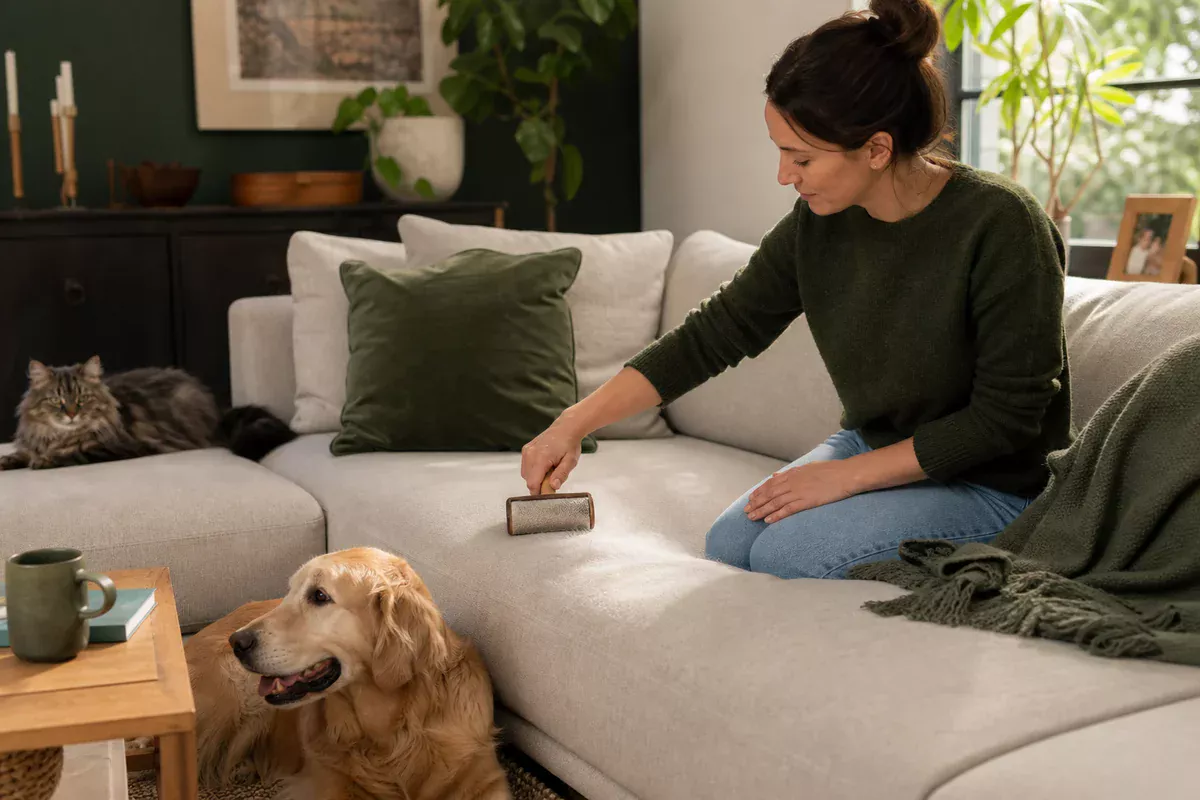
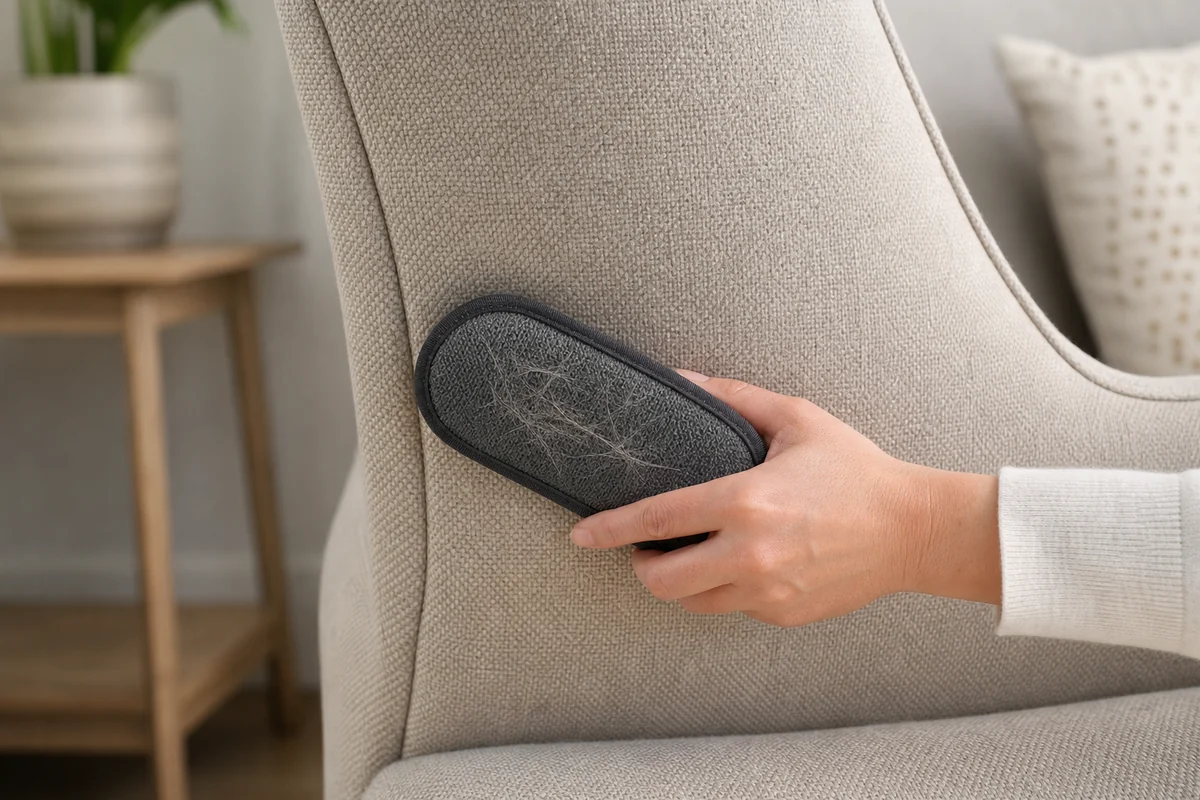
Begin at the backrest and arms. Use short, overlapping strokes with a tested fabric brush, lint tool, or other manufacturer-compatible device. Gather the hair into small lines that can be picked up instead of pushing it randomly across the seat. Light pressure is usually easier to control than forceful scrubbing.
3. Work around cushions and seams
Remove cushions only if they are designed to come out. Clean the top, sides, underside, and the exposed frame. Use a crevice attachment where the furniture maker and vacuum instructions permit it. Do not force a rigid nozzle against piping, buttons, zippers, or loose threads.
4. Vacuum remaining hair carefully
Fit the appropriate upholstery attachment and use controlled passes. Avoid aggressive suction on delicate fabric, loose covers, fringe, or filled sections that can pull upward. The EPA notes that cleaning can temporarily resuspend fine particles, so avoid creating a cloud with vigorous dry brushing and ventilate the room when conditions allow.
5. Handle removable covers separately
Take off as much dry hair as possible before putting a washable cover in the machine. Close fasteners, follow its temperature and cycle label, and do not assume the inner cushion has the same care instructions. The related pet-hair laundry routine explains how to reduce transfer inside the load.
6. Reset the furniture and tools
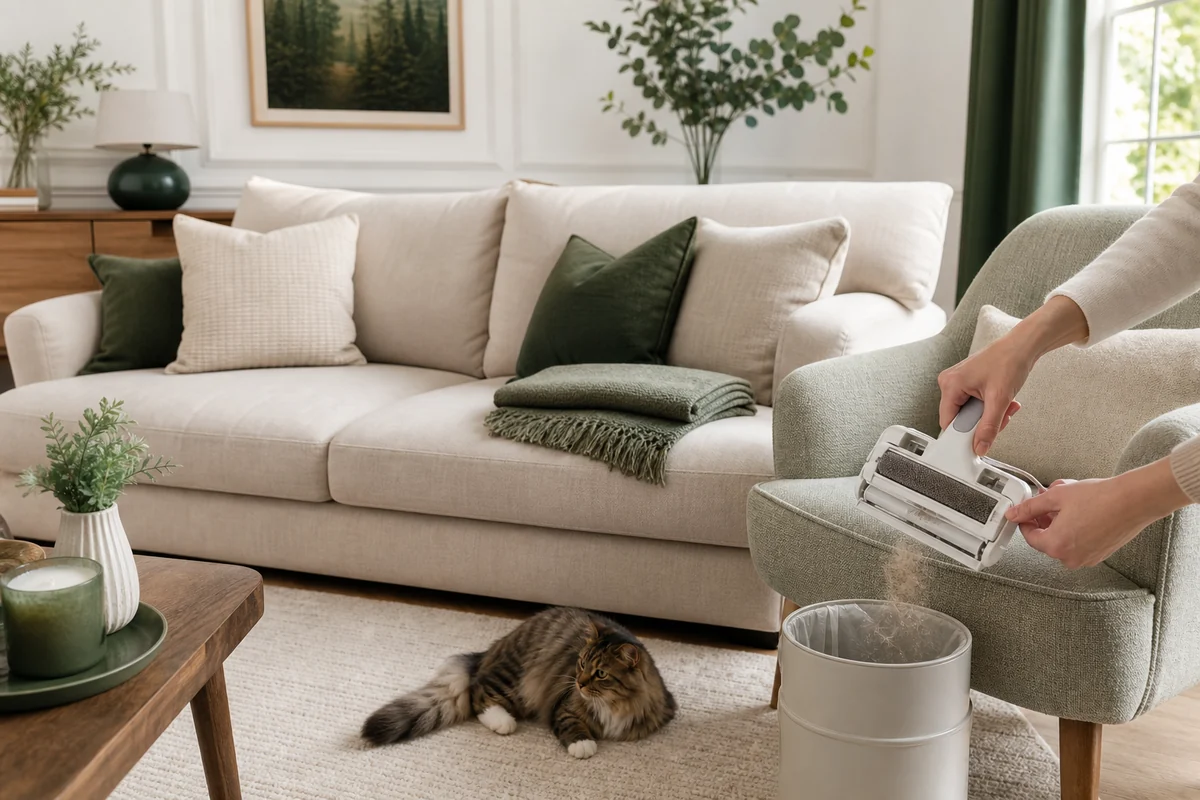
Empty the brush or vacuum collection point into the trash. Clean reusable tools according to their instructions and let them dry before storage. Replace cushions only after every cleaned component is dry. Then collect the hair that fell onto the surrounding floor.
Which pet-hair tools suit different furniture areas?
A wide reusable brush can cover open seat panels efficiently. A smaller detail tool may be easier around piping. A vacuum upholstery head can collect loosened hair, while a crevice tool can reach frame gaps. Tool names matter less than surface compatibility, a successful hidden test, and controlled pressure.
| Furniture area | Useful approach | Avoid |
|---|---|---|
| Backrest and seat | Broad overlapping passes | Random back-and-forth scrubbing |
| Piping and seams | Small tool or low-contact vacuuming | Catching threads with a hard edge |
| Under cushions | Collect debris first, then vacuum | Pushing objects deeper into the frame |
| Throws and blankets | Dry collection followed by label-approved washing | Mixing heavily furred items with ordinary clothes |
What mistakes can damage upholstery?
- Skipping the care label: similar-looking fabrics can require different methods.
- Using heavy pressure: it can distort a nap, pull loops, or stress stitching.
- Adding moisture before dry collection: wet hair may be harder to gather and moisture may be unsuitable for the fabric.
- Using sticky products without testing: residue or strong adhesion can affect delicate fibers.
- Applying household mixtures: an online recipe does not confirm compatibility with a particular finish or dye.
- Ignoring the surrounding floor: loosened hair can settle nearby and return to the furniture.
How can you reduce hair buildup between deep cleanings?
Use washable throws on favored resting areas, collect visible hair before it becomes packed into seams, and maintain an appropriate grooming routine for the individual pet. Store the furniture tool close enough to use regularly but out of the pet’s reach. Clean nearby carpet with a separate surface-aware method rather than using one tool everywhere.
For the floor around the sofa, follow the guide to remove pet hair from carpet: If you are comparing reusable rollers, brushes, or mitts, the Fur & Hair collection organizes tools by use case without treating every fabric as identical.
How do you know when the routine is finished?
Stop when a light pass no longer gathers a meaningful amount of hair and the tested area still matches the surrounding upholstery. More pressure is not a better finish. It simply raises the chance of pulling a loop, flattening a directional nap, or stressing a seam. Check the seat in ordinary room light and from the angle where hair was easiest to see.
Run a clean hand just above the fabric rather than rubbing it. Then inspect piping, the gap behind the seat cushion, and the floor directly below the furniture. Those areas often hold the last loose strands. If hair returns immediately, clean the nearby floor and the pet’s usual throw before repeating the sofa. The guide for cleaning dog paws after a walk can also help keep outdoor debris away from the seating area.
Why can hair appear again after cleaning?
A clean seat can pick up hair again from a blanket, nearby carpet, clothing, or a cushion that was cleaned on only one side. That does not mean the first pass failed. Trace the short route hair takes back to the furniture. Wash a removable throw if its label permits, clear the floor around the legs, and check the rear and underside of each loose cushion.
If the room also has a persistent smell, treat odor as a separate source-finding task. Hair removal alone does not identify an accident, damp textile, litter area, or ventilation problem. Use the pet odor guide to check those sources without adding fragrance or moisture to the upholstery.
Frequently asked questions
Can I use a rubber glove on every sofa?
No. Rubber can gather hair from some sturdy fabrics, but friction may alter delicate weaves or directional nap. Test a hidden area first and stop if the fabric pulls, darkens, or changes texture.
Should I wet the sofa before removing pet hair?
Start dry unless the furniture instructions specify another method. Dry collection lets you see how the tool affects the surface and avoids introducing moisture to an unknown cushion or finish.
Why does hair remain along cushion edges?
Body movement pushes strands toward piping and gaps. Remove detachable cushions and use a tested detail or crevice tool, without forcing it against stitching.
Can removable cushion covers go straight into the washer?
Only when their labels permit machine washing. Remove loose hair first, close fasteners, and remember that the cushion insert may have separate instructions.
How often should furniture be cleared of pet hair?
Use visible buildup and household needs as your guide. A light, regular pass is usually easier to control than waiting until hair is embedded. Avoid inventing a fixed schedule that ignores the pet, fabric, and level of use.
When does a pet hair remover glove fit this routine?
A glove is one optional tool within a broader furniture-cleaning process. Use this page for the complete method: identify the upholstery, test a hidden area, clear broad panels, work through seams, and check removable covers. If you have already chosen a glove and need technique-specific instructions, follow our upholstery pet-hair remover glove guide.
Sources and further reading
- U.S. EPA: Indoor Air Pollution. An Introduction for Health Professionals: routine vacuuming of upholstered furniture.
- U.S. EPA: Biological Contaminants and Indoor Air Quality: regular cleaning of fabric-covered furniture.
- CDC: About Cleaning and Disinfecting Pet Supplies: follow item and product instructions.