How to Remove Pet Odor from Home: A Room-by-Room Source Plan

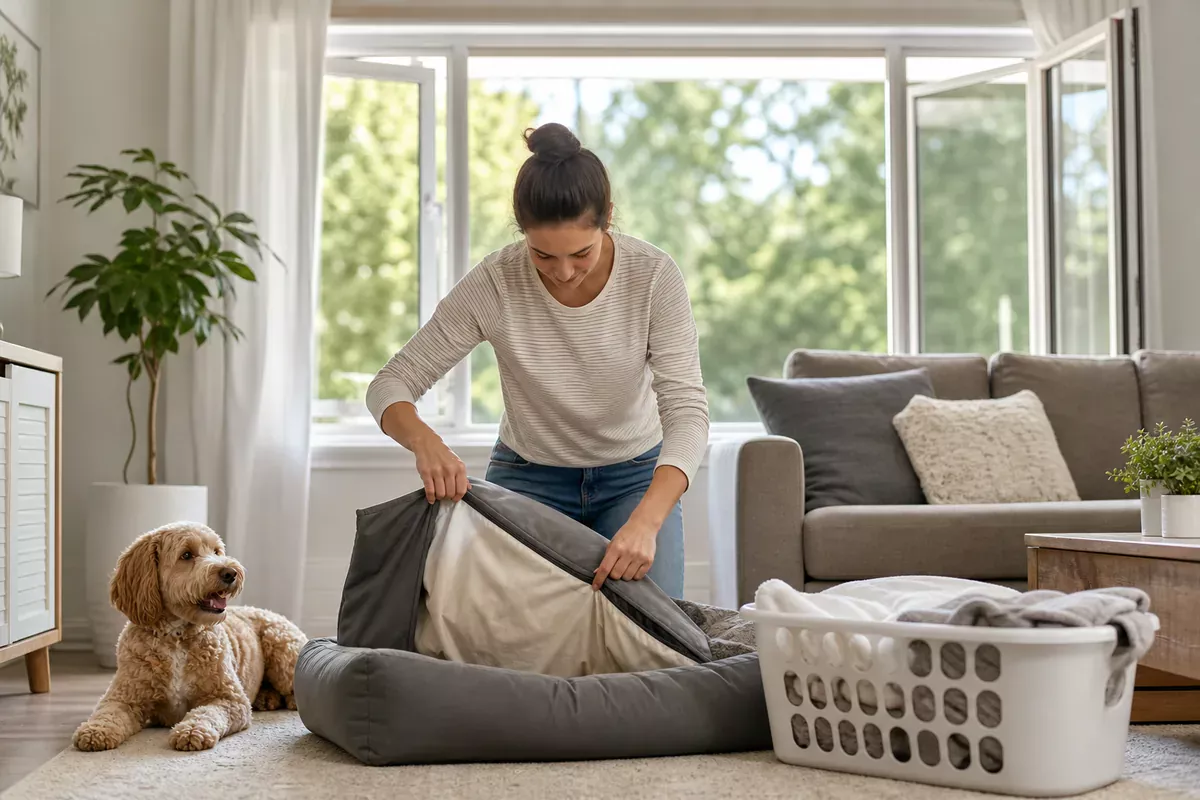
ODOR SOURCE MAP
To remove pet odor from a home, locate and clean the source before trying to change the room’s scent. Work zone by zone: washable textiles, hard surfaces, carpeted areas, litter or feeding zones, and ventilation. Air treatment can support this routine, but it cannot replace source control.
Quick answer
- Identify the strongest source instead of treating the entire room at once.
- Follow care labels and surface instructions for every washable item.
- Dry cleaned materials fully and control moisture.
- Ventilate with suitable outdoor air after the source is addressed.
- Map the strongest odor source.
- Clean removable items before large surfaces.
- Dry each layer completely.
- Ventilate when suitable, then reassess.
Where should you look for pet odor first?
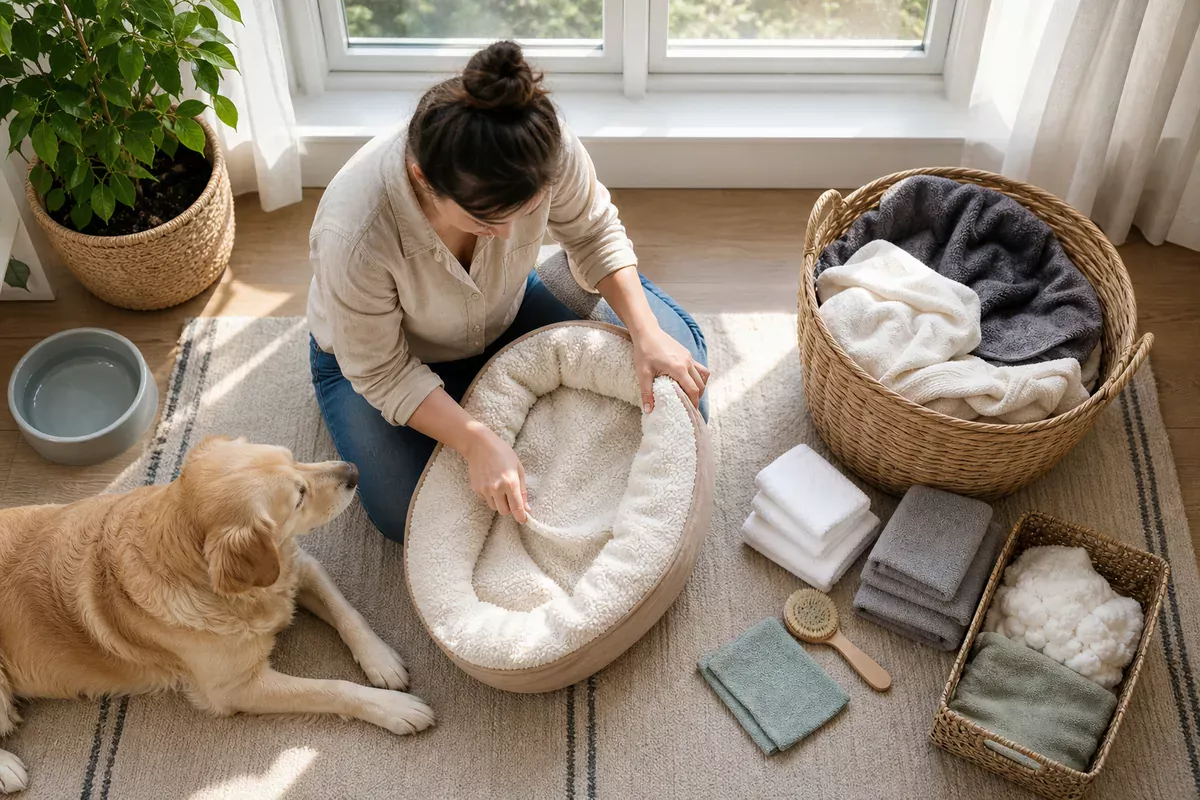
Begin at nose level, then check lower surfaces where pets rest and travel. Inspect bedding, furniture covers, rugs, carpet edges, washable mats, crates, litter zones, and the floor beneath bowls. Do not overlook the laundry basket or a damp towel used during cleanup.
Use a simple source map. Mark each room as clear, uncertain, or active. Within an active room, check one zone at a time. This prevents scent from a recently cleaned item from masking a second source nearby.
How do you separate an air problem from a surface problem?
A surface odor is usually strongest close to a specific textile or floor zone. An air-quality concern may persist across the room and may involve moisture, ventilation, smoke, or another non-pet source. The U.S. EPA describes source control, ventilation, and filtration as separate indoor-air strategies; that order is useful here.
Source control
Remove waste, clean the affected item, and launder washable covers as directed.
Drying
Prevent cleaned textiles from remaining damp. Check hidden layers before returning them.
Ventilation
When outdoor conditions are suitable, exchange indoor air after cleaning.
Filtration
Maintain HVAC or portable filters according to the equipment instructions.
How to remove pet odor from home step by step
1. Remove the immediate source
Dispose of waste and isolate washable textiles. If an accident is present, blot or collect it using the appropriate surface method. Avoid rubbing material farther into carpet or upholstery.
2. Read the care information
Check fabric labels, flooring guidance, and product directions. Test a hidden area before broad treatment. Do not combine cleaning products unless their labels explicitly instruct it.
3. Clean from small items to large surfaces
Start with removable covers, towels, mats, and bedding. Then address furniture, carpet, or flooring. This order prevents a washable item from reintroducing odor after the room surface has been cleaned.
4. Dry every layer
Surface dryness does not always mean the padding or underside is dry. Allow airflow around the item and follow care instructions. Persistent dampness requires attention because moisture can create a separate indoor-environment problem.
5. Ventilate and reassess
When weather and outdoor conditions allow, use ventilation after cleaning. Leave the room, return later, and reassess each marked zone. If odor remains, repeat the source check rather than adding more fragrance.
What should you do in common pet zones?
| Zone | First action | Important check |
|---|---|---|
| Pet bedding | Remove washable covers | Dry filling and seams fully |
| Carpet | Locate the exact area | Test treatment on a hidden patch |
| Upholstery | Check removable fabric | Do not oversaturate padding |
| Litter area | Remove waste and loose litter | Inspect mat and floor edges |
| Entryway | Clean tracked-in debris | Dry mats before reuse |
Why does pet odor return after cleaning?
Recurring odor usually means the source was only partly removed, an adjacent item was missed, or a cleaned layer stayed damp. Another possibility is that the odor comes from plumbing, moisture, waste storage, or ventilation rather than the pet zone itself.
Do not assume every persistent odor has the same cause. If you find extensive moisture, visible mold, damaged flooring, or an odor you cannot locate, stop routine cleaning and seek an appropriate qualified professional.
What role do ventilation and air cleaners play?
Ventilation can dilute indoor pollutants by bringing in suitable outdoor air. The EPA also notes that filtration can supplement source control and ventilation, but air cleaners cannot remove every pollutant. Treat these as supporting steps, not substitutes for cleaning the source.
Maintain filters according to equipment directions. Avoid treating duct cleaning as a default odor solution: the EPA recommends considering other indoor sources first and describes duct cleaning as an as-needed decision.
How can you maintain a lower-odor pet home?
Create a repeatable route: bedding, feeding area, entryway, favorite resting surface, and waste zone. Keep clean cloths separate from used ones. Store washable covers only when dry. Inspect high-contact zones before odor becomes room-wide.
For soft-surface accidents, use our guides to freshening a couch after a house accident and removing pet stains from carpet. Browse the odor-control collection only after the source and surface needs are clear.
How do you verify that the source plan worked?
Recheck the room after cleaned items are dry and the air has returned to normal. Approach from the doorway, then inspect each source-map zone at close range. This separates a room-wide impression from a specific remaining source. Do not judge the result while laundry, damp materials, or strongly scented products are still changing the room.
Keep a brief note of what was removed, washed, dried, or left unchanged. If odor returns, the note narrows the next inspection. A repeat at the same location points toward a material layer, an adjacent object, or an unresolved moisture source. Odor moving to another zone suggests that the original map missed a second item.
Consistency matters more than adding steps. The useful sequence remains source, surface, drying, ventilation, and reassessment. When one stage is incomplete, adding fragrance or running another device can make diagnosis harder without resolving the underlying condition.
Keep the source map with your household cleaning notes. It provides a clear baseline for the next room check.
Frequently asked questions
Can fragrance remove pet odor from a room?
Fragrance can change what a room smells like, but it does not confirm that the source has been removed. Clean and dry the source first, then reassess the room without layering additional scent.
Should I open windows while cleaning?
Ventilation may help when outdoor air and weather are suitable. Follow product directions, control access to the work area, and never use ventilation to replace source removal or proper drying.
Will an air cleaner remove all pet odors?
No. EPA guidance says air cleaners and filters can supplement source control and ventilation but cannot remove all indoor pollutants. Match any device to its instructions and intended use.
When should I stop DIY odor cleanup?
Stop when you find extensive moisture, damaged material, visible mold, an unknown chemical source, or an odor that persists without a clear pet-related origin. Those conditions require a different assessment.
When the identified source is a wood floor, use a finish-first hardwood pet-stain routine instead of applying carpet or upholstery instructions to the boards.
If the source map points specifically to a carpeted area, follow the separate routine to remove pet odors from carpet and verify that the carpet has dried before reassessing the room.
When the room-by-room check points to a wood floor, use the hardwood-specific pet odor routine. It limits moisture, checks the floor finish, and separates a surface issue from odor concentrated at seams or edges.
Sources
- U.S. EPA, What can I do to improve indoor air quality in my home?, updated June 4, 2026; retrieved July 24, 2026.
- U.S. EPA, Air Cleaners and Air Filters in the Home, retrieved July 24, 2026.
- U.S. EPA, Should You Have the Air Ducts in Your Home Cleaned?, retrieved July 24, 2026.