Pet Dander Cleaning Products: A Surface-by-Surface Home Routine

GENERAL PET HOME CLEANING
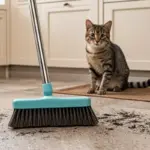
Pet dander cleaning products should support a routine that captures settled dust instead of simply moving it around. Start with a vacuum and attachments suited to each surface, washable cloths used slightly damp where the surface allows, and label-approved laundry care for removable textiles. Clean from upper surfaces toward the floor, work one room at a time, and avoid unsupported claims that one product removes every allergen.
What is pet dander, and where does it collect?
Pet dander is not the same thing as visible pet hair. The U.S. Environmental Protection Agency lists pet dander among biological particles found in indoor dust. Those particles can settle on floors, upholstery, bedding, shelves, curtains, and other surfaces. Walking, sweeping, dusting, and vacuuming can stir settled dust back into the air, so the order and technique of cleaning matter.
The practical implication is that a single lint roller or air freshener is not a complete dander routine. Hair tools can collect visible strands, but settled dust also needs attention. EPA guidance recommends frequent cleaning to reduce the buildup of indoor dust and allergens, including animal dander. It specifically mentions vacuuming carpets and furniture and dusting with a damp cloth, which helps keep settled dust from returning immediately to the air.
Which pet dander cleaning products belong in a basic kit?
A useful kit contains a small number of surface-compatible tools: a vacuum with the attachments required for the flooring and upholstery, several washable cloths, a laundry basket for removable textiles, and any cleaner specifically approved by the surface maker. Product count matters less than having a controlled path from clean cloth to used cloth and from upper surfaces to the final floor pass.
| Area | Practical starting tool | Check before use |
|---|---|---|
| Sealed hard furniture | Slightly damp clean cloth | Finish and moisture instructions |
| Upholstered seating | Compatible upholstery vacuum attachment | Care label, loose weave, and suction limits |
| Carpet and rugs | Vacuum setting or head suited to the pile | Rug label, fringe, loose edges, and beater-bar guidance |
| Washable pet bedding | Dry hair collection followed by label-approved laundry | Cover, filling, fasteners, temperature, and drying method |
| Small detail areas | Clean cloth or suitable crevice tool | Cables, vents, delicate surfaces, and moving parts |
Avoid buying products solely because the label uses broad words such as “complete” or “allergen eliminating.” Read the actual directions, compatible surfaces, contact time, ventilation language, storage requirements, and disposal instructions. If a household member has asthma or allergies, cleaning choices should support advice from an appropriate healthcare professional rather than replace it.
How do you clean a room without spreading settled dander?
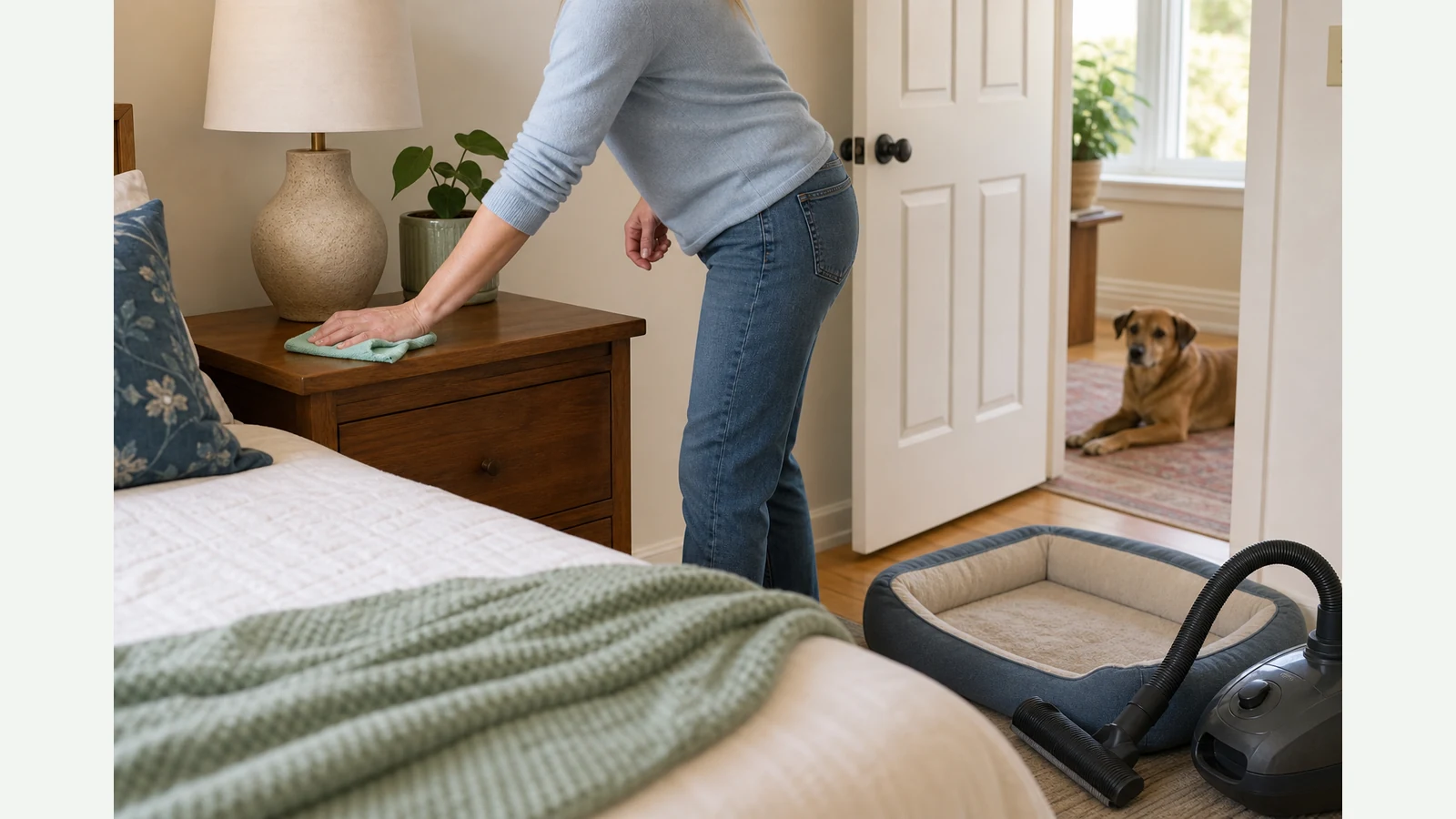
Clean a small zone from high surfaces to low surfaces. Move washable throws and pet bedding into a separate basket without shaking them. Wipe compatible hard surfaces, vacuum upholstery with the correct attachment, then vacuum or damp-clean the floor as its instructions allow. Keep used cloths separate so they do not return collected dust to another room.
- Move the pet to another comfortable room and gather supplies.
- Remove washable textiles gently without shaking them indoors.
- Wipe compatible shelves and hard surfaces from high to low.
- Vacuum upholstery, seams, pet beds, and accessible edges.
- Clean the floor last with the method approved for that surface.
- Empty equipment and wash reusable tools according to instructions.
1. Prepare one manageable zone
Close drawers, secure loose cords, and remove fragile objects. Put fresh cloths in one place and a container for used cloths in another. This sounds minor, but it prevents the same cloth from traveling between a dusty shelf, a food surface, and a bedside table.
2. Remove textiles without shaking
Fold blankets inward and carry them directly to the laundry area. Check care labels before washing covers, curtains, or pet bedding. If a cushion cover is removable, do not assume the insert has identical instructions. The separate guide to removing pet hair from laundry explains how to collect loose hair before starting a load.
3. Capture settled dust on hard surfaces
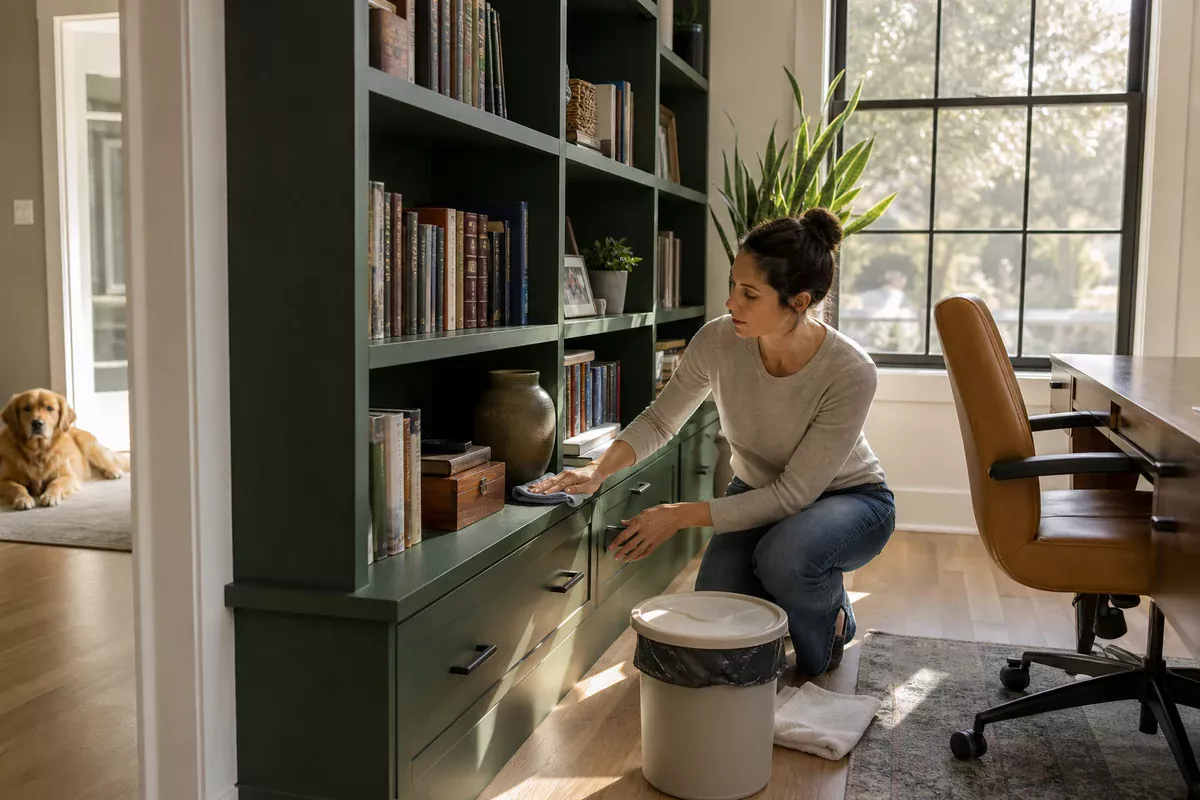
Where the finish permits, use a clean cloth damp enough to hold dust but not wet enough to leave water behind. Work across the surface once, fold to a clean side, and continue. Do not spray toward electronics, pet bowls, open containers, or ventilation grilles.
4. Vacuum fabric and flooring in separate passes
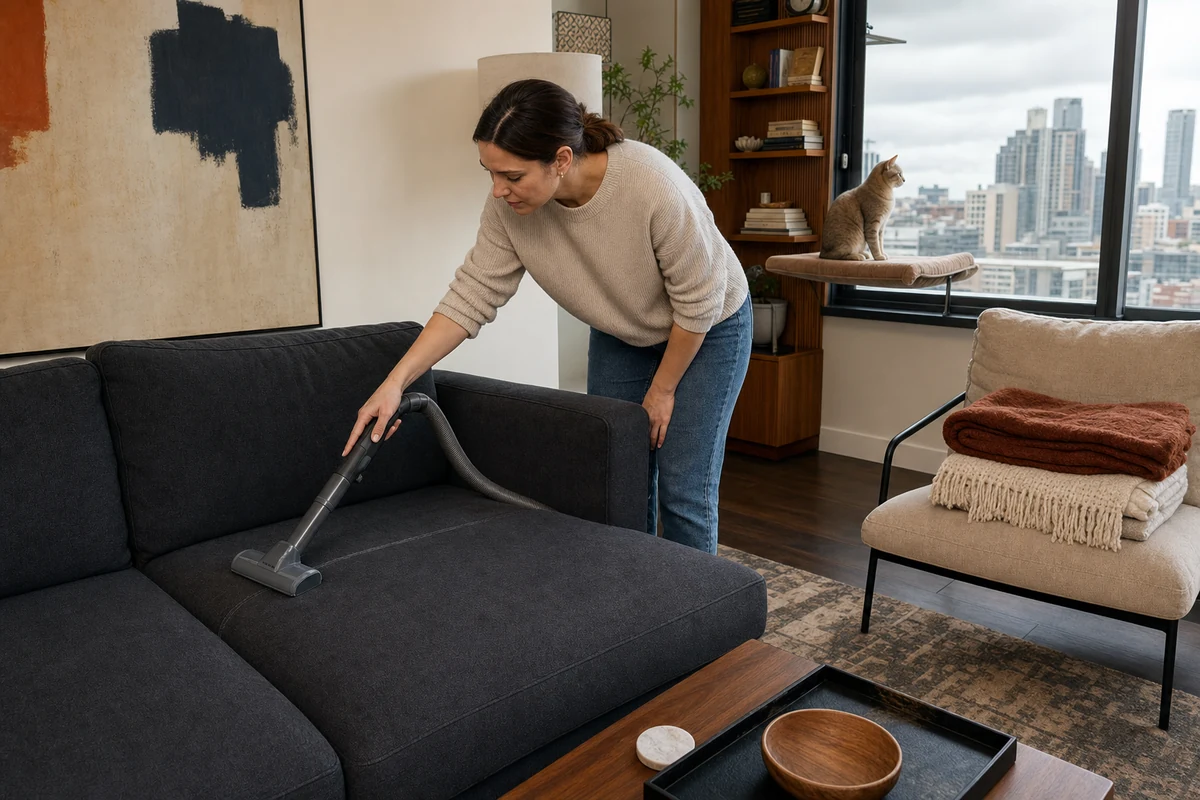
Use the upholstery head on furniture and the correct floor head on carpet. Follow the appliance instructions when changing settings. The guide to removing pet hair from furniture adds fabric testing and seam-specific steps for visible hair.
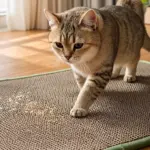
Carpet needs its own pile-aware pass. The guide to removing pet hair from carpet covers loosening visible strands, gathering them without rough scrubbing, and maintaining the vacuum and reusable tools afterward.
How should bedding, throws, and soft furnishings be handled?
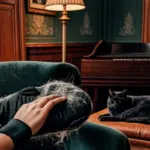
Start by reading each textile label. Remove loose hair while the item is dry, close fasteners, and separate damaged pieces that may shed filling. Wash only at the permitted temperature and use the approved drying method. Return bedding to the room when it is completely dry, then clean the basket or surface that held the used item.
The CDC’s 2026 pet-supply guidance recommends following item instructions and cleaning soft pet items in a washing machine and dryer when appropriate. It also distinguishes cleaning, which physically removes dirt and germs, from disinfection, which uses chemicals to kill germs. Routine dander housekeeping should not turn into unnecessary disinfection of every surface.
Which cleaning mistakes can make the routine less useful?
Dry sweeping, vigorous shaking, and reusing one dusty cloth across several rooms can redistribute settled material. Heavy fragrance can hide odor without showing whether a surface is clean. Overwetting upholstery or carpet creates a different problem, while using an aggressive vacuum head on delicate fabric can damage the surface before it improves housekeeping.
- Do not equate visible hair removal with complete dander removal.
- Do not spray products into the air or onto unknown finishes.
- Do not mix cleaners or ignore ventilation and storage directions.
- Do not use a carpet setting on rugs or upholstery without checking compatibility.
- Do not return a damp bed, cover, or mat to the pet’s area.
- Do not promise medical outcomes from ordinary household cleaning.
EPA notes that many pet-allergen particles settle on surfaces and cannot be removed by an air cleaner unless they become airborne. Filtration may supplement source control and cleaning, but it does not replace them. Consult the HVAC or air-cleaner manual before changing filters or settings, and seek professional medical guidance for persistent respiratory symptoms.
Frequently asked questions
Are pet hair and pet dander the same?
No. Hair is visible fiber shed from the coat. Dander consists of much smaller biological material and can be part of household dust. Hair-removal tools help with strands, while the broader routine must also address settled dust and washable textiles.
Should I dust or vacuum first?
Work from upper hard surfaces toward upholstery and finish with the floor. This sequence gives settled material a final collection point. Use a slightly damp cloth only where the surface allows, and avoid vigorous dry dusting that visibly sends dust into the room.
Can an air purifier replace cleaning?
No. EPA explains that many larger particles settle on surfaces and are not available to an air cleaner until disturbed. Appropriate filtration can supplement source control, ventilation, and cleaning, but it cannot clean a dusty shelf, sofa seam, bed cover, or carpet by itself.
Do I need to disinfect every pet surface?
Not for routine dander cleanup. CDC guidance says cleaning is usually sufficient for most pet items, while disinfection is an additional step for particular situations. Follow the item and product labels, and do not add a disinfectant merely to make the routine feel more complete.
How often should I repeat the routine?
Base the schedule on visible buildup, household sensitivity, surface use, shedding, and professional advice where relevant. EPA recommends frequent cleaning, but a fixed interval cannot account for every pet, room, ventilation system, or medical need.
Sources and further reading
- U.S. EPA: Sources of Indoor Particulate Matter, updated in 2026, retrieved July 27, 2026.
- U.S. EPA: Biological Contaminants and Indoor Air Quality, retrieved July 27, 2026.
- U.S. EPA: Will Air Cleaners Reduce Health Risks?, retrieved July 27, 2026.
- CDC: About Cleaning and Disinfecting Pet Supplies, updated February 18, 2026, retrieved July 27, 2026.