How to Clean a Cat Litter Scoop: A Simple Routine

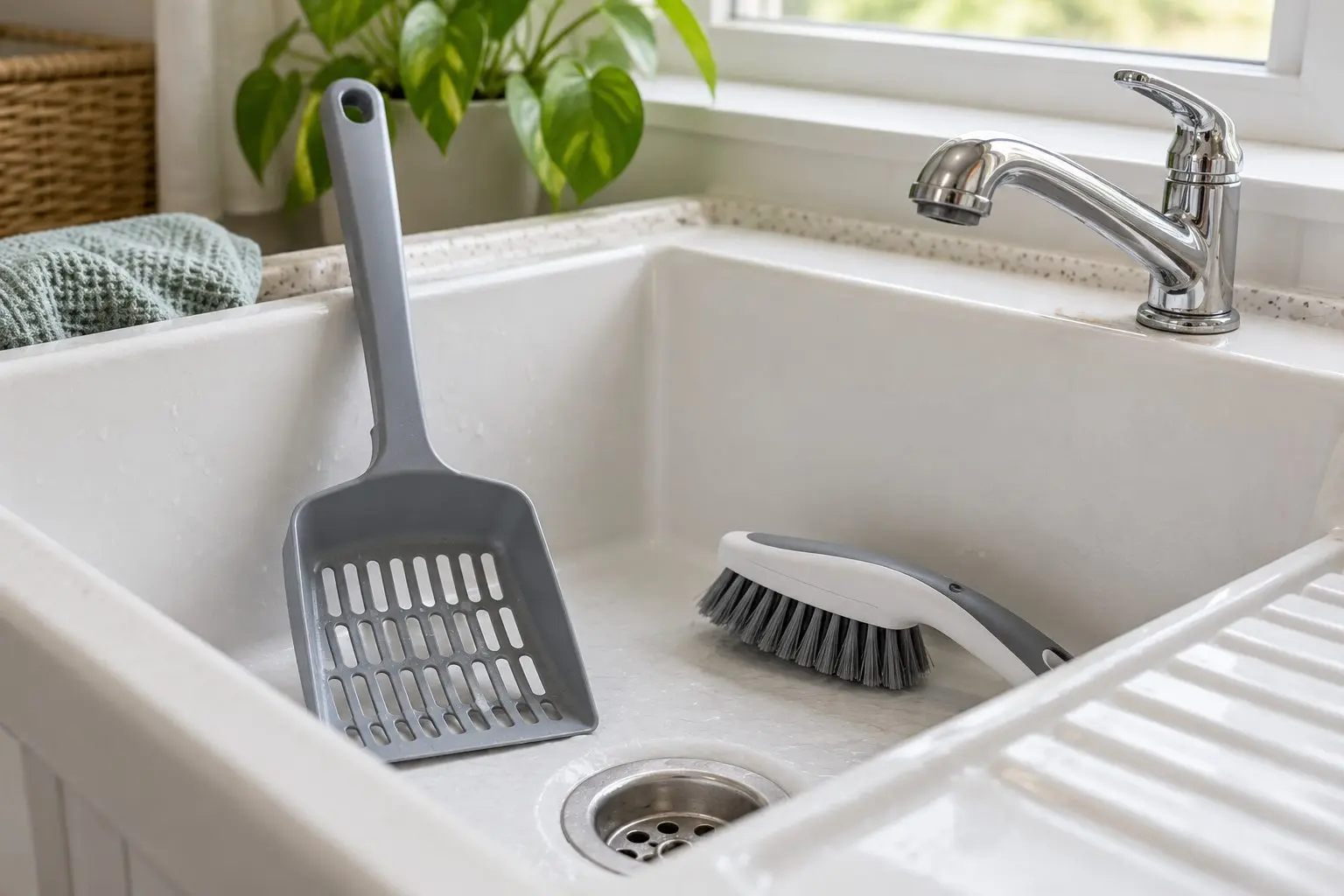
Quick answer: Follow the scoop’s care instructions first. If it has no special directions, wash it in warm, soapy water with a brush reserved for litter cleanup. Rinse away dirt and soap, then let it dry completely before storing. The CDC gives this as general guidance for hard pet items; it does not set a litter-scoop-specific cleaning schedule.
A little stuck litter is easier to deal with before it dries. Keep the scoop’s cleaning routine separate from the cat’s tray: this guide covers the tool itself, while our cat litter box cleaning guide covers daily scooping and washing the tray.
What you’ll need
- Warm water and soap or detergent
- A small brush or scrubber used only for litter-area cleanup
- A pet-only wash tub, laundry sink, or bathtub
- A clean towel or a spot where the scoop can air-dry
Check the scoop’s label or manufacturer directions before using hot water, a dishwasher, or a disinfectant. For pet items without care instructions, the CDC’s general method for hard items is to wash with soap or detergent and warm water, scrub, rinse, and air-dry or wipe with a clean towel.
How to clean a cat litter scoop
- Set up a separate wash area. Use a wash tub and brush reserved for pet cleanup, a laundry sink, or a bathtub—not the kitchen sink. The CDC recommends those areas for pet items other than bowls and toys, noting that a kitchen sink may spread germs to food. Clean and disinfect a shared sink or tub right after using it.
- Remove loose litter first. Hold the scoop over the litter box or a waste bag and let clean granules fall away. Remove any stuck waste with the dedicated brush or a disposable towel.
- Wash all sides. Add soap or detergent to warm water. Scrub the scoop’s face, underside, slots or openings, edges, and handle joint. Use enough pressure to lift visible residue, not a rough pad that could damage the scoop.
- Rinse thoroughly. Rinse until visible dirt and suds are gone. Don’t put the scoop away with soap or debris still on it.
- Dry before putting it away. Air-dry the scoop or wipe it with a clean towel. Wait until the handle and openings are dry, then return it to a clean holder or hook.
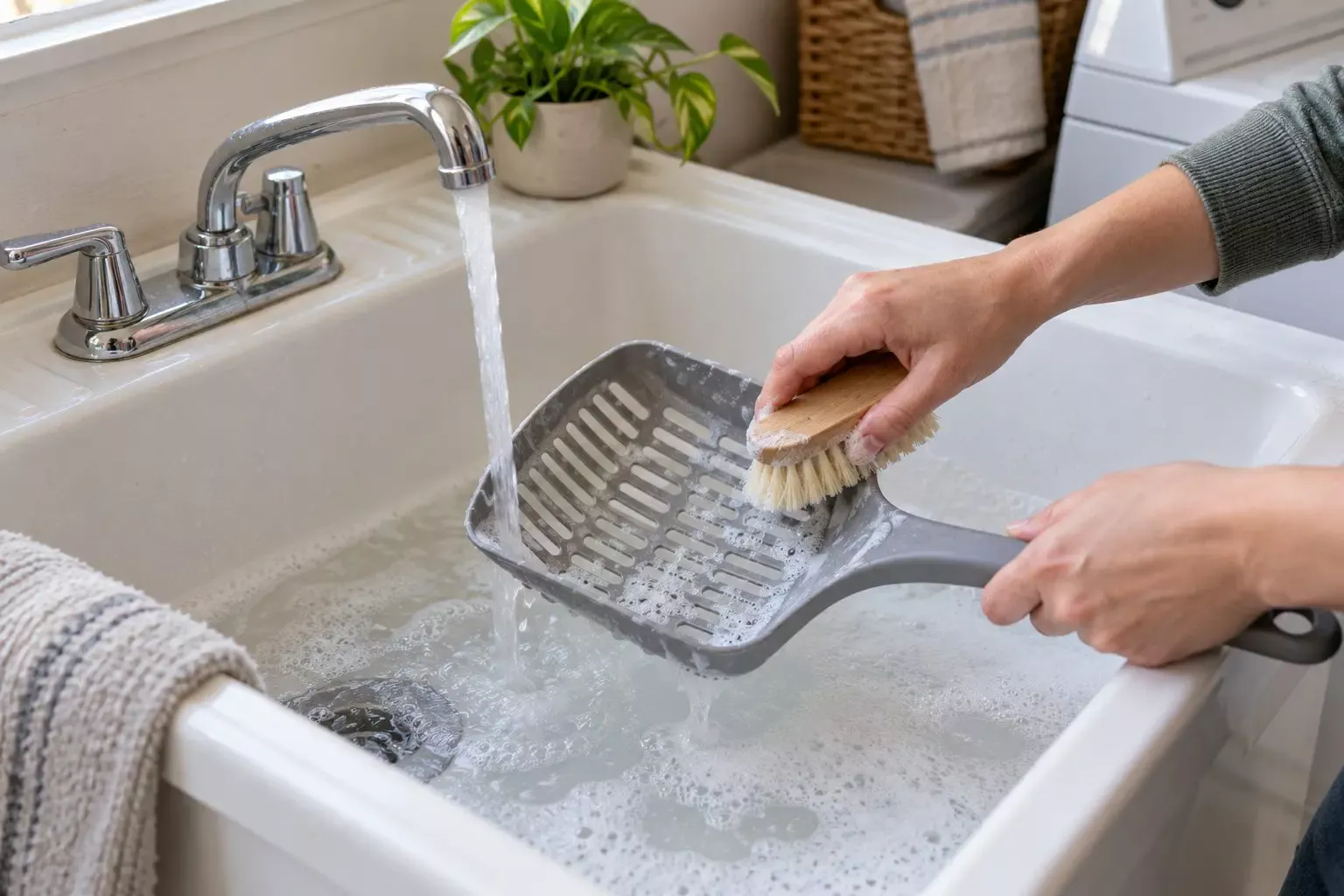
If residue has dried in the slots, soak the scoop in warm, soapy water only if its care instructions allow it, then brush and rinse again. Skip knives or metal scrapers that could gouge the surface.
How often should you wash the scoop?
Follow the scoop maker’s instructions if they give a schedule. If not, wash it when waste sticks to it, you can see residue, or a smell remains after loose litter is removed. You can also wash it when you empty and clean the litter tray; that is a convenient household routine, not a universal interval set by the CDC.
Between washes, knock loose clean granules back into the tray and check that nothing is caught between the slots. If the scoop is cracked, the handle is loose, or the surface is hard to clean, check the manufacturer’s replacement guidance rather than trying a stronger cleaner.
Can you put a cat litter scoop in the dishwasher?
Only if the scoop’s maker labels it dishwasher-safe. The CDC’s dishwasher guidance applies to pet items marked dishwasher-safe; it is not a blanket instruction for every plastic scoop. If you can’t confirm that yours is safe for a dishwasher, use the warm-water hand-washing method above.
Do you need to disinfect a litter scoop?
Washing removes visible dirt; disinfection is a separate step. The CDC says pet items that touch poop or pee, including litter boxes, should be disinfected as often as a toilet or bathroom. It does not name litter scoops specifically, so follow that general guidance along with the scoop maker’s care directions. First wash away visible dirt, then use only a disinfectant and method permitted for the scoop. Follow the label for contact time, rinsing, and drying; let the scoop dry completely before your cat can reach it. Never mix bleach with ammonia or another cleaner, and don’t use disinfectants containing phenol on cat items.
Wash your hands with soap and water after handling litter or cleaning the scoop. The CDC’s cat-safety guidance says people who are pregnant or have a weakened immune system should have someone else clean the litter box when possible; if they must do it, CDC advises disposable gloves and handwashing afterward.
Keep the rest of the litter area in its own routine
If the scoop is clean but litter keeps spreading onto the floor, the mat is a separate job. Our cat litter mat guide explains how to choose and care for a mat by floor type. If you’re replacing both pieces, browse the Litter Area collection; it currently includes a cat litter mat and scoop set. Check the product listing for included items and care directions before ordering.
Sources
- CDC: About Cleaning and Disinfecting Pet Supplies (general cleaning method for hard pet items; retrieved October 25, 2026).
- CDC: Cats — How to Stay Healthy Around Cats (handwashing and extra precautions around litter; retrieved October 25, 2026).