What Are Puzzle Toys for Dogs? A Practical Guide to Interactive Play

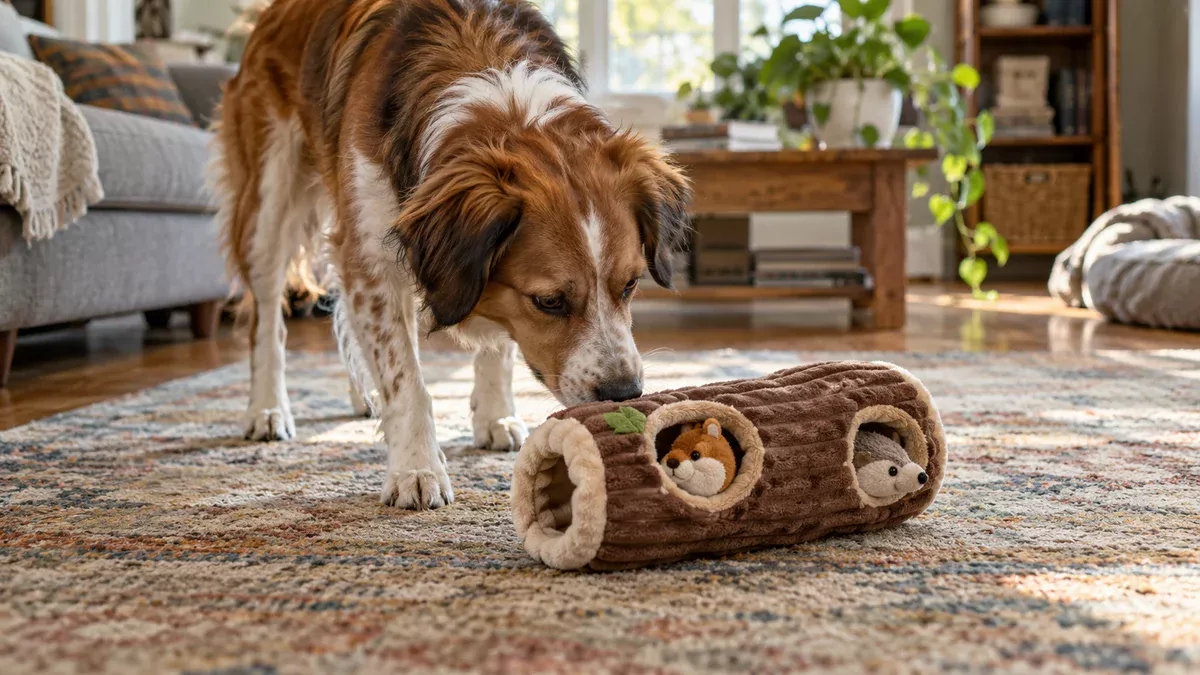
Puzzle toys for dogs make a dog work out how to reach a reward, usually food. Some toys ask a dog to sniff through fabric; others have sliders, lids, or openings that release kibble. The right first puzzle is one your dog can use without getting stuck or chewing off pieces. “Interactive dog toy” is a broader label: it can mean a food puzzle, but it can also mean a ball or tug toy you use together.
Quick answer: Start with the kind of play your dog already enjoys, choose an easy version, and watch the first sessions. A puzzle does not need to be complicated to hold a dog’s attention.
- Sniffers may prefer a snuffle mat or a simple search game.
- Dogs that like licking can try a stuffable toy or lick mat made for their size.
- Dogs that like playing with you may prefer fetch or tug, which are interactive but not food puzzles.
- Check size, materials, removable pieces, and cleaning instructions before buying.
What are puzzle toys for dogs, exactly?
A dog puzzle toy hides or dispenses a reward and asks the dog to do something to get it. That action might be sniffing, licking, nudging, pawing, or moving a simple part. Food puzzles are one kind of interactive toy. The term also covers toys that need a person on the other end, such as a fetch ball or tug toy.
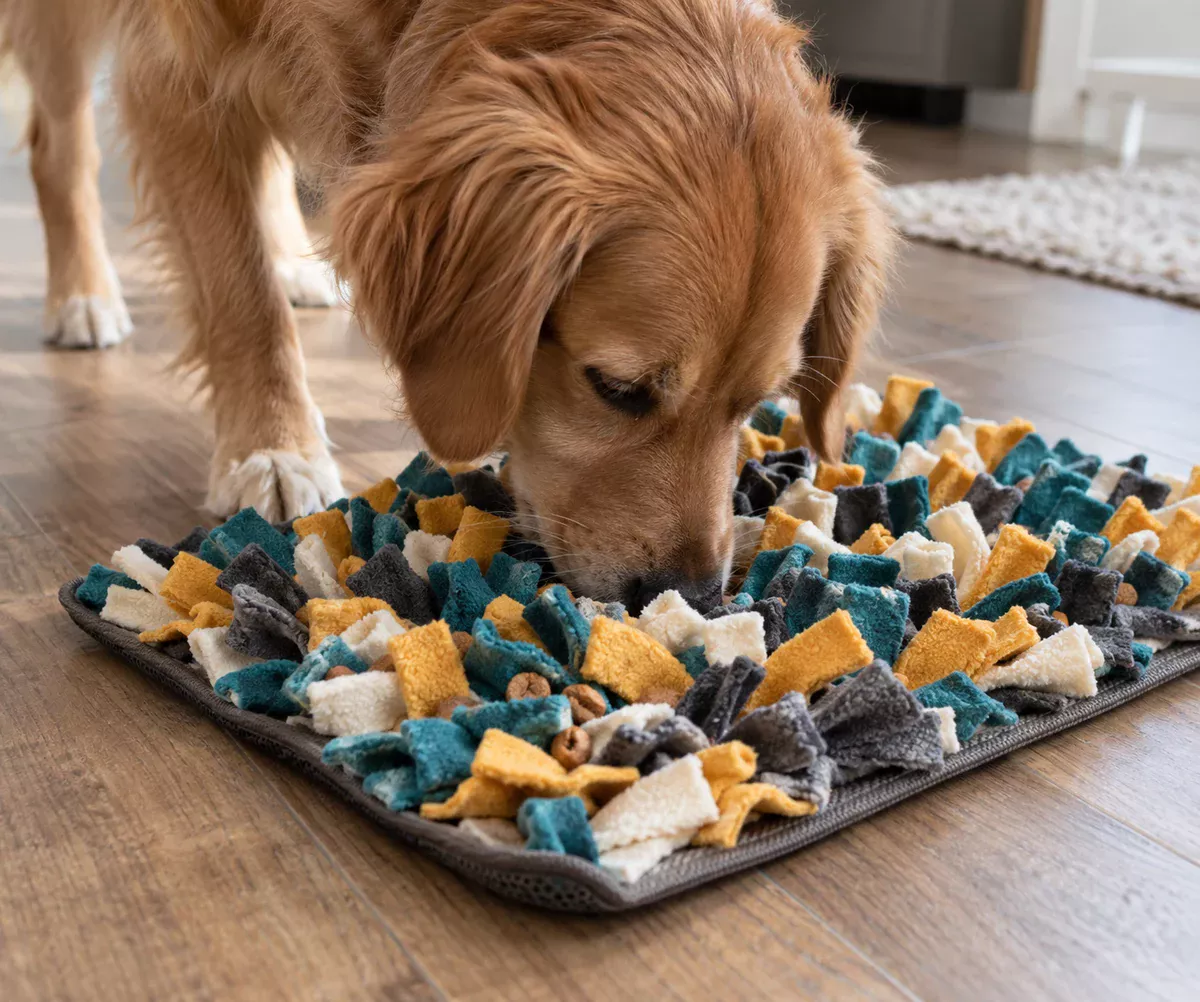
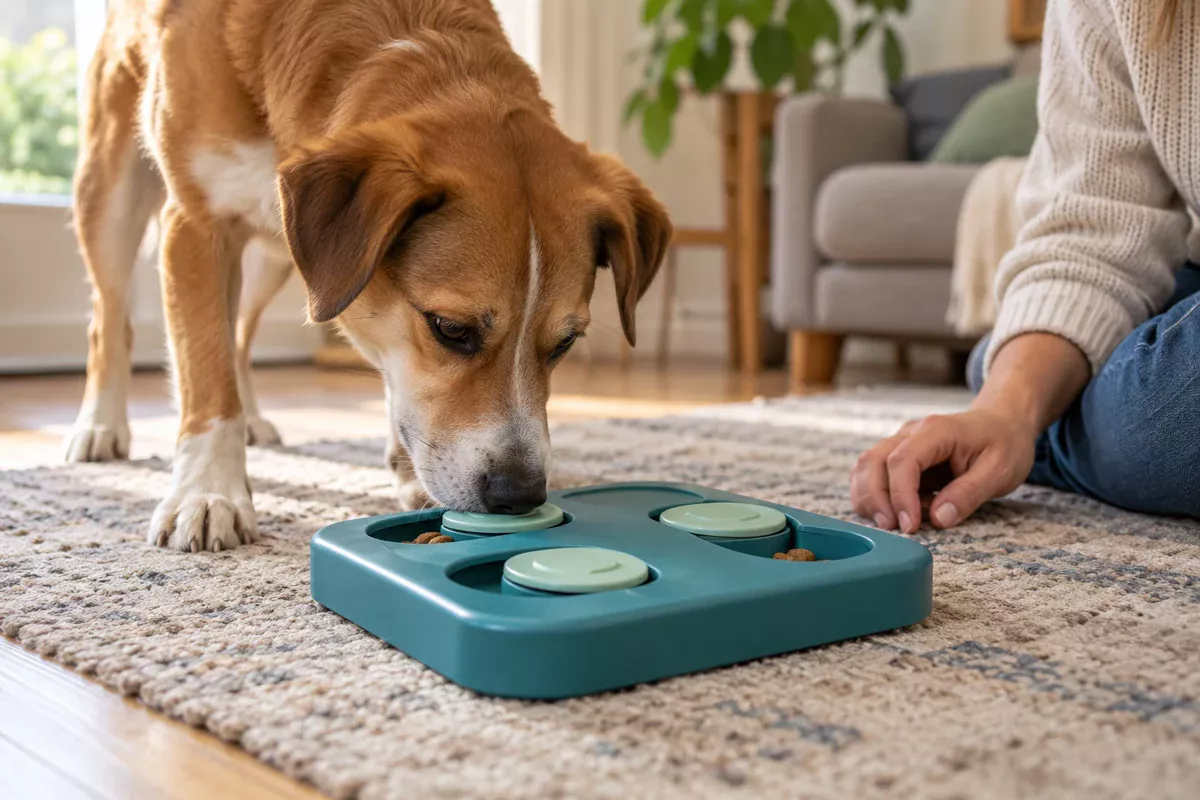
Labels can blur these differences. A slow-feeder bowl may make a meal take more effort, while a sliding puzzle asks a dog to move pieces. A snuffle mat has no single solution; the dog searches for food among fabric strips. Ohio State University’s Veterinary Medical Center guide to toys and puzzles describes snuffle mats as a foraging activity, while its activity mats use puzzle steps to uncover food. Those are different play experiences, even if a product listing calls both “enrichment.”
It helps to decide what you want the toy to do before shopping. Are you looking for a game to play together, a way to serve part of a meal, or an activity your dog can explore while you supervise nearby? That answer narrows the options faster than a “difficulty level” printed on a box.
Which interactive dog toy matches your dog’s play style?
Watch what your dog chooses during ordinary play. A dog who follows a scent may enjoy a sniffing game more than a board with several moving parts. A dog who wants to chase a toy with you has a different need from one who likes licking food from a surface.
| What your dog tends to do | Type to consider | Check before use |
|---|---|---|
| Sniffs and searches | Snuffle mat or simple hide-and-find game | Watch for chewing or pulling up fabric |
| Licks food slowly | Stuffable toy or lick mat | Choose a suitable size and use food that fits your dog’s diet |
| Nudges or bats objects | Roller or treat-dispensing toy | Consider noise, floor surfaces, and whether the toy gets stuck |
| Likes moving pieces | Beginner slider or lift-the-flap puzzle | Look for small parts your dog might chew or swallow |
| Wants you involved | Fetch or a tug toy used with a person | Put it away if your dog shreds or eats pieces |
These are starting points, not rules about breed or personality. Some dogs will sniff for a few minutes and then ask for a ball. Others lose interest in a puzzle but enjoy tug. The Ohio State Veterinary Medical Center’s guide to toys and puzzles also distinguishes sniffing mats, food-stuffable toys, and activity puzzles by how the dog uses them.
For a first purchase, it is fine to pick one simple format and see what your dog does with it. You do not need a full set. If the toy is a poor match, that does not mean your dog is “bad at puzzles”; it may just be the wrong kind of task.
How do you choose a puzzle toy that fits your dog?
Start with your dog’s behavior around toys, then check the toy’s size, construction, and instructions. A product marked “interactive” does not tell you whether it is meant for licking, nudging, chewing, or supervised play with a person.
- Look at the opening and pieces. If your dog grabs and chews toys, avoid a design with small pieces that can come loose. Read the manufacturer’s size guidance and compare it with your dog’s mouth and play style.
- Match the challenge to what your dog has tried. A beginner-friendly design should make the reward easy to find. Several linked steps can be frustrating as a first experience, even if the toy looks more impressive.
- Think about where the toy will be used. A hard roller can clatter on tile or hardwood. A stationary mat may suit a dog that does not enjoy chasing a moving feeder. Check whether the toy can slide under furniture.
- Check how it is cleaned. Food and saliva collect in grooves and seams. Choose a toy you can clean as directed, especially if it will be used often.
- Use food that makes sense for your dog. You can often start with part of a regular meal, if the food fits the toy and your dog’s diet. For dietary restrictions or food sensitivities, ask your veterinarian before adding ingredients.
Preventive Vet’s guide to choosing interactive toys recommends starting new puzzle users with an easy-to-activate design, then increasing the challenge after the dog understands how it works. It also points out practical details that are easy to miss while shopping, including toy size, removable pieces, cleanup, and noise on hard floors.
How do you introduce the first puzzle toy?
Make the first try easy enough that your dog can get a reward without guessing for long. Ohio State’s Veterinary Medical Center guide advises monitoring a new toy for frustration, stress, or attempts to ingest pieces. Help is part of the introduction; you do not need to wait for your dog to solve every step alone.
- Choose one toy with a simple opening or a low-effort way to uncover food.
- Use a small amount of familiar food, or part of the regular meal if appropriate.
- Show your dog where the reward is. Leave a flap open or make food easy to reach on the first try.
- Let your dog investigate while you stay nearby. If they get stuck, make the next step easier or point out the food.
- End the activity when the food is gone, the dog loses interest, or the toy starts to come apart.
- On another try, change just one thing, such as closing one flap or using a slightly different setup.
A dog that paws at a puzzle or walks away is giving you useful information. Try a simpler mechanism, a different texture, or a toy that involves you more directly. Preventive Vet’s introduction advice makes the same practical point: if the task is too hard, some dogs stop trying, so begin with easy access and build from there.
What safety checks matter before and during play?
Supervise the first sessions and inspect the toy as your dog uses it. Ohio State’s Veterinary Medical Center advises monitoring for damage and watching for attempts to ingest toy pieces. The American Kennel Club’s toy-shopping guide also recommends removing toys that are easy to destroy or swallow.
- Follow the maker’s size and age guidance. The toy should not be small enough for your dog to swallow, and it should fit the way your dog actually plays.
- Take the toy away if pieces loosen, cracks appear, or your dog begins chewing parts that should not be eaten.
- Use food puzzles separately in a multi-dog home if dogs compete over food or guard toys. If resource guarding is already a concern, ask your veterinarian or a qualified behavior professional about setup.
- Do not assume a food puzzle can safely keep every dog occupied alone. First learn how your dog handles it while you are there.
- Follow the care label.
“Durable” is not a universal safety guarantee. A toy that works for one dog’s gentle licking may not suit another dog who bites and pulls. Check it regularly, and choose a different design if your dog repeatedly tries to chew through the mechanism or remove its parts.
Frequently asked questions
Are puzzle toys good for dogs who get bored?
A puzzle toy can give a dog another activity, but it is not a fix for every kind of boredom or behavior problem. Start with a task your dog can complete and see whether they choose to keep playing. If the toy causes frustration or frantic chewing, stop and try a different type.
Can I leave my dog alone with an interactive toy?
There is no single answer for every toy and dog. Supervise the first sessions and watch whether your dog chews, breaks, or swallows parts. Only leave a toy out when you know it suits your dog’s habits and the manufacturer’s instructions allow it. Some tug and training toys are meant for use with a person.
What is the easiest puzzle toy for a beginner?
Look for a simple snuffle activity, a broad opening, or a toy that releases food with one easy action. The best first choice depends on whether your dog likes sniffing, licking, nudging, or solving. Keep the reward easy to reach at first, then add a little challenge after your dog understands the game.
What if my dog ignores the puzzle?
Try a different way of playing rather than making the puzzle harder. A dog who ignores sliding pieces may prefer sniffing for food or playing tug with you. You can also make the first attempt easier by leaving compartments open and showing where the reward is. For a no-cost starting point, try our DIY puzzles for dogs made with household items.
How often should I clean a food puzzle toy?
Follow the toy maker’s cleaning instructions and clean it whenever food residue or saliva remains. Materials and designs vary, so one method may not suit every toy. Our dog toy cleaning guide explains what to check for rubber, plush, and rope toys.
The easiest puzzle to choose is usually the one that matches something your dog already likes doing. Pick a simple version, stay nearby for the first tries, and change the setup if your dog gets stuck or starts chewing the toy. If you are choosing a toy that needs your participation, treat fetch or tug as a valid kind of interactive play too.