How to Clean a Cat Litter Box: Daily Scooping and Deep Cleaning

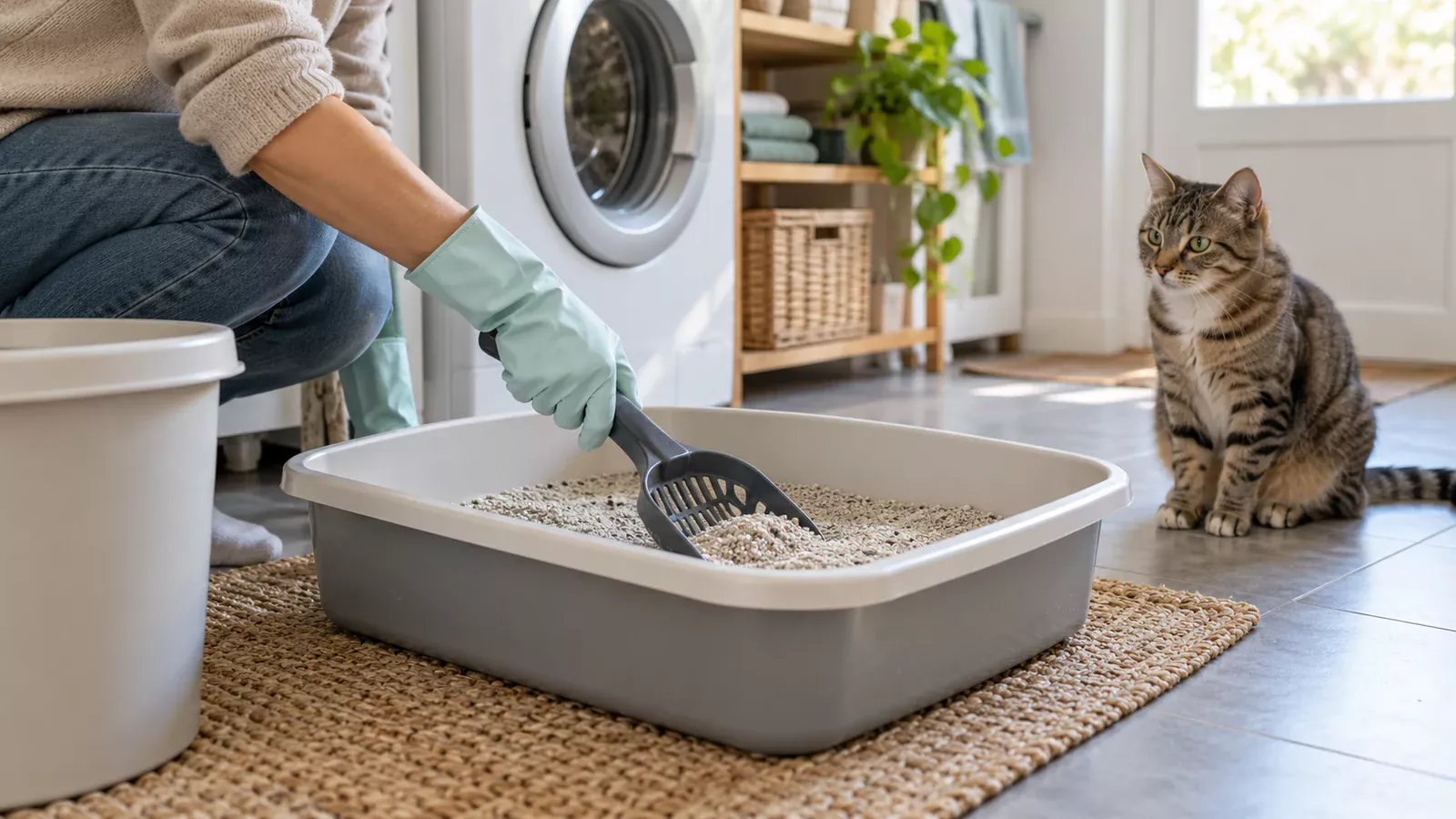
To clean a cat litter box, scoop out stool and urine clumps every day, then wash the empty tray with soap and warm water when you replace the litter or whenever residue builds up. Rinse away the soap and let the tray dry before refilling it. Disinfection is separate from washing, and the CDC recommends a regular schedule for items that touch urine or feces.
| Task | Simple routine | What to check |
|---|---|---|
| Daily upkeep | Scoop stool and urine clumps; top up litter if its instructions call for it | More than one cat or a box that gets used heavily may need another check |
| Full litter change | Empty the box and wash it before adding fresh litter | Follow the litter and box maker’s directions; change sooner if the contents are wet or dirty |
| Disinfection | Clean first, then follow a regular schedule appropriate for the item | Follow the label, keep the cat away, rinse when directed, and dry fully |
What do you need to clean a cat litter box?
Keep the setup plain: a scoop, a waste bag, gloves if you prefer them, mild soap or detergent, warm water, and a brush or sponge reserved for the litter box. A second box can help if your cat needs access while the usual one dries. Check the box and litter instructions before you start, especially if the tray has a removable liner, filter, or electrical parts.
The CDC recommends a separate wash tub, sponge, or scrubber for pet items other than bowls and toys. A litter box is better cleaned in a utility sink, laundry tub, or bathtub than in the kitchen sink. If the tub is the only option, remove personal items first and clean the area afterward. For the floor around the tray, see our guide to choosing and caring for cat litter mats.
How often should you scoop and wash the litter box?
Scoop the box at least once a day. The CDC says Toxoplasma in cat feces needs one to five days to become infectious, which is one reason daily removal matters. If you are pregnant or have a weakened immune system, ask another household member to handle the litter when possible. If you must do it, the CDC advises disposable gloves and immediate handwashing.
A full litter change and tray wash do not have one schedule that fits every cat, litter, and box. Follow the litter package and box maker first. The Cornell Feline Health Center says to change litter often enough that it stays dry and clean by sight and smell, and more often when several cats use the box. Empty and wash sooner if you see stuck-on residue or the smell remains after scooping.
That distinction helps: scoop waste on a daily routine, then base the full wash on the litter instructions and what you can see in the tray. Don’t wait for a strong odor to tell you something is overdue. For the rest of the litter corner, our DIY litter mat setup covers tracked granules, not cleaning the box itself.
How do you deep clean a cat litter box?
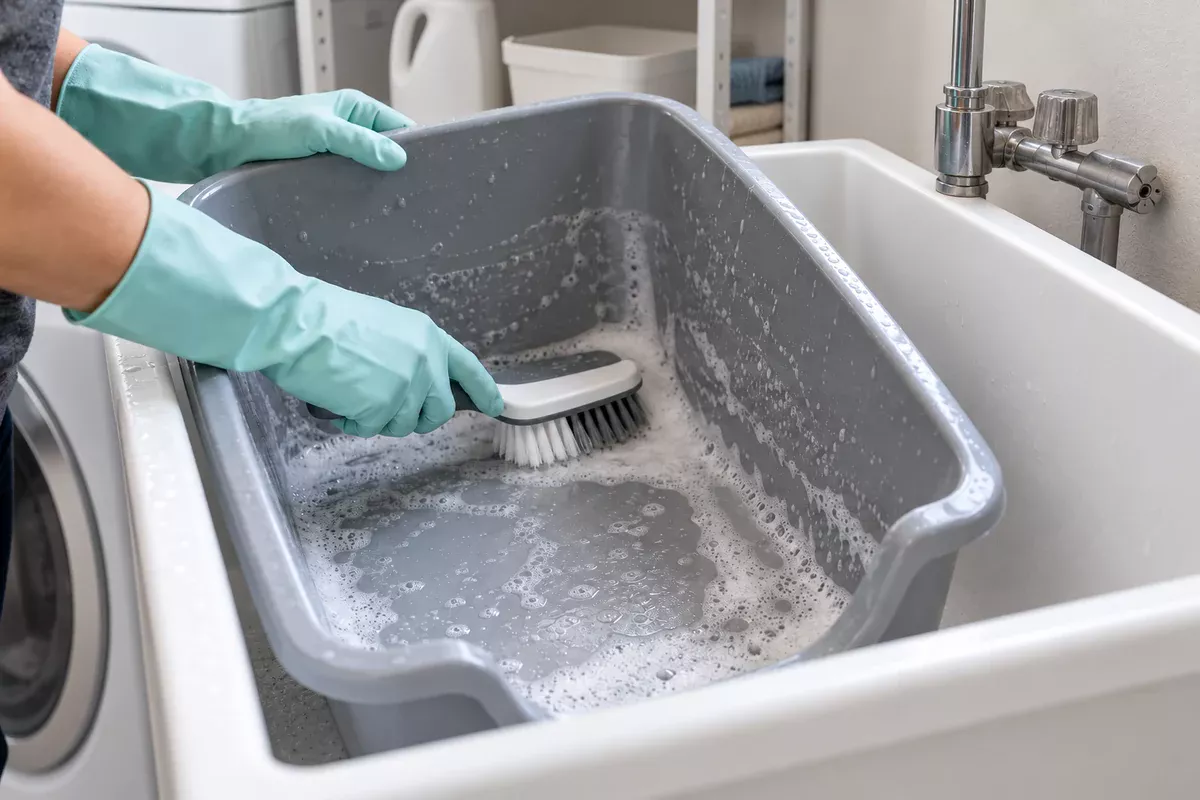
For an ordinary full wash, empty the tray, scrub it with soap and warm water, rinse until no visible soap or debris remains, and let it dry completely. The CDC’s general pet-supply method for hard items follows that same clean, scrub, rinse, and dry sequence. Check the box maker’s care instructions before using hot water or any appliance.
- Put on gloves if you use them, and move the cat away from the wash area.
- Scoop out the remaining litter, then dispose of it according to the litter package and local waste rules. Don’t assume cat litter belongs in the toilet.
- Take the empty tray to a suitable wash area. Remove a hood or other detachable part only if the instructions allow it.
- Use warm water and a small amount of soap or detergent. Scrub the base, corners, rim, and any removable hood with the dedicated brush.
- Rinse the tray and parts thoroughly so dirt and soap are gone.
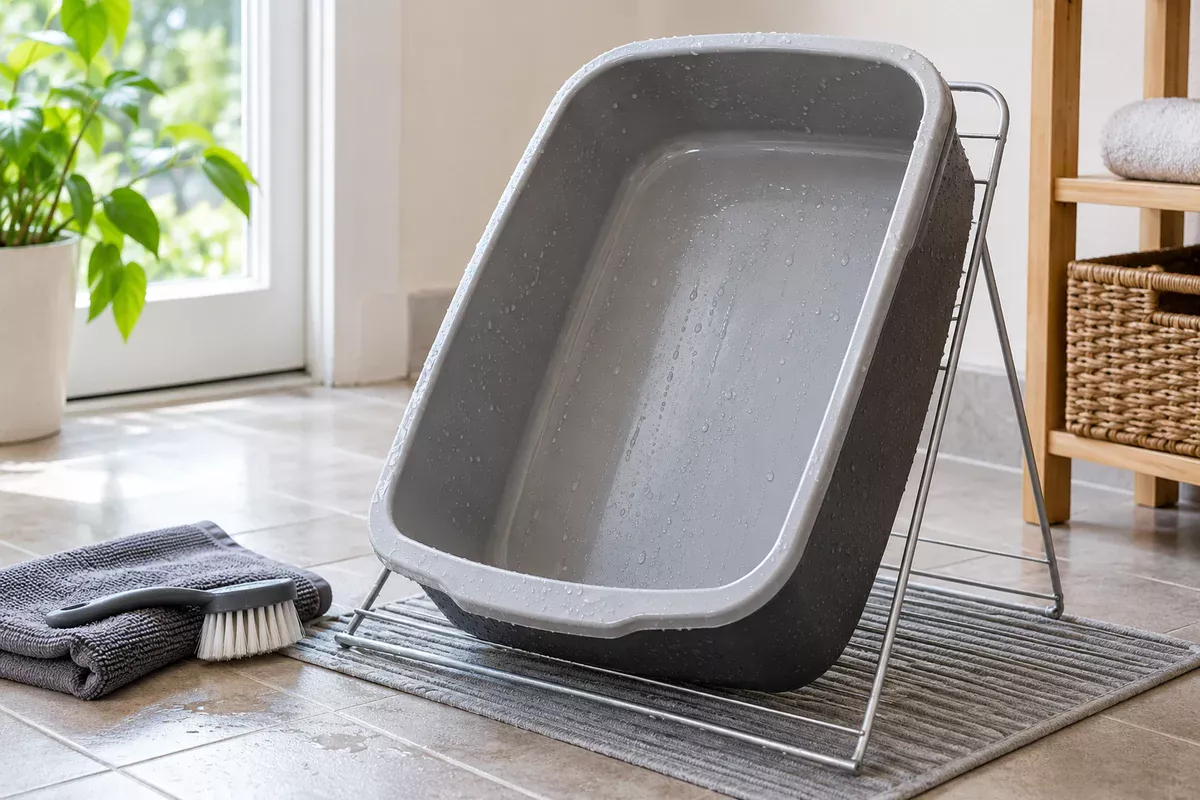
- Air-dry or wipe with a clean towel. Wait until every surface is dry before adding litter.
- Refill and reassemble the box according to its instructions, then put it back in its usual accessible place.
For a covered box with a replaceable filter, keep filter care separate from washing the tray. Our cat litter box filter guide explains when to replace that part and what it cannot fix.
Does a cat litter box need to be disinfected?
Routine washing and disinfection are different jobs. Soap and water remove visible dirt; a disinfectant is intended to kill germs. The CDC says pet items that touch urine or feces, including litter boxes, should be disinfected as often as a household toilet or bathroom. It also advises more frequent disinfection when a pet is sick or someone in the home is at higher risk from germs.
If you disinfect, first clean away visible dirt. Use only a method that the box maker permits and follow the product label for dilution, contact time, rinsing, and drying. For compatible hard pet items, the CDC describes a solution of 1/4 cup household bleach in 1 gallon of water, left on for at least 10 minutes, then rinsed and dried completely. Don’t apply it to a tray if its instructions warn against bleach. Keep the cat away during cleaning, and never mix bleach with ammonia or another cleaner.
Vinegar is not a proven shortcut for disinfecting. The CDC says there is not enough research to show how well vinegar removes dirt or kills germs. It can kill some germs with enough contact time, but not all of them. If the box has been exposed to a specific illness or contamination, ask your veterinarian which cleaning steps fit the situation.
What should you avoid when cleaning the box?
- Don’t mix cleaning products. The CDC warns that bleach mixed with ammonia can release dangerous gases.
- Don’t leave disinfectant or soap residue where your cat will walk or lick. Follow the label’s rinse and dry directions.
- Don’t use a disinfectant containing phenol on a cat’s items. The CDC warns that phenols are very toxic to cats.
- Don’t use a kitchen sponge, dish brush, or food-prep sink for litter-box cleanup.
- Don’t cover a lingering smell with fragrance. Check the tray, hood, nearby floor, mat, and filter instead.
If the box still smells after a thorough wash, check for residue around seams and under a removable hood. A worn or scratched tray can also hold odor. Look at the mat and floor separately, then inspect any filter. Our pet odor source guide can help with smells elsewhere in the room.
What is a practical daily litter-box routine?
A useful routine is short enough to keep doing: scoop once a day, check for wet or stuck litter, and wash your hands afterward. If the box is heavily used, check it again later. CDC guidance recommends daily removal of cat feces; Cornell also recommends removing clumps and feces daily when using clumping litter.
Keep the scoop and waste bags nearby, but store them away from food-preparation areas. If litter keeps spreading beyond the tray, adjust the mat or cleanup area rather than mixing mat washing into the box routine. The PawPureHome litter-area collection groups mats and other accessories for the space around the box.
For more surface-specific routines, browse the PawPureHome cleaning guides.
Frequently asked questions
How often should I scoop a cat litter box?
Scoop stool and urine clumps at least once daily. The CDC says the parasite that causes toxoplasmosis may take one to five days to become infectious after it is shed, so daily removal is part of its prevention guidance. Some homes may need to scoop more often, especially when several cats share a box.
How often should I replace all the litter?
Check the litter package because clumping, non-clumping, and other litters can have different directions. Change it sooner if the litter is wet, visibly dirty, or smells bad after scooping. Cornell recommends keeping litter dry and clean by sight and smell, with more frequent changes when several cats use the box.
Can I use bleach to disinfect a cat litter box?
Only if the box material and its care instructions allow it. The CDC gives a diluted bleach method for compatible hard pet items, but the item must be cleaned first, the solution used as directed, then rinsed and dried fully. Keep your cat away during the process and never mix bleach with another cleaner.
Can I wash a litter box in the kitchen sink?
A utility tub, laundry sink, or bathtub is a better choice. The CDC recommends a dedicated wash tub and cleaning tools for most pet items, and says a sink or tub used for pet items should be cleaned afterward. Keep litter-box tools separate from the sponge and brush you use for dishes.
Can a pregnant person clean the litter box?
The CDC recommends that someone else in the household change the litter when a person is pregnant or has a weakened immune system. If no one else can do it, the CDC advises disposable gloves, daily removal of stool, and washing hands with soap and water immediately afterward. Ask a healthcare provider about personal risk questions.
Sources
- CDC, About Cleaning and Disinfecting Pet Supplies, updated February 18, 2026, retrieved October 9, 2026.
- CDC, Preventing Toxoplasmosis, retrieved October 9, 2026.
- Cornell Feline Health Center, Feline Behavior Problems: House Soiling, retrieved October 9, 2026.