Cleaning Dog Paws After a Walk: A Calm Entryway Routine

ENTRYWAY PAW ROUTINE
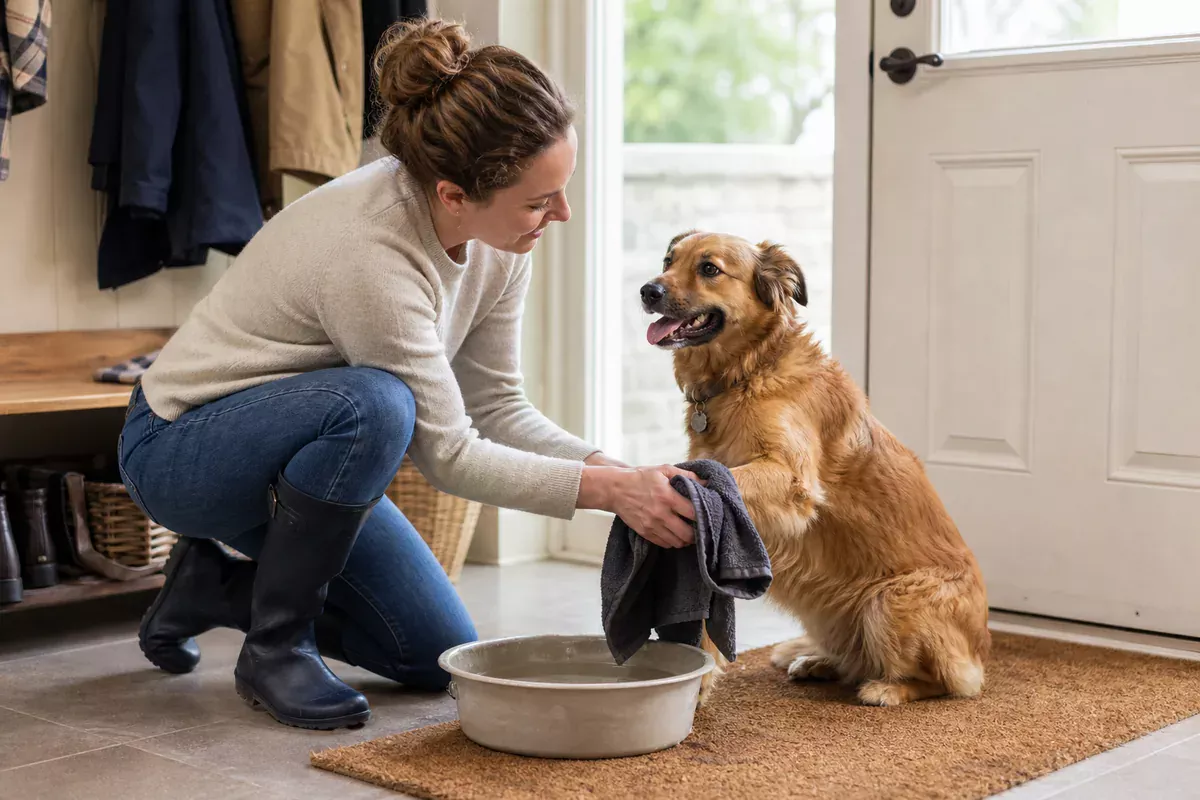
A practical approach to cleaning dog paws is a calm entryway routine: pause on a mat, inspect each paw, remove loose debris, rinse or wipe only as needed, check between the toes, and dry thoroughly. The goal is a repeatable transition from outdoors to indoors, not an aggressive scrub.
Quick answer
- Prepare the towel, basin, mat, and waste bag before the walk.
- Handle one paw at a time and inspect pads, toes, and nails.
- Use the least intensive method that fits the mess.
- Dry between the toes before the dog leaves the station.
- Pause on the entry mat.
- Inspect pads, toes, and nails.
- Wipe or rinse only as needed.
- Dry every side of the paw.
How should you clean dog paws after a walk?
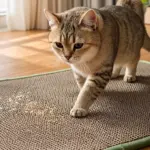
After a routine walk, pause the dog on an entry mat and inspect each paw, including the pads, nails, and spaces between the toes. Remove loose, dry debris first. Use a clean damp cloth or a gentle rinse only when the remaining mess requires it, then dry the entire paw before the dog moves indoors. Avoid repeated scrubbing or introducing a product without checking its directions. Stop the routine and contact a veterinarian when you find a cut, swelling, persistent redness, an embedded object, or signs of pain.
What do you need for cleaning dog paws?
A basic station needs an absorbent towel, a washable entry mat, a shallow basin or paw-cleaning tool used according to its directions, and a place for damp items. Keep everything within reach so the dog does not have to wait while you search for supplies. If tracked moisture has already marked a finished wood surface, switch to the separate hardwood-floor pet stain routine instead of extending the paw-cleaning method to the floor.
For muddy, sandy, or wet paws, a cloth and water may be enough. For contact with road salt, unknown substances, or anything that may irritate the paw, follow veterinary guidance rather than improvising with household products.
How should you inspect a dog’s paws?
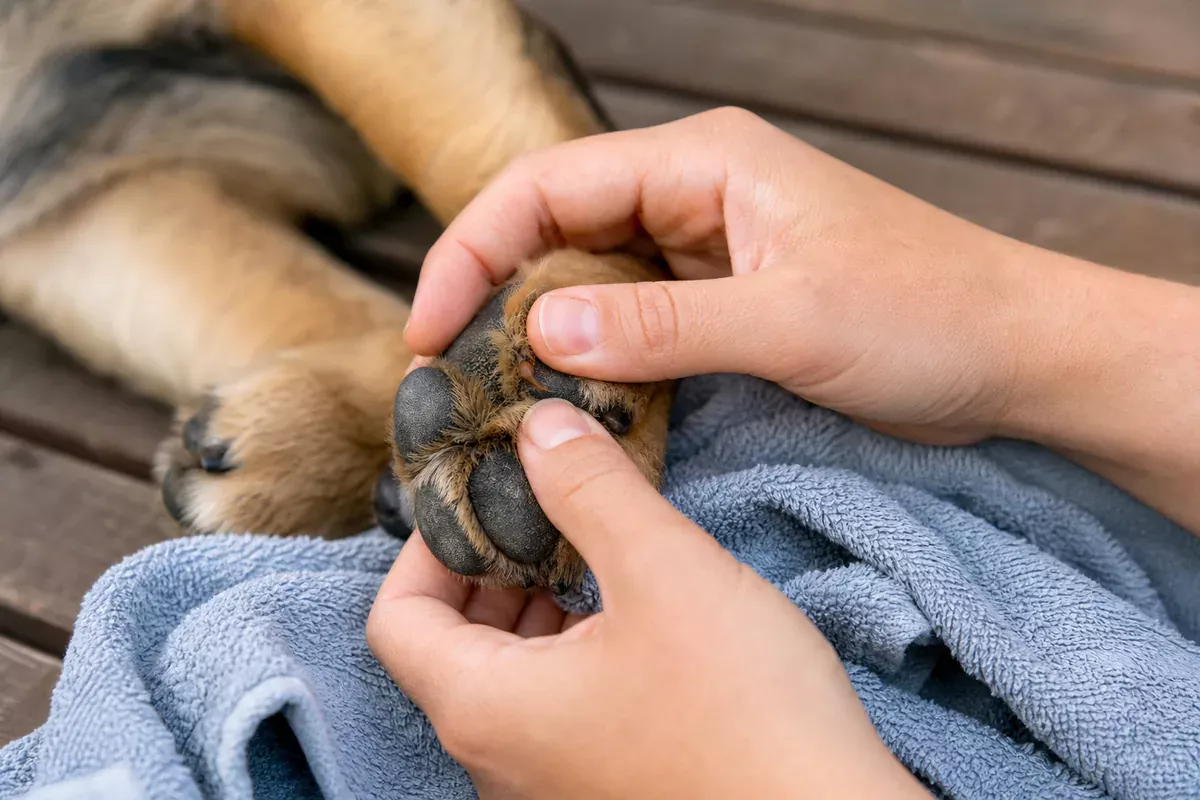
Look at the top of the paw, each pad, the space between toes, the nail area, and the fur around the foot. The American Kennel Club’s paw-care guidance specifically recommends checking between toes because dirt and salt can collect around pads and nails.
Keep the inspection brief. If the dog pulls away, appears painful, or will not bear weight, stop. Cuts, swelling, persistent redness, embedded material, or licking that continues after cleaning are reasons to contact a veterinarian.
How to clean dog paws after a normal walk
1. Pause on the entry mat
Ask for a familiar stand or sit. Use the mat as a consistent boundary between outdoor dirt and the clean floor. Calm handling matters more than speed.
2. Remove loose debris
Brush away dry dirt that releases easily. Check for small stones, plant material, or clumps around the toes. Do not pull anything that appears embedded.
3. Wipe or rinse
Use a damp cloth for light soil. Use a shallow rinse when more dirt is present, keeping the movement gentle. Follow the directions for any paw-cleaning device and introduce it gradually.
4. Check between toes
Part the toes gently and look around each pad and nail. This is where fine debris can remain after the top of the paw looks clean.
5. Dry thoroughly
Blot rather than rub. Dry the pads, fur, and spaces between toes. Place the damp towel in a laundry container and let the mat or basin dry before the next use.
When does the routine need to change?
| Condition | Approach | Escalate when |
|---|---|---|
| Light dust | Dry brush or towel | Debris will not release |
| Mud | Gentle rinse, then dry | Skin looks irritated |
| Sand | Remove loose grains, then rinse if needed | Dog shows discomfort |
| Winter residue | Rinse and inspect between toes | Unknown substance or persistent licking |
| Sticky or unknown material | Prevent licking and seek guidance | Always when removal method is uncertain |
How do you help a dog accept paw cleaning?
Build the routine in short stages. Touch a paw, reward calm behavior, and release it. Add the towel later. Introduce a basin or cleaning tool without water before using it. Do not restrain a frightened dog solely to complete a routine cleaning.
Use the same location and sequence after walks. Predictability helps the dog understand what will happen. Keep towels ready before opening the door so the process starts without delay.
What mistakes should dog owners avoid?
- Cleaning only the top: debris may remain between pads and around nails.
- Using very hot water: use a comfortable temperature and veterinary guidance when uncertain.
- Leaving paws damp: dry all sides and between toes.
- Forcing an embedded object out: stop and contact a veterinarian.
- Using an unlabeled household product: do not improvise treatments on paws.
- Ignoring behavior: limping, pain, or repeated licking changes this from routine cleaning to a health concern.
How do you organize a dog paw cleaning station?
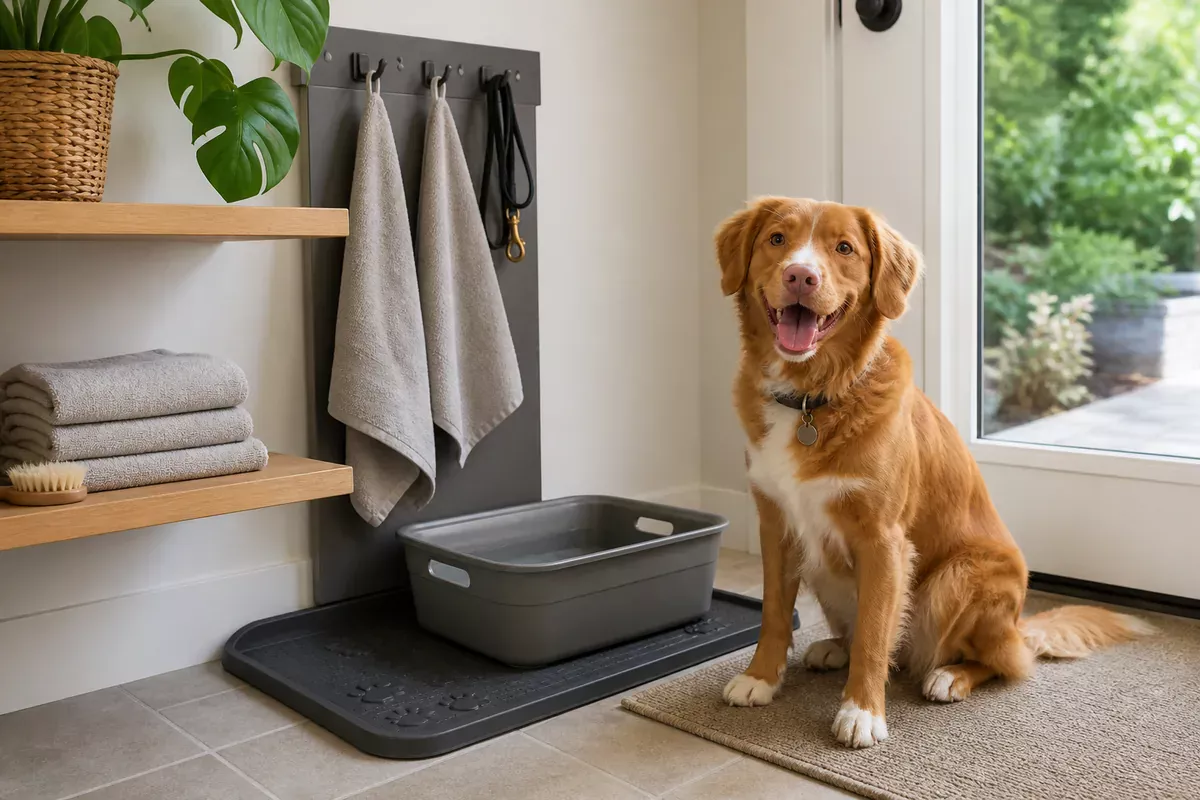
Place the washable mat directly inside the usual entrance. Store clean towels above floor level and keep used towels in a separate container. Set the basin on a tray that can be emptied and dried. Keep the route free of clutter so the dog has stable footing.
Clean and dry the station after use. A damp towel left in a basket can become a separate odor source. The entryway also connects to whole-home upkeep; see our guide to organizing cleaning supplies for pet homes and the paw-cleaning products.
How can you make the routine consistent for every caregiver?
Keep a simple station card that lists the same order: mat, inspect, remove loose debris, wipe or rinse, inspect between toes, and dry. The card should also state when to stop and contact a veterinarian. A shared sequence prevents one person from skipping the inspection while another uses a more intensive method than the condition requires.
Replace clean towels before they run out and move damp items directly to their laundry container. Empty and dry the basin after use. Check that the mat lies flat and that the dog has stable footing. These details turn paw cleaning into an entryway habit instead of an improvised response to muddy floors.
Review the setup when seasons change. Rain, dry dust, sand, and winter residue create different entryway conditions. The decision still begins with inspection. Change the method only when the visible condition changes, and keep health concerns separate from routine household cleanup.
Do you need a cleaning routine, a tool comparison, or an entryway setup?
Use this page for the everyday after-walk routine. If you are comparing cups, mats, and portable options before choosing a tool, read the dog paw cleaner selection guide. For a floor-aware station designed around wet or muddy arrivals, use the muddy-entryway paw-cleaner guide.
Frequently asked questions
Do dog paws need washing after every walk?
Not every walk creates the same need. Inspect first. A dry towel may be enough for light dust, while mud, sand, or winter residue may require a rinse and careful drying.
Can I use a paw-cleaner cup?
Use it only according to its instructions and introduce it gradually. Check the fit, avoid force, and inspect the paw before and after use. Stop if the dog appears uncomfortable.
Why is drying between the toes important?
Water and debris can remain in spaces that look clean from above. Drying completes the routine and gives you a second chance to notice irritation or material between the pads.
When should a veterinarian check the paw?
Contact a veterinarian for limping, bleeding, swelling, persistent redness, pain, an embedded object, exposure to an unknown substance, or repeated licking that continues after gentle cleaning.
Sources
- American Kennel Club, How to Clean and Care for Your Dog’s Paws, retrieved July 24, 2026.
- U.S. EPA, Biological Contaminants and Indoor Air Quality, retrieved July 24, 2026. The EPA notes that wiping pets’ feet before they come indoors can help reduce tracked-in dust and dirt.