Cat Litter Box Filter Replacement: When and How to Do It

LITTER AREA CARE
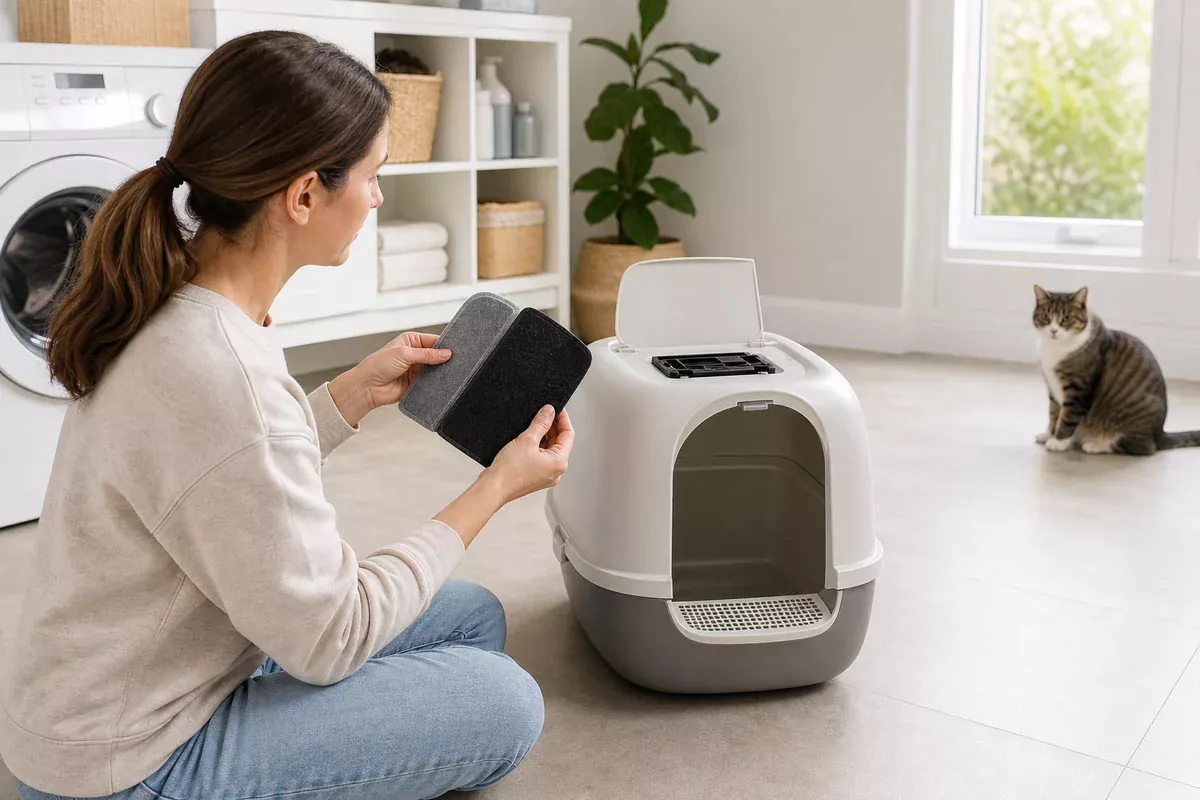
For a cat litter box filter replacement, identify the exact box and filter type, follow the manufacturer’s interval, clean the litter source before relying on filtration, and install the new filter flat in its holder. A small vent filter can support litter-area maintenance, but it does not replace scooping, box cleaning, appropriate litter depth, or ventilation.
Quick answer
- Check the box manual or manufacturer page for the correct filter and schedule.
- Replace sooner if the filter is damaged, wet, heavily dusty, or no longer fits correctly.
- Clean and dry the empty box before fitting the new filter.
- Keep a simple dated note so replacement is based on use, not guesswork.
What does a litter box filter do?
Many covered boxes use a removable carbon or foam-style insert near a vent. Its job depends on the product design: it may help capture some odor-related compounds or particles as air moves through that specific vent. It cannot correct a dirty box, saturated litter, a blocked opening, or poor room ventilation.
The U.S. EPA describes source control as the first strategy for indoor air quality, with ventilation and filtration as supporting measures. Applied to a litter area, that means removing waste and maintaining the box come before expecting a small filter to manage the room.
When should you replace the filter?
There is no honest universal interval for every litter box filter. Size, material, box design, cat count, humidity, and manufacturer specifications differ. Use the printed instructions as the baseline. Then inspect the filter during regular box care.
| Observation | What it may mean | Action |
|---|---|---|
| Scheduled interval reached | Expected service period is complete | Replace as directed |
| Filter is wet or misshapen | Material or airflow path may be compromised | Replace; find and correct moisture source |
| Heavy dust or litter coating | Surface is obstructed | Follow cleaning or replacement instructions |
| Edges no longer fit the holder | Air can bypass the insert | Use the correct replacement part |
| Odor remains after box care | Source or room conditions still need attention | Recheck scooping, cleaning, litter, and ventilation |
How to choose the correct replacement
1. Identify the box model
Look for the model name or number on the box, manual, order record, or manufacturer website. A visually similar filter can still have the wrong thickness, shape, or airflow characteristics.
2. Confirm dimensions and material
Compare length, width, thickness, edge shape, and any frame or tab. Do not trim an insert unless the manufacturer explicitly describes it as cut-to-fit. A loose piece can shift, while an oversized piece can keep the vent cover from closing.
3. Read disposal and handling directions
Some filters are disposable; others may have limited cleaning instructions. Do not wash carbon or foam media simply because it looks dusty unless the manufacturer says it is washable. Water can change the material and prevent complete drying.
How to replace a cat litter box filter step by step
1. Move the cat away from the work area
Choose a time when the box can be briefly unavailable. Prepare a waste bag, clean cloths, and the confirmed replacement. Wash your hands after handling litter-area components.
2. Empty and clean the box as directed
Remove waste and litter according to your usual safe routine. Clean the box using its instructions and let all parts dry. The CDC advises following product labels and cleaning pet items regularly; litter boxes need particular care because they contact urine and feces.
3. Open the filter holder
Release clips gently and note the old filter’s orientation. Do not pry a brittle cover with a sharp object. Photograph the arrangement first if the airflow direction or tabs are easy to forget.
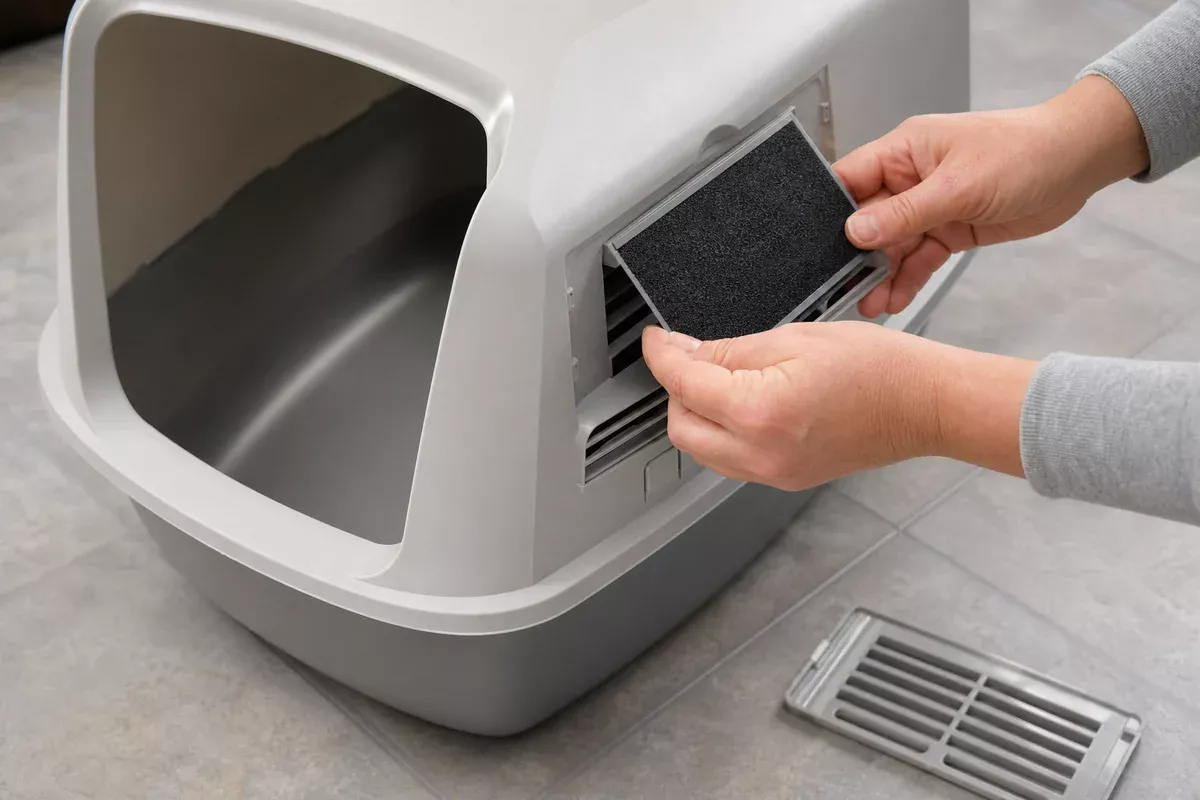
4. Remove and contain the used filter
Lift it without shaking. Place it in the disposal container specified by the manufacturer or local waste guidance. Wipe the holder if instructed, then make sure it is dry before installing new media.
5. Install the new filter flat
Match the orientation shown in the manual. Seat every edge inside the holder, close the vent cover without forcing it, and confirm that no corner protrudes. Reassemble the box and restore litter according to the box and litter instructions.
6. Record the date
Add a calendar reminder based on the manufacturer’s interval, then continue inspecting during box care. The date is a prompt to check, not a reason to ignore visible damage or moisture earlier.
What a new filter cannot fix
- Waste left in the box: remove the source on the schedule appropriate for the household.
- A dirty hood or base: clean surfaces according to their instructions.
- Incorrect litter depth or type: follow the box and litter guidance and consider the cat’s acceptance.
- Poor room airflow: use safe ventilation appropriate to outdoor conditions and the home.
- A sudden or unusual change: investigate the source rather than masking it with fragrance.
How to maintain the litter area between replacements
Keep a scoop and waste container nearby, clean tracked litter from the floor, and avoid placing food or water beside the box. Inspect the filter vent when cleaning the hood. Address the source first, then consider filtration and ventilation as supporting steps. For general room routines, see how to remove pet odor from home.
Frequently asked questions
Can I wash and reuse a carbon litter box filter?
Only if the manufacturer states that the exact filter is washable. Many carbon inserts are intended for replacement, and washing may damage them.
Can I cut a larger filter to fit?
Only use cut-to-fit material when the product instructions permit it. Otherwise, choose the model-specific part.
Why does the litter area still smell after replacement?
A filter is only one part of the system. Recheck waste removal, litter condition, the hood and base, moisture, room ventilation, and whether the replacement fits correctly.
Should I replace the filter every time I clean the box?
Not automatically. Follow the manufacturer’s replacement schedule and replace earlier for damage, wetness, heavy obstruction, or poor fit.
Is a covered box with a filter right for every cat?
Not necessarily. Cats can have different preferences. Monitor normal box use and discuss avoidance or elimination changes with a veterinarian.
A simple filter replacement log
A useful log needs only four details: the installation date, the exact replacement part, the condition of the removed filter, and any maintenance performed on the box at the same time. This separates evidence from memory. If a filter repeatedly becomes wet or heavily coated long before the stated interval, investigate the box location, litter tracking, vent placement, and cleaning routine instead of shortening the schedule indefinitely.
Keep the part number with the manual or in a phone note. When buying replacements, compare the seller, package, dimensions, and compatibility statement. Avoid assuming that every black foam rectangle contains the same material or is intended for the same airflow path. Store unused filters dry, sealed as directed, and away from litter dust and household chemicals.
When is the issue bigger than the filter?
Persistent odor after waste removal and box cleaning may indicate trapped material around seams, an unsuitable location, moisture, or a litter routine that needs adjustment. A sudden change in a cat’s urination, defecation, or box use is not a filter-performance question; contact a veterinarian. Likewise, never use a replacement project to seal vents or alter the box in a way the manufacturer did not approve, because changes can affect access and the cat’s willingness to use it.
Sources and further reading
- CDC: Cleaning and Disinfecting Pet Supplies.
- U.S. EPA: Indoor Air Quality — source control, ventilation, and filtration framework.