DIY Dog Paw Cleaner Station: A Simple Entryway Setup

DOG PAW ROUTINE
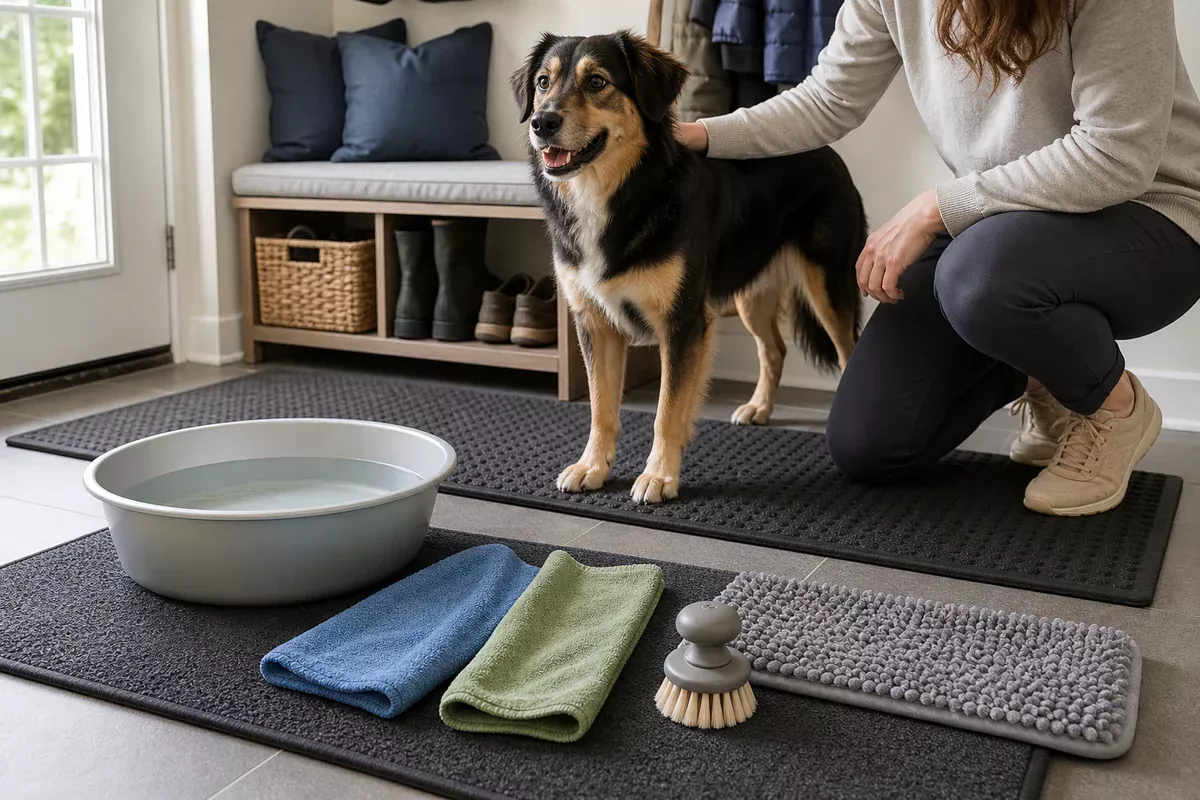
A useful DIY dog paw cleaner is an organized station, not a homemade chemical formula. Place a washable mat, shallow basin of comfortably lukewarm water, soft cloths, a dry towel, and a container for used items near the door. Then use the least intensive method that matches the mess.
Quick answer
- Choose a stable, non-slip location near the entrance.
- Use a dry towel for clean wet paws, a damp cloth for light dirt, or a brief rinse for heavier mud.
- Check between toes and around pads without forcing the paw.
- Dry thoroughly and clean the station after use.
What is a DIY dog paw cleaner station?
It is a repeatable entryway setup that keeps the necessary items within reach. It avoids the scramble for towels while a muddy dog walks through the house. The station can be compact enough for an apartment or expanded for a mudroom, but the essential sequence stays the same: pause, assess, clean only as much as needed, inspect, and dry.
This article does not recommend mixing household cleaning chemicals for paws. Products made for floors, counters, laundry, or disinfection are not interchangeable with animal-care products. If you use a pet grooming product, follow its label and ask a veterinarian when your dog has a known skin condition.
What belongs in the station?
| Item | Use | Setup check |
|---|---|---|
| Washable non-slip mat | Defines the cleaning zone | Lies flat without curled edges |
| Shallow stable basin | Brief rinse for muddy paws | Easy to lift without spilling |
| Soft damp cloth | Wipes light dirt | Clean and free of rough debris |
| Dry absorbent towel | Dries paws and between toes | Fresh for each session |
| Soft paw brush, optional | Loosens surface mud | Soft enough not to scrape |
| Used-towel container | Keeps wet items off the floor | Washable and ventilated |
How to build the station
1. Pick a safe location
Choose a place where your dog can stand without blocking the door. The floor should tolerate an occasional splash. Keep the basin out of the walking path until needed. If your dog is nervous in a narrow entry, use a more open nearby area.
2. Separate clean and used items
Store clean towels above floor level. Put damp cloths directly into a washable container after use. This small separation keeps the routine clear and prevents yesterday’s damp towel from becoming today’s cleaning cloth.
3. Make the routine easy to repeat
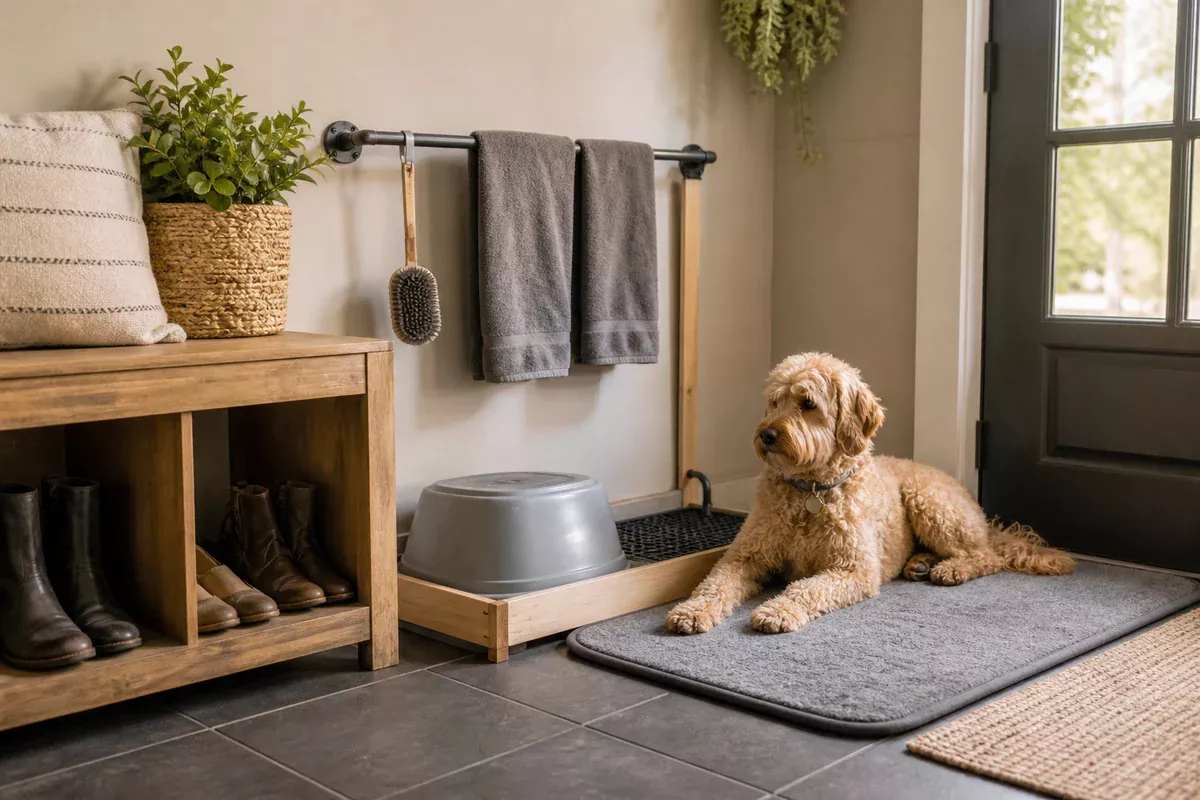
Place the dry towel closest to where the dog will stand. Keep any basin empty between uses and fill it shortly before a muddy walk ends. Hang rinsed tools where air can circulate, out of the pet’s reach.
How to clean dog paws after a walk
1. Pause on the mat and inspect
Look at the tops and bottoms of the paws. Check for mud, sand, small debris, or material caught around the pads. If you see bleeding, a deep cut, marked swelling, or an embedded object, stop the cleaning routine and contact a veterinarian rather than trying to remove it yourself.
2. Match the method to the mess
For clean rainwater, a dry towel may be enough. For a light film of dirt, use a soft damp cloth. For heavier mud or material such as road salt, a brief rinse may be appropriate. The American Kennel Club advises checking between the toes and drying thoroughly after cleaning.
3. Work one paw at a time
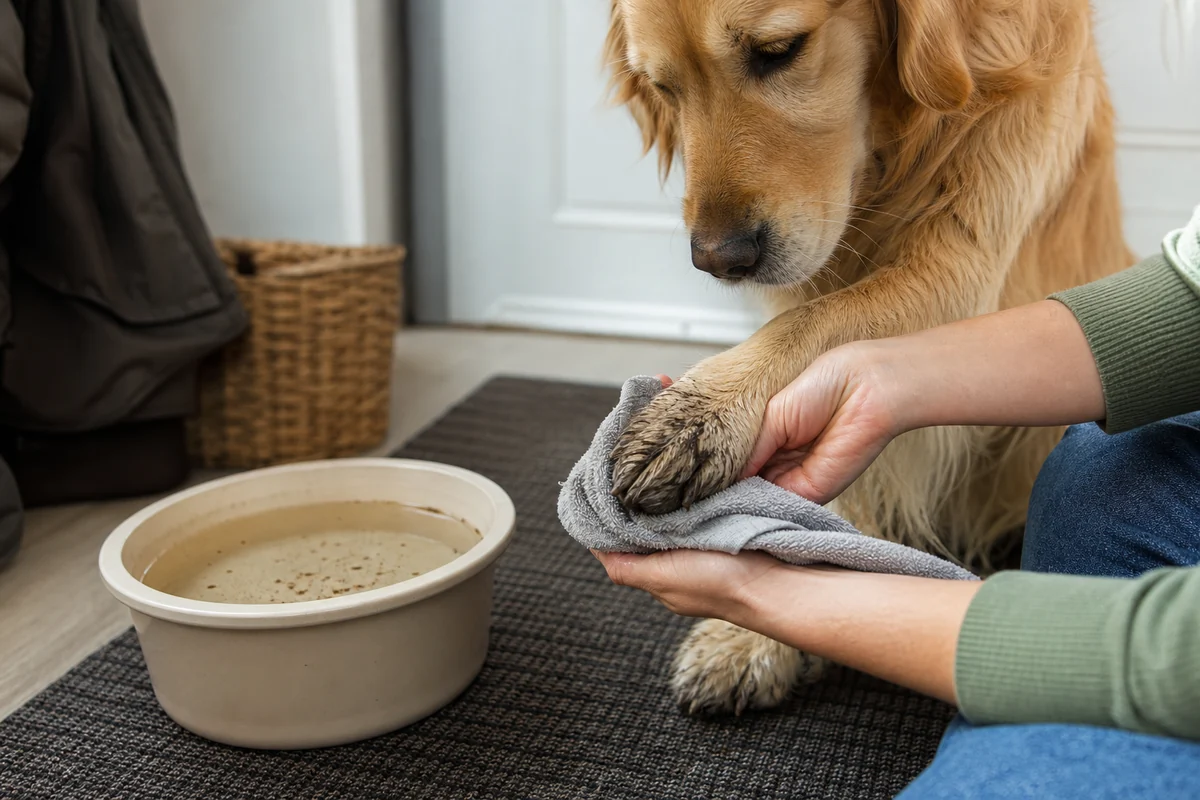
Ask for a familiar cue or wait for a comfortable stance. Support the leg without pulling it sideways. Wipe from the leg toward the paw, then gently clean around the pads. Do not force toes apart if the dog resists; pause and try a calmer, shorter session.
4. Rinse the cloth as needed
A dirty cloth can spread grit across another paw. Use a clean section or a second cloth. Replace basin water when it becomes visibly dirty instead of dipping clean paws into muddy water.
5. Dry before leaving the station
Blot the tops and bottoms of the paws and the spaces you cleaned. Drying reduces wet tracks and gives you a final opportunity to notice remaining grit. Let the dog step off only when the nearby floor is not slippery.
How should the routine change by weather?
| Condition | Starting method | Extra check |
|---|---|---|
| Light rain | Dry absorbent towel | Moisture between toes |
| Mud | Damp cloth or brief rinse | Grit around pads |
| Sand | Brush loose grains, then wipe | Sand between toes |
| Winter-treated pavement | Rinse as appropriate | Residue around pads |
Common setup mistakes
- Leaving a filled basin by the door: it can spill or become dirty before use.
- Using one damp towel all day: keep clean and used textiles separate.
- Making every walk a full wash: start with the least intensive method that addresses the mess.
- Using floor-cleaning products on paws: household surface directions do not make a product suitable for animal skin.
- Skipping the dry step: wet paws can track water and make smooth floors slippery.
How to reset the station
Empty and rinse the basin, wash cloths according to their labels, remove hair and grit from the mat, and let all components dry. Return only clean, dry items to storage. For a broader routine, see cleaning dog paws after a walk.
Frequently asked questions
Do I need a special paw-cleaning cup?
No. A stable shallow basin and soft cloth can create a practical station. If you use a commercial cup, follow its instructions and clean it after use.
Should I add soap to the basin?
Not by default. Plain water may be sufficient for routine dirt. Use only a product intended for the purpose and follow its label or veterinary guidance.
What if my dog dislikes paw handling?
Keep sessions short, pair the station with familiar cues and rewards, and stop before the dog becomes distressed. A trainer or veterinarian can help with persistent handling difficulty.
Can I use disinfecting wipes?
Do not assume a household disinfecting wipe is suitable for paws. Use only products specifically labeled for the intended animal use.
How to help your dog accept the station
Introduce the setup when the paws are already clean. Let the dog approach the mat, reward a calm pause, and practice touching one leg briefly before adding water or a towel. Build the sequence over several short sessions: stand on the mat, offer one paw, accept a light wipe, then step away. This keeps the station from appearing only when the dog is wet, muddy, or hurried.
Watch body language throughout. Turning away, repeated lip licking, pulling the leg back, or trying to leave are signals to slow down. Do not trap the dog between a wall and a closed door. If handling remains difficult, ask a qualified trainer about cooperative-care exercises. Pain, sudden sensitivity, limping, or a new refusal to bear weight needs veterinary attention rather than more practice.
How can a small-space station work?
Use one washable mat with a hanging towel pocket and keep the empty basin on a shelf. Fill it only when a rinse is likely. A boot tray can contain damp shoes beside the station, but the dog should still have a flat, non-slip standing area. Dry every component before storing it, because stacking damp towels and brushes in a closed basket makes the next session less hygienic.
Sources and further reading
- American Kennel Club: How to Care for and Clean Dog Paws.
- CDC: Cleaning and Disinfecting Pet Supplies — cleaning and label-use principles.